Content Feed

Discover interesting content about books and writing

News Jun 2, 10:22 PM

Discovery of Renowned Soviet Poet's Unpublished Diaries in Tbilisi Archive

The Georgian National Archive announced the recovery of Vladimir Yasenkov's personal diaries this week, marking a substantial addition to Soviet literary history. Yasenkov, whose poetry collections were published sporadically throughout his lifetime, maintained detailed journals that document his intellectual development and relationships with contemporaries. The three volumes, preserved in remarkably good condition despite decades in storage, contain approximately 400,000 words of handwritten text in Russian and Georgian. Literary scholars have begun preliminary analysis, identifying references to unpublished poems, abandoned narrative projects, and detailed commentary on the sociopolitical constraints that shaped his writing. Particularly significant are entries from 1956-1958, which correspond to Yasenkov's most productive period. The diaries include correspondence notes, reading lists, and reflections on craft that challenge existing interpretations of his major works. Archive director Ketevan Metreveli indicated that digitization would commence in autumn 2026, with academic access granted to vetted researchers within six months.
News May 23, 04:45 PM

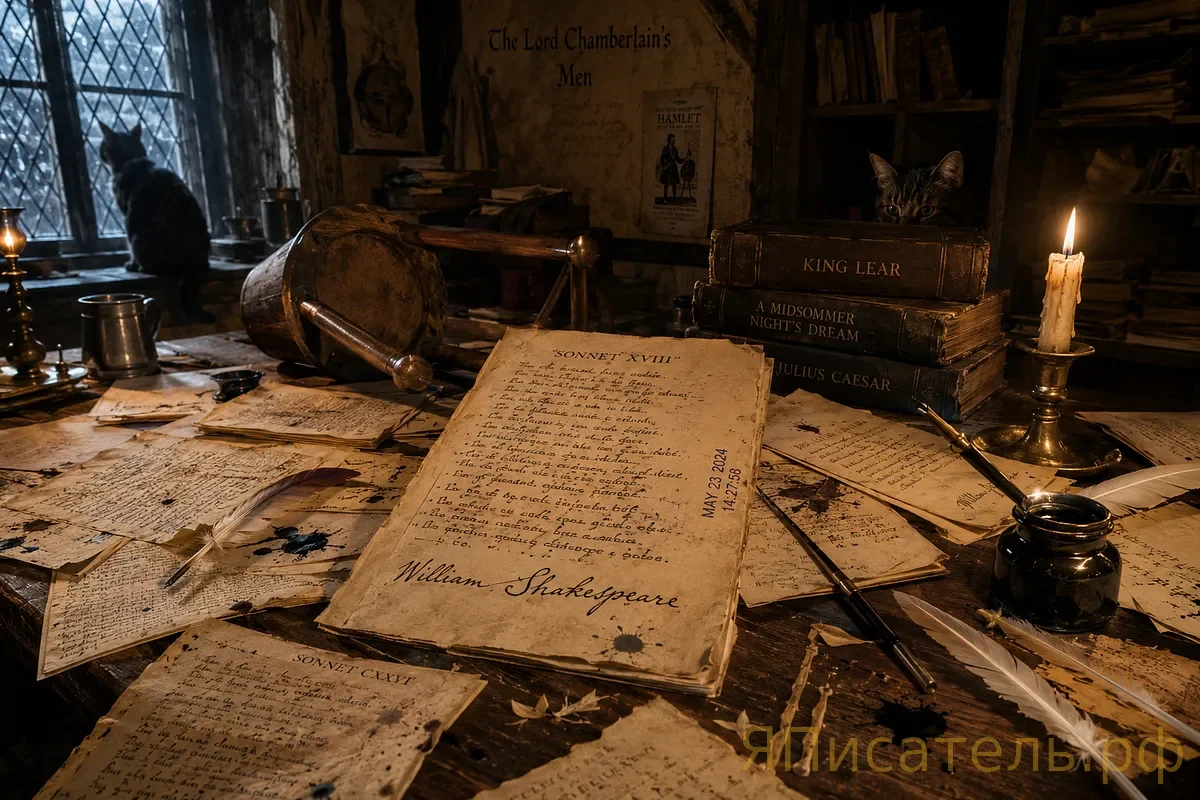
Shakespeare's Sonnets: Lost Variants and Annotations

Shakespeare's Sonnets: Lost Variants and Annotations

The Folger Shakespeare Library in Washington, D.C., announced authentication of 18 variant manuscript pages containing alternative versions of sonnets from the 1609 quarto. These materials, acquired from a private collector, present different word choices, line arrangements, and stanzaic structures than the published versions. Handwriting analysis suggests possible authorial annotation, though scholars remain cautiously uncertain about attribution. The variants reveal Shakespeare experimenting with prosodic patterns, exploring alternative rhyme schemes, and testing metaphorical registers. One particularly striking variant of Sonnet 29 contains six entirely different lines in the final quatrain, suggesting Shakespeare was dissatisfied with the published resolution. Several pages include marginal notes in an unidentified hand debating specific word choices, possibly representing editorial discussion in the printing house. The collection includes physical analysis showing evidence of multiple revisions on single pagesβ€”deletions, insertions between lines, and words circled for alternative consideration. These discoveries have prompted renewed scholarly interest in textual variants and the relationship between manuscript and printed text in the Renaissance. Debates continue about whether these represent Shakespeare's own revisions or other hands' editorial interventions.

News May 23, 02:45 PM

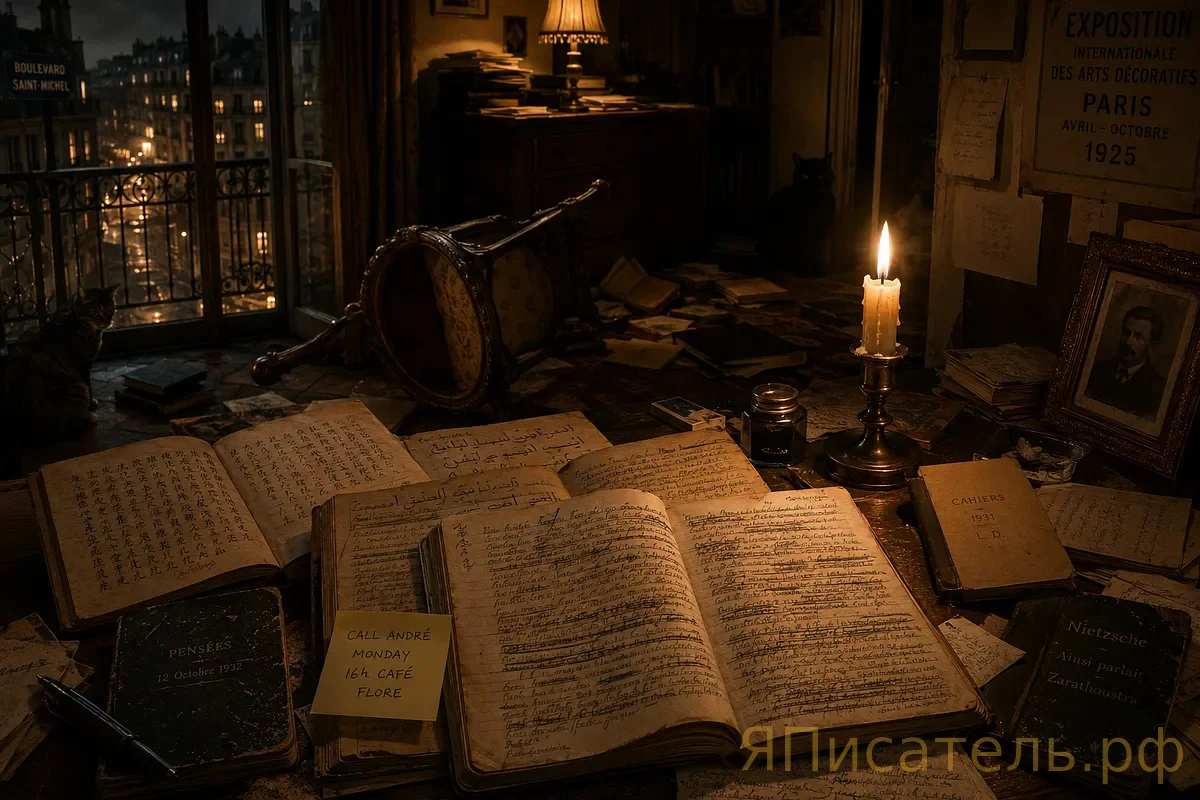
Joyce's Hidden Finnegans Wake Manuscripts

Joyce's Hidden Finnegans Wake Manuscripts

The James Joyce Collection at the University of Buffalo received a significant donation of Joyce's composition materials for Finnegans Wake, comprising 156 pages of densely annotated notebooks spanning 1924-1938. These documents showcase Joyce's extraordinary method of linguistic construction: pages featuring words in various languages, phonetic variations, puns constructed across multiple tongues, and architectural sketches for the novel's cyclical structure. The manuscripts reveal Joyce's systematic approach to creating portmanteau words, with cross-references to etymological sources. Several pages contain Joyce's commentary on his own wordplay, justifications for structural choices, and notes on reader reception. Particularly valuable are passages showing how Joyce revised and rerevised single paragraphs, sometimes producing five or six versions. The collection includes correspondence between Joyce and his literary assistant, Paul LΓ©on, discussing specific passages. These materials provide unprecedented insight into one of modernism's most experimental and demanding works, demonstrating that Joyce's apparent chaos was in fact meticulously planned.

Nothing to read? Create your own book and read it! Like I do.

Create a book
1x

"A word after a word after a word is power." β€” Margaret Atwood