Content Feed

Discover interesting content about books and writing

News May 23, 04:45 PM

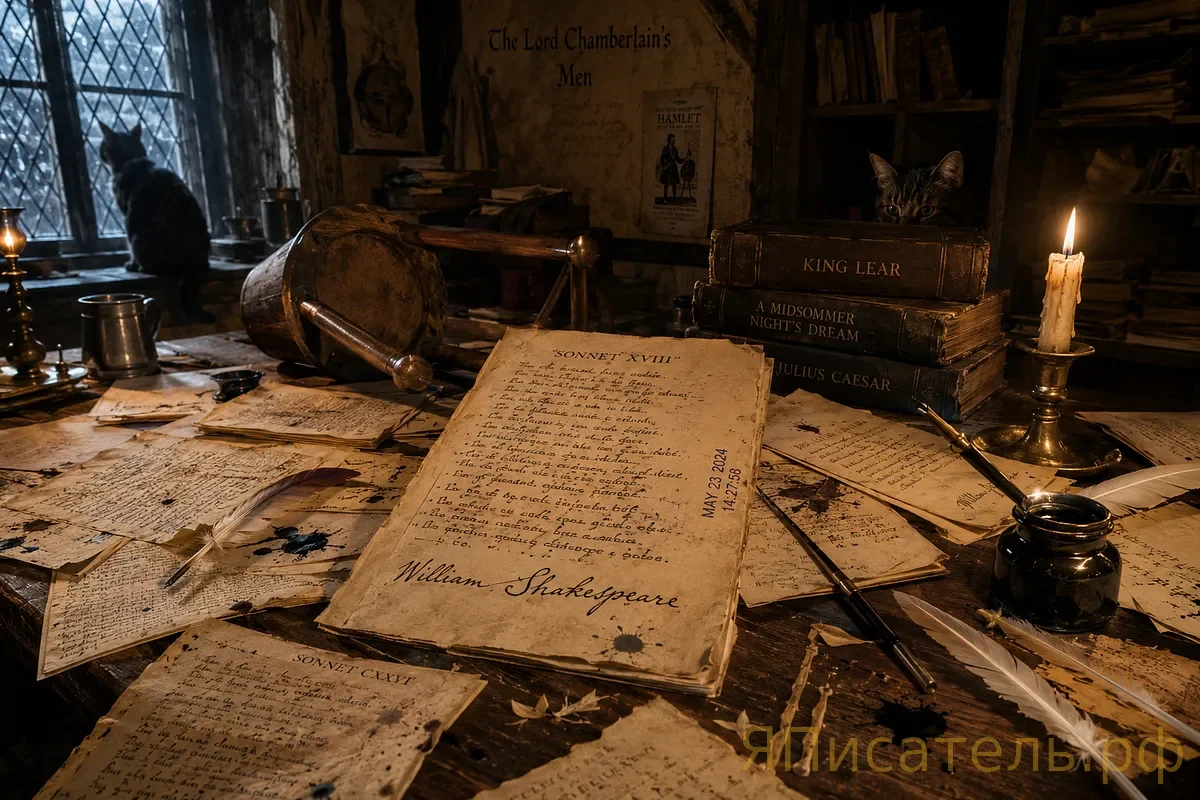
Shakespeare's Sonnets: Lost Variants and Annotations
Shakespeare's Sonnets: Lost Variants and Annotations

The Folger Shakespeare Library in Washington, D.C., announced authentication of 18 variant manuscript pages containing alternative versions of sonnets from the 1609 quarto. These materials, acquired from a private collector, present different word choices, line arrangements, and stanzaic structures than the published versions. Handwriting analysis suggests possible authorial annotation, though scholars remain cautiously uncertain about attribution. The variants reveal Shakespeare experimenting with prosodic patterns, exploring alternative rhyme schemes, and testing metaphorical registers. One particularly striking variant of Sonnet 29 contains six entirely different lines in the final quatrain, suggesting Shakespeare was dissatisfied with the published resolution. Several pages include marginal notes in an unidentified hand debating specific word choices, possibly representing editorial discussion in the printing house. The collection includes physical analysis showing evidence of multiple revisions on single pages—deletions, insertions between lines, and words circled for alternative consideration. These discoveries have prompted renewed scholarly interest in textual variants and the relationship between manuscript and printed text in the Renaissance. Debates continue about whether these represent Shakespeare's own revisions or other hands' editorial interventions.

News May 9, 10:34 AM

Franz Kafka's The Metamorphosis: Minimal Documentation, Maximum Influence

The Franz Kafka Archive at the German Literature Archive in Marbach contains the surviving materials related to 'The Metamorphosis,' including manuscript pages and correspondence that illuminate the work's creation. Kafka's diary entries from the period of composition reveal his emotional state while writing and provide contextual information about how personal anxiety influenced the novella's psychological dimensions. The surviving manuscript pages are fragmentary—Kafka was notoriously self-critical and destroyed significant portions of his work—but what remains shows characteristics of his compositional process and revision approach. Textual analysis of the surviving pages reveals Kafka's meticulous attention to narrative consistency and the logical development of Gregor Samsa's impossible circumstances. Correspondence with his editor and publisher shows Kafka's ambivalence about the novella's reception, his uncertainty about its artistic success, and his reluctance to discuss interpretative questions about meaning. The archives contain Kafka's notes on other literary works and his theoretical writings on art and literature, providing intellectual context for understanding how 'The Metamorphosis' emerged from his broader artistic concerns. Kafka's marginalia in books he read reveal his engagement with contemporary philosophy and literature. Scholars comparing the surviving manuscript pages with the published text have identified editorial interventions and textual variants that inform debates about Kafka's final intentions. The sparse nature of the archive has made 'The Metamorphosis' particularly subject to interpretative debate, with scholars using limited textual evidence to reconstruct Kafka's thematic preoccupations.

Nothing to read? Create your own book and read it! Like I do.

Create a book
1x

"Write with the door closed, rewrite with the door open." — Stephen King