Content Feed

Discover interesting content about books and writing

Tip May 23, 12:16 PM

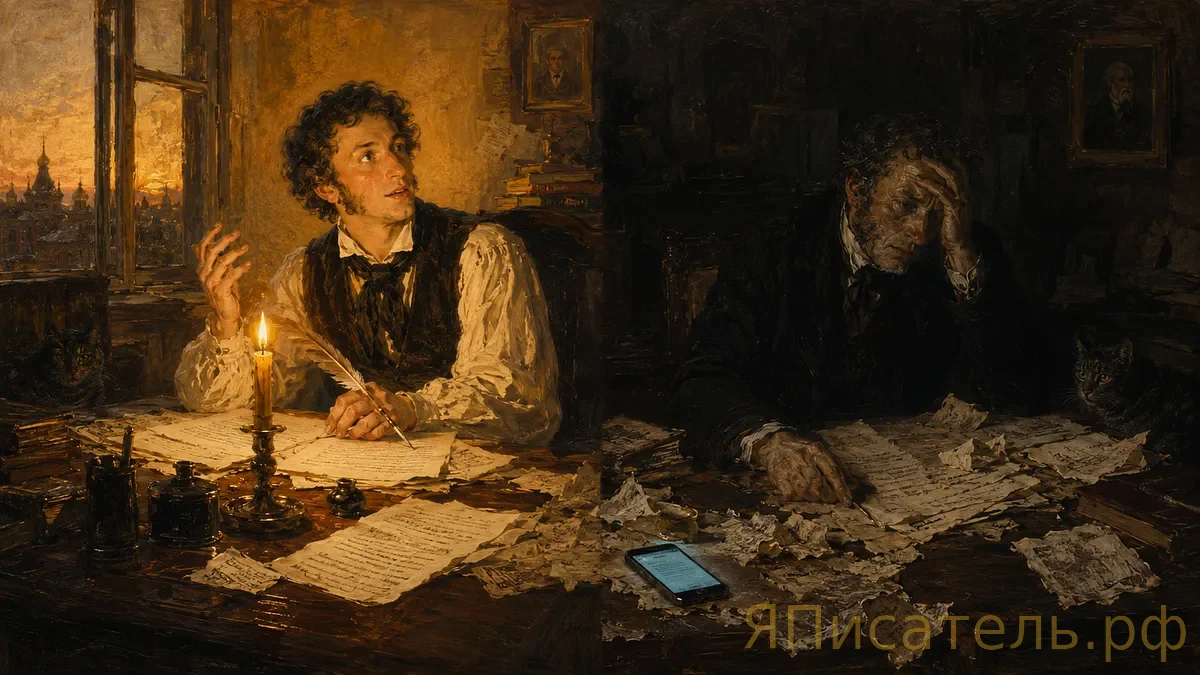
Character Arc Development
Character Arc Development

Explore how Russian writers construct character transformation through internal conflict, choice, and consequence. A well-developed arc shows how characters change, what costs them this change, and what they discover about themselves.

Character arcs in Russian literature are rarely simple trajectories from ignorance to wisdom. Instead, Russian writers created complex, often cyclical transformations where characters move between states without resolution. The arc involves inciting incident, escalating conflict, and moment of choice where internal change becomes visible. Dostoevsky's Raskolnikov doesn't simply abandon his theory; he experiences psychological devastation, spiritual crisis, and only then begins transformation. The arc must be earned—readers must understand why characters change, what compels new choices, what costs accompany growth. Russian prose emphasizes the psychological dimensions of change: the internal turmoil preceding external action. Characters in Russian literature rarely change completely; instead they integrate contradictions, learn to live with unresolved tensions, or face consequences of unchanged natures. The arc's endpoint matters less than the journey—what readers witness about human capacity for self-deception, rationalization, and rare genuine transformation. Effective arcs show characters at crossroads where choices are genuinely difficult, where any path carries cost, and where growth is purchased through genuine loss.


Joke Jan 31, 10:01 PM

The Literal Arc Problem

"Your character arc is flat."

"He's a pancake."

"Metaphorically?"

"Literally. Chapter 4. Witch."

Tip May 9, 09:31 AM

Craft Satisfying Endings That Fulfill Story Promises

Endings must feel both inevitable and surprising, fulfilling the story's thematic promises while providing genuine emotional and plot resolution. Avoid cheap tricks, but embrace meaningful ambiguity if it serves the story.

An ending must feel simultaneously inevitable and surprising. Readers should look back and recognize that everything pointed toward this conclusion, yet the specific form of that conclusion should still carry impact. Endings fulfill the promises made in your opening—they should resolve the central conflict, complete character arcs, and deliver on thematic implications established throughout the narrative. Poor endings either feel arbitrary (unconnected to what came before) or feel unearned (the character achieves goals without appropriate struggle). Strong endings show consequences of character choices and prove that the character has changed through their journey, or conversely, prove their refusal to change and the consequences of that stubbornness. Ambiguous endings can be powerful if they're genuinely ambiguous—the reader can reasonably interpret events in multiple ways, each interpretation meaningful and supported by the narrative. Avoid ambiguity that simply means you didn't know how to end the story. Russian literature often employs endings that suggest continuation beyond the page—life continues with new questions and conflicts emerging. This can be powerful, suggesting that stories don't resolve neatly but continue into unknowable futures. However, such endings require that the reader feels the character has genuinely changed or that their situation has fundamentally shifted, even if external resolution remains uncertain. Give yourself permission to revise endings extensively. If your ending feels forced or unsatisfying during revision, trust that instinct. Spend time discovering what ending truly completes your story's arc. Many writers discover their genuine ending exists earlier in the manuscript and must delete material after it.

Nothing to read? Create your own book and read it! Like I do.

Create a book
1x

"Start telling the stories that only you can tell." — Neil Gaiman