Content Feed

Discover interesting content about books and writing

News Jun 2, 11:52 PM

Swiss Author Ricarda Huch's Complete Verse Collection Authenticated

The Swiss National Museum announced completion of authentication studies on 156 poems attributed to Ricarda Huch, the influential early-twentieth-century writer whose historical novels and critical essays achieved prominence throughout European intellectual circles. The poems, discovered among archival materials donated anonymously, span Huch's early creative period and demonstrate considerable formal innovation and thematic diversity. Experts employed multiple verification methods including handwriting analysis, ink composition studies, and contextual literary analysis to confirm attribution. The verses treat themes of temporality, consciousness, and feminine experience with complexity rarely associated with Huch's better-known prose works. Many poems employ unconventional metrics and syntactic structures that predate modernist experimentation in German-language poetry. Literary scholars from the University of Zurich have begun preparing annotated editions. The poems evidence Huch's sustained engagement with philosophical questions, particularly regarding the relationship between subjective experience and historical processes. Inclusion of these works will substantially reshape understanding of her aesthetic development and influence on subsequent Swiss and German literary traditions. Publication is planned for 2027.
News May 23, 10:45 PM

Marcel Proust's À la Recherche: Manuscript Galleys and Revisions

Marcel Proust's À la Recherche: Manuscript Galleys and Revisions

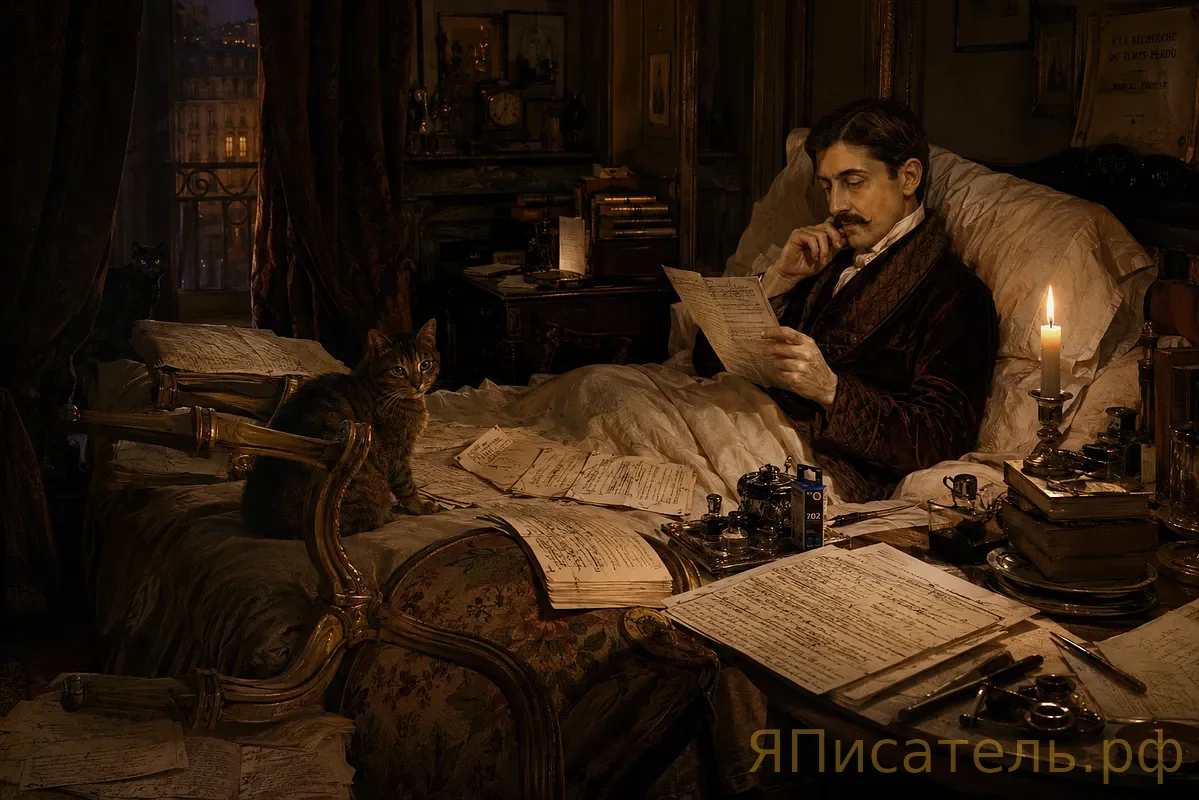
The Bibliothèque Nationale de France announced authentication of 289 pages of Proust's handwritten corrections and extensive revisions to galley proofs for À la Recherche du Temps Perdu, spanning the novel's publication from 1913-1927. These materials demonstrate Proust's legendary revision practices—margins crowded with additions, deletions, and substitutions transforming galley text into radically different prose. The revisions show Proust adding entire new passages between set lines, expanding psychological analyses, introducing new metaphors, and fundamentally restructuring narrative sequences. Some pages contain corrections so extensive that the original printed text is nearly obscured by handwritten overlay. Proust's annotations reveal his conscious crafting of time's psychological representation—revisions often involve temporal reference, shifting verb tenses, and reconsidering chronological relationships. The galleys show physical evidence of Proust's intensive working method: coffee stains, marginal sketches, and notes to himself about narrative coherence. Several passages reveal Proust questioning his own metaphors and revising them multiple times across different proofs, suggesting dissatisfaction with initial formulations. The manuscript includes Proust's correspondence with his publisher regarding production schedules and his anxiety about whether his revisions could meet publication deadlines. This collection demonstrates À la Recherche not as spontaneous creation but as meticulously constructed consciousness exploration.

News May 23, 10:15 PM

Kafka's The Trial: Variant Manuscripts and Editorial Revisions

Kafka's The Trial: Variant Manuscripts and Editorial Revisions

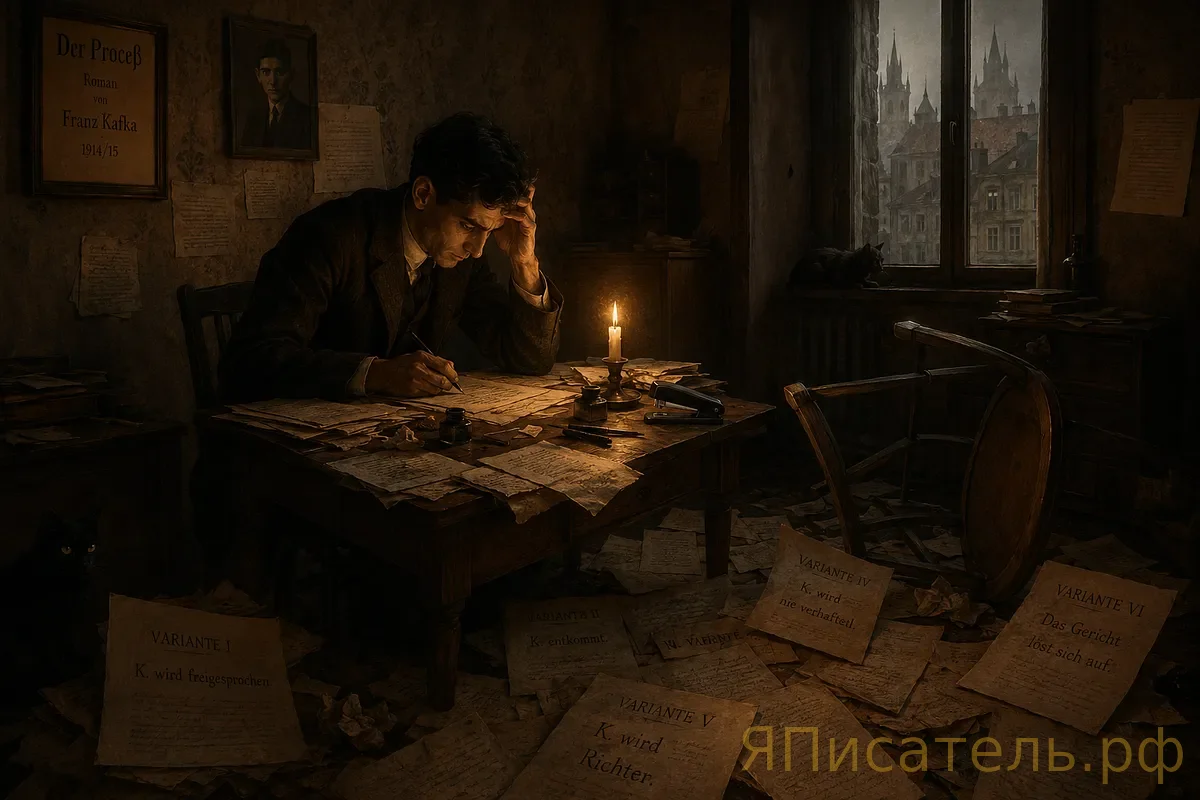
The German Literature Archive in Marbach authenticated 134 pages of Kafka's handwritten manuscript materials for The Trial, comprising variant versions, rejected passages, and editorial revisions spanning the novel's composition from 1914-1915. The manuscripts show Kafka's uncertainty about narrative structure, particularly regarding the novel's ending—multiple versions present substantially different conclusions to Josef K.'s trial. Early manuscript versions present K. with greater agency and clearer moral agency; later revisions intensify his helplessness and the trial's inscrutability. The bureaucratic absurdity that defines the published novel is gradually intensified across manuscript versions, suggesting Kafka's deliberate movement toward existential uncertainty. Margins contain Kafka's annotations questioning narrative choices, philosophical implications, and the novel's ultimate meaning. Several passages were deleted entirely: extended philosophical discussions too explicitly questioning authority, passages of greater psychological interiority than the published austere style, and narrative sections Kafka judged insufficiently ambiguous. The manuscript reveals Kafka's sophisticated understanding of modernist technique—his deliberate use of narrative distance, withholding of explanation, and refusal of conventional emotional development. Physical analysis shows evidence of multiple compositional phases, with pages revised extensively, sometimes rewritten entirely. Kafka's marginal notes reveal internal debate about the novel's publishability and its potential impact on readers.

Nothing to read? Create your own book and read it! Like I do.

Create a book
1x

"All you do is sit down at a typewriter and bleed." — Ernest Hemingway