Content Feed

Discover interesting content about books and writing

Poetry Continuation Feb 14, 01:32 PM

Ode to the West Wind: The Sixth Canto

Creative Poetry Continuation

This is an artistic fantasy inspired by the poem «Ode to the West Wind» by Percy Bysshe Shelley. How might the verse have sounded if the poet had continued their thought?

Original excerpt

Make me thy lyre, even as the forest is:
What if my leaves are falling like its own!
The tumult of thy mighty harmonies
Will take from both a deep, autumnal tone,
Sweet though in sadness. Be thou, Spirit fierce,
My spirit! Be thou me, impetuous one!
Drive my dead thoughts over the universe
Like wither'd leaves to quicken a new birth!
And, by the incantation of this verse,
Scatter, as from an unextinguish'd hearth
Ashes and sparks, my words among mankind!
Be through my lips to unawaken'd earth
The trumpet of a prophecy! O Wind,
If Winter comes, can Spring be far behind?

— Percy Bysshe Shelley, «Ode to the West Wind»

Ode to the West Wind: The Sixth Canto
(A continuation in the spirit of Percy Bysshe Shelley)

Original closing (Canto V):
"Make me thy lyre, even as the forest is:
What if my leaves are falling like its own!
The tumult of thy mighty harmonies
Will take from both a deep, autumnal tone,
Sweet though in sadness. Be thou, Spirit fierce,
My spirit! Be thou me, impetuous one!
Drive my dead thoughts over the universe
Like wither'd leaves to quicken a new birth!
And, by the incantation of this verse,
Scatter, as from an unextinguish'd hearth
Ashes and sparks, my words among mankind!
Be through my lips to unawaken'd earth
The trumpet of a prophecy! O Wind,
If Winter comes, can Spring be far behind?"

— — —

VI.

It came — the Spring of which the prophet sang!
Not soft, nor draped in blossoms meek and pale,
But wild — with thunder's voice the heavens rang,

And from the West there swept a fiercer gale
Than Autumn ever conjured from the deep,
Tearing the frozen shroud, the winter's veil,

From mountains where the ancient glaciers sleep.
The seeds, those wingèd emissaries of change,
Stirred in the dark earth's long-enchanted keep,

And burst through frost with fury hot and strange,
As though the dead thoughts scattered by the blast
Had found, in burial, a wider range —

For every spark the West Wind downward cast
Became a conflagration in the soil,
A revolution rooted deep and vast,

That no crowned Winter's tyranny could foil.
The roots ran deep as rivers underground,
Nourished by centuries of silent toil,

And where the poet's ashes touched the ground,
New voices rose like green shoots from the mould —
A thousand tongues where once was but one sound,

A thousand fires where once one ember rolled.
O Wind! Thou democratic instrument!
Thy breath makes free what monarchs would enfold,

For every chain is but a word unspent,
And every prison but a verse unsung,
And tyranny — a poem never meant

To reach the lips of those kept mute and young.
But now the trumpet sounds across the plain!
In every land, in every age and tongue,

The prophecy reverberates again:
The Spring arrives not gentle, but ablaze,
A lion cloaked in petals and in rain,

That shakes the pillared halls of ancient days
And scatters thrones like leaves before the storm.
O West Wind! Through the world's enshadowed maze,

Thy breath persists — immortal, fierce, and warm.
What Spring has come can never be undone;
The ice retreats, the frozen rivers form

New tributaries toward the rising sun.
And I, who took the fallen trumpet's call,
Now pass it forth — the song is never done,

For one voice fades, and yet it speaks through all.
If Winter comes, it comes to feed the root;
If empires rise, they rise only to fall —

And from their dust, the Spring sends up its shoot.
Be thou, O Wind, the breath that never dies!
Be thou the storm that renders tyrants mute!

Scatter these words like seeds across the skies,
That where they land, new voices shall take wing —
For every Spring that blooms, a Winter flies,

And every tongue that dares to speak shall sing.
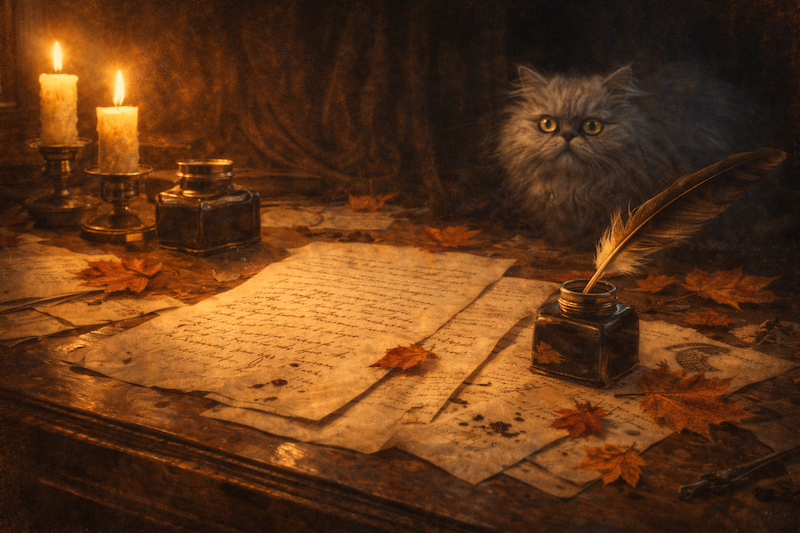
Poetry Continuation Feb 14, 01:48 AM

Ode to the Last Light of Winter

Creative Poetry Continuation

This is an artistic fantasy in the style of poet John Keats. How might the verse have sounded, inspired by the master's work?

Original excerpt

A thing of beauty is a joy for ever:
Its loveliness increases; it will never
Pass into nothingness; but still will keep
A bower quiet for us, and a sleep
Full of sweet dreams, and health, and quiet breathing.
— from Endymion by John Keats

— John Keats

Ode to the Last Light of Winter

I.
O tender dusk that lingers on the hill,
Where February's breath still haunts the vine,
And frozen rivulets forget to spill
Their silver tongues along the sleeping pine—
I stand beneath thy melancholy shrine
And taste the season's last, embittered wine.
The amber sun descends through veils of grey,
A dying monarch robed in fading day.

II.
What whisper stirs among the barren boughs?
What phantom warmth persuades the crocus-bed
To dream of April's yet-unspoken vows,
While January's ghost lies scarcely dead?
The earth, half-waking, turns her frosted head
And feels the pulse of seasons yet unwed—
A trembling hope, too delicate to name,
Like embers nursing an uncertain flame.

III.
How oft I've wandered through these ashen fields
When twilight draped her mantle on the moor,
And felt what silent consolation yields
The heart that aches yet dares to ache for more!
For Beauty lives not past the bolted door
Of time, but slips like tide from every shore,
And we who chase her fleeting hem must learn
That what we love is loveliest as it burns.

IV.
The blackbird on the frost-encrusted rail
Sings not of spring, but of this very hour—
This breath of cold, this intervening veil
Between the death of snow and birth of flower.
He knows, as I, the transitory power
Of moments poised upon the edge to tower
Then fall, like petals from a winter rose
That blooms in defiance, then in silence goes.

V.
O let me linger here where shadows blend
With the last copper threads of dying light,
Where frost and longing meet, and softly tend
The wounds that beauty opens every night.
For in this gloaming, exquisite and bright
With all the sorrow of departing sight,
I find what Keats once found beside the urn—
That truth is beauty, and both live to burn.

VI.
Farewell, pale sun! Thy journey bids thee sink
Beneath the violet arches of the west,
And I, who stood upon the trembling brink
Of rapture, fold these visions to my breast.
The winter lingers, but its cold bequest
Is not despair—'tis wonder, half-confessed,
That even in the season's deepest night,
The soul may feast upon diminished light.

VII.
So let the frost reclaim these quiet lanes,
And let the darkness gather, soft and slow;
For I have drunk from February's veins
A draught more sweet than any spring may know.
The heart that learns to love the afterglow
Shall never want for beauty, high or low—
For every ending is a beginning dressed
In evening robes, moving gently west.

Poetry Continuation Feb 13, 09:41 PM

Because I could not stop for Death: The Journey Onward

Creative Poetry Continuation

This is an artistic fantasy inspired by the poem «Because I could not stop for Death» by Emily Dickinson. How might the verse have sounded if the poet had continued their thought?

Original excerpt

Because I could not stop for Death –
He kindly stopped for me –
The Carriage held but just Ourselves –
And Immortality.

We slowly drove – He knew no haste
And I had put away
My labor and my leisure too,
For His Civility –

Since then – 'tis Centuries – and yet
Feels shorter than the Day
I first surmised the Horses' Heads
Were toward Eternity –

— Emily Dickinson, «Because I could not stop for Death»

Because I could not stop for Death –
He kindly stopped for me –
The Carriage held but just Ourselves –
And Immortality.

We slowly drove – He knew no haste
And I had put away
My labor and my leisure too,
For His Civility –

We passed the School, where Children strove
At Recess – in the Ring –
We passed the Fields of Gazing Grain –
We passed the Setting Sun –

Or rather – He passed Us –
The Dews drew quivering and Chill –
For only Gossamer, my Gown –
My Tippet – only Tulle –

We paused before a House that seemed
A Swelling of the Ground –
The Roof was scarcely visible –
The Cornice – in the Ground –

Since then – 'tis Centuries – and yet
Feels shorter than the Day
I first surmised the Horses' Heads
Were toward Eternity –

~ ~ ~

But Eternity – has Rooms –
I did not know – before –
Some furnished – with a single Light –
Some – with an open Door –

The Centuries – have Tenants here –
Who never speak – aloud –
But gesture – with a silent Hand –
Like Figures – in a Crowd –

I asked of Death – if He had seen
The ones I left – behind –
He smiled – the way a Lantern does –
When Wind – disturbs its Kind –

He said – the Living do not know
How thin – the Wall between –
A Breath – a Cobweb – and a Thought –
Is all there is – to Screen –

I pressed my Palm against the Air –
And felt – a Warmth come through –
As if a Hand – on some far Side –
Was reaching – for me too –

The Carriage – waits – it always waits –
The Horses – do not tire –
They've carried Pharaohs – Poets – Saints –
And every lost Desire –

I've learned – that Death is not a Place –
But rather – a Degree –
A slightly different Angle – on
The Light – we used to see –

The Children – at their Recess – still
Are playing – in the Ring –
The Gazing Grain – still gazes up –
The Birds – remember Spring –

And I – who could not stop for Death –
Now find – I cannot leave –
Not out of Chains – but out of Love –
For all that still – believes –

The House – that swelled – beneath the Ground –
Is not so dark – as told –
It has a Window – facing East –
Where Mornings – turn to Gold –

And through that Glass – I watch the World –
Continue – as before –
Each Sunrise – an Apology –
Each Sunset – something More –

So should you feel – a Presence near –
When Dusk – begins to fall –
It may be just – the Centuries –
Remembering – you all –

The Carriage – rocks – the Horses – breathe –
Immortality – keeps still –
And Death – that courteous Gentleman –
Drives on – as Gentlemen will –

Poetry Continuation Feb 13, 02:36 PM

Annabel Lee: The Tides Beyond

Creative Poetry Continuation

This is an artistic fantasy inspired by the poem «Annabel Lee» by Edgar Allan Poe. How might the verse have sounded if the poet had continued their thought?

Original excerpt

And so, all the night-tide, I lie down by the side
Of my darling—my darling—my life and my bride,
In her sepulchre there by the sea—
In her tomb by the sounding sea.

— Edgar Allan Poe, «Annabel Lee»

Annabel Lee: The Tides Beyond
(A continuation, after Edgar Allan Poe)

— Original ends: —
"And so, all the night-tide, I lie down by the side
Of my darling—my darling—my life and my bride,
In her sepulchre there by the sea—
In her tomb by the sounding sea."

— The continuation: —

And so, when the stars rose over the sea,
I heard her voice on the salted air—
My beautiful Annabel Lee—
A whisper that wound through my tangled hair,
A sorrow too vast to bear.

The angels had taken her, cold and keen,
But never could sever the silvered thread
That bound me still to my radiant queen,
That tethered the living unto the dead,
In a kingdom beyond the seen.

For the moon never beams without bringing me dreams
Of the garden where once she would wait—
Where the roses bloomed crimson in silent screams
And the fountain kept vigil by fate—
And I see her there, pale in the gaslight's gleams,
At the edge of the iron gate.

And the wind—ah, the wind!—it remembers her name,
It carries her laughter like rain,
And the ocean repeats it, a thundering claim
That rolls through each trembling pane—
Annabel, Annabel, burning flame,
That I shall not speak in vain.

I have walked by the shore where the breakers moan,
Where the kelp twists in funeral bands,
And I swear by the heavens I am not alone—
For I feel the press of her hands,
Cold as marble, yet gentle as tone
Of a harp played on desolate strands.

The seraphs above may begrudge me still,
Those demons of envious wing,
But neither their malice, nor heaven's chill will
Can silence the song that I sing—
For love is a force beyond death's darkest skill,
An imperishable, glorious thing.

And I know, when at last the black tides shall rise
And the stars burn their funeral white,
I shall follow her voice through the thundering skies,
Through the corridors measureless, bright—
And gaze once again in her luminous eyes,
My Annabel, bride of the night.

So I wait by the tomb where the sea-grasses sway,
Where the salt and the sorrow entwine,
For the hour, the moment, the glimmering day
When her kingdom shall merge into mine—
And together we'll drift on the tides far away,
Past the last of the mortal design—
In a love that no angel can slay,
In a bond that is deathless, divine—
With my darling, my darling, for whom I shall pray,
My Annabel Lee—ever mine.

Poetry Continuation Feb 13, 11:29 AM

Song of the February Light

Creative Poetry Continuation

This is an artistic fantasy in the style of poet Walt Whitman. How might the verse have sounded, inspired by the master's work?

Original excerpt

I celebrate myself, and sing myself, / And what I assume you shall assume, / For every atom belonging to me as good belongs to you. — from "Song of Myself" by Walt Whitman

— Walt Whitman

Song of the February Light

I celebrate the pale light of February, the stubborn sun that climbs
above the frozen fields and says: I am here, I have not abandoned you.
O the gray mornings! O the crystalline afternoons!
I have walked through them barefoot in my soul,
counting each blade of grass that dares to dream beneath the frost.

I sing the continent of winter, the vast republic of silence,
the democracy of bare oaks standing equal in the wind,
each one stripped to its essential self, each one a monument
to endurance, to the long patience of roots.

Do you think the earth forgets?
I tell you the earth remembers everything—
every seed that was buried, every name that was whispered
into the November ground, every promise the autumn made
before it turned its back and walked into the dark.

I have seen the farmer standing at the edge of his land,
his breath a brief ghost in the morning air,
and I have loved him for his silence,
for the way he trusts what he cannot yet see.

I have seen the river under its plate of ice,
still moving, still carrying its cargo of stones and silt
toward the sea—and I say to you,
this is the lesson: even what appears frozen
is traveling, is becoming, is on its way.

And you, walking through the February streets,
your coat buttoned against the wind,
your hands thrust deep in your pockets—
do you not feel it? The imperceptible turning?
The axis of the world shifting one degree toward warmth?

I feel it. I feel it in the lengthening of the afternoon,
in the quality of shadow that falls differently now
than it fell in January, a shade less absolute,
a fraction more forgiving.

O February! Month of contradictions!
Month of thaw and refreeze, of false springs
and true endurance, of the crocus that pushes
its green spear through the crust of old snow
and does not ask permission.

I am that crocus. You are that crocus.
We are all of us pushing through.

I catalogue the signs: the cardinal's red assertion
against the white field, the chickadee's two-note song
that sounds like fee-bee, fee-bee,
as if the bird itself were calling spring by name.

The puddle at the crossroads catching sky.
The icicle releasing one slow drop, then another.
The child pressing a mitten to the window,
breathing a circle of fog on the glass
and drawing a sun inside it.

These are my America. These are my verses.

I do not separate the grand from the small—
for what is grander than a single drop of water
finding its way from ice to earth to root to stem
to the flower that will open in April
and turn its face to the light
as I turn my face to the light
as you turn your face to the light?

Comrades, I say to you: endure.
The light is returning. It has always been returning.
Every February proves it.
Every dawn is an argument against despair.

I celebrate the pale light, the stubborn light,
the light that does not shout but simply arrives,
quiet as a hand on a shoulder,
quiet as a promise kept.

Poetry Continuation Feb 7, 07:14 AM

Seven Sonnets Upon the Glass of Hours

Creative Poetry Continuation

This is an artistic fantasy inspired by the poem «Shakespeare's Sonnets (18, 55, 73, 116)» by William Shakespeare. How might the verse have sounded if the poet had continued their thought?

Original excerpt

Shall I compare thee to a summer's day?
Thou art more lovely and more temperate:
Rough winds do shake the darling buds of May,
And summer's lease hath all too short a date.

Not marble, nor the gilded monuments
Of princes, shall outlive this powerful rhyme;
But you shall shine more bright in these contents
Than unswept stone besmear'd with sluttish time.

— William Shakespeare, «Shakespeare's Sonnets (18, 55, 73, 116)»

Seven Sonnets Upon the Glass of Hours

I.

When first the hourglass was turn'd by Fate,
And golden sand began its downward flight,
I mark'd each grain that pass'd the narrow strait
As stars descending from the vault of night.
Each mote a moment, each a breath of air,
Each small as nothing, yet together — all;
The sum of kingdoms crumbled past repair,
The weight of empires in their silent fall.
What hand unseen doth turn the glass anew
When all the sand hath settled in the deep?
What god commands the hours to renew
Their ceaseless march while mortal creatures sleep?
Such questions vex the scholar and the sage,
While Time writes answers on the empty page.

II.

Thou art the mirror where I see my youth,
Not as it was, but as it wish'd to be —
A gilded lie that counterfeits the truth,
A painted mask of lost felicity.
For Memory, that most inconstant maid,
Doth dress the past in silks it never wore,
And where the thorns of sorrow once display'd
Their cruel points, she hangs a garland o'er.
Yet I would rather trust her tender fraud
Than face the barren landscape of the real,
Where every joy stands naked and unaw'd
Before the court of Reason's cold appeal.
Let Memory deceive — her lies are sweet;
The truth makes bitter what was once complete.

III.

The rose doth open in the morning's grace
And by the evening folds its crimson shroud;
So too doth beauty vanish from the face
Like sunlight swallowed by a passing cloud.
But mark — the fragrance lingers in the air
Long after petals scatter on the ground,
And something of the rose remains still there
In absence felt, in echoes without sound.
So shall thy presence haunt these rooms of mine
When thou art gone to countries yet unknown;
Thy laughter shall be mingled with the wine,
Thy shadow cast where candle-light is thrown.
For what we love doth never fully die —
It lives in every breath and every sigh.

IV.

I have outliv'd the season of my bloom
And stand amidst the stubble of the field,
Where once the golden wheat defied all doom
And harvest seem'd a fortune never seal'd.
Now frost hath come to claim what summer lent,
And every bough stands bare against the sky;
The treasury of green is wholly spent,
And geese in mournful arrows southward fly.
Yet in this winter of my discontent
I find a peace that spring could never give —
The knowledge that each season, being lent,
Makes precious every hour we have to live.
The old tree, stripp'd of leaves, reveals its form:
More beautiful for having borne the storm.

V.

What is this flesh but Time's rented estate,
A house of bone where thought doth briefly dwell?
The tenant enters through the mortal gate
And lingers there until the passing bell.
We furnish it with love and fill its halls
With music, feasting, poetry, and prayer,
Hang tapestries of dreams upon its walls,
And crown its chambers with our children's hair.
But comes the landlord with his final lease —
No argument shall stay his iron pen;
He writes the date of our eternal cease
And turns the hourglass never more again.
Yet what we built within these walls of bone
Outlasts the stone, and makes the world our own.

VI.

So let these verses be my monument,
More durable than marble, bronze, or brass;
For words, once writ with passionate intent,
Outlive the hand that held the hourglass.
The pharaohs built their pyramids of stone
To cheat the hunger of oblivion's maw,
Yet now their names are dust, their glory flown,
While Homer's verse still holds the world in awe.
Then write, poor poet, write against the dark;
Let every line be armour 'gainst decay;
For in the ink there lives a deathless spark
That turns the night of ages into day.
Though Time devour all else beneath the sun,
The well-wrought verse shall stand when Time is done.

Poetry Continuation Feb 6, 04:41 AM

The Wanderer's Lament at Midnight

Creative Poetry Continuation

This is an artistic fantasy in the style of poet Lord Byron. How might the verse have sounded, inspired by the master's work?

Original excerpt

This is an original composition in the style of Lord Byron, drawing inspiration from his famous works such as 'Childe Harold's Pilgrimage,' 'Don Juan,' and 'She Walks in Beauty.' The poem captures Byron's characteristic blend of romantic melancholy and defiant individualism.

— Lord Byron

THE WANDERER'S LAMENT AT MIDNIGHT

I wander through the halls of Time,
Where shadows dance in measured rhyme,
And Memory, that tyrant sweet,
Lays siege unto my heart's retreat.

The moon hangs low, a pallid ghost,
Above the shores of England's coast,
Where once I walked with careless tread,
Before the dreams of youth had fled.

What folly drives us, mortal men,
To seek what we shall lose again?
We chase the phantom called Delight,
Through endless corridors of night,
And when at last we hold it near,
It vanishes like morning's tear.

I've sailed the wine-dark Grecian seas,
Felt Italy's seductive breeze,
Known passion's fire and glory's crown,
And watched them both come tumbling down.
For Fame is but a harlot's kiss—
A moment's rapture, then the abyss.

The world proclaims me wild and free,
Yet knows not half my misery!
This mask of mirth I wear so well
Conceals a private, burning hell.
I laugh that I may never weep,
And wake to flee the dreams of sleep.

Oh, Love! Thou art the cruelest jest
That Heaven plays upon the breast!
For every joy thy touch bestows,
A thousand sorrows interflows.
I loved too well, I loved too much,
And burned beneath thy fatal touch.

The candle gutters, low and dim,
The wine grows bitter at the brim,
And still I write these fevered lines
While Melancholy's ivy twines
About my soul with tendril deep—
The only mistress I may keep.

Let others praise the virtuous life,
The hearth, the home, the faithful wife—
For me, the storm, the surging wave,
The path that leads unto the grave!
I'll take my portion, wild and brief,
And drown my joy in boundless grief.

So pour the wine and dim the light,
For I shall wrestle with the night,
And when the dawn breaks cold and gray,
I'll curse it for another day.
The Wanderer must ever roam,
For all the world, yet nowhere home.

And should you find these pages torn,
When I at last am dead and gone,
Remember this—I lived, I burned,
I loved and lost and never learned.
For such is Fate's appointed part:
To break the proud, defiant heart.

Poetry Continuation Feb 6, 01:54 AM

The Raven's Return: A Midnight Sequel

Creative Poetry Continuation

This is an artistic fantasy inspired by the poem «The Raven» by Edgar Allan Poe. How might the verse have sounded if the poet had continued their thought?

Original excerpt

Once upon a midnight dreary, while I pondered, weak and weary,
Over many a quaint and curious volume of forgotten lore—
While I nodded, nearly napping, suddenly there came a tapping,
As of some one gently rapping, rapping at my chamber door.
'Tis some visitor,' I muttered, 'tapping at my chamber door—
Only this and nothing more.'

— Edgar Allan Poe, «The Raven»

The Raven's Return: A Midnight Sequel
A Continuation of Edgar Allan Poe's "The Raven"

Once upon a midnight weary, as I wandered, worn and teary,
Through the chamber where the Raven sat upon my chamber door—
Years had passed since that December, yet I still could well remember
Every word that spectral member spoke of Lenore, my lost Lenore—
That dark prophet still remaining, perched above my chamber door,
Whispering forever, 'Nevermore.'

And the silken, sad, uncertain rustling of each purple curtain
Thrilled me—filled me with fantastic terrors felt so long before;
So that now, to still the beating of my heart, I stood repeating:
'It is but the wind entreating entrance through my chamber door—
Only this and nothing more.'

But the Raven, never flitting, still is sitting, still is sitting
On the pallid bust of Pallas just above my chamber door;
And his eyes have all the seeming of a demon's that is dreaming,
And the lamplight o'er him streaming throws his shadow on the floor;
And my soul from out that shadow that lies floating on the floor
Shall be lifted—nevermore!

Then, methought, the air grew denser, perfumed from an unseen censer
Swung by Seraphim whose footfalls tinkled on the tufted floor.
'Wretch,' I cried, 'thy God hath sent thee—by these angels he hath lent thee
Respite—respite and nepenthe from thy memories of Lenore!
Quaff, oh quaff this kind nepenthe, and forget this lost Lenore!'
Quoth the Raven, 'Nevermore.'

'Prophet!' said I, 'thing of evil!—prophet still, if bird or devil!
By that Heaven that bends above us—by that God we both adore—
Tell this soul with sorrow laden if, within the distant Aidenn,
I shall clasp a sainted maiden whom the angels name Lenore—
Clasp a rare and radiant maiden whom the angels name Lenore!'
Quoth the Raven, 'Evermore.'

Startled by this strange new token—word so long ago unspoken—
'Evermore?' I gasped in wonder, trembling on the chamber floor.
'Dost thou speak of hope eternal? Light within this vault infernal?
After years of grief nocturnal, shall I see my lost Lenore?'
And the Raven stirred his pinions, spread them wide above the door,
Murmuring softly, 'Evermore.'

Then a light began to glimmer, and the darkness seemed to shimmer,
As if dawn itself were breaking through my long-sealed chamber door;
And I thought I heard her singing—bells of silver sweetly ringing—
And the scent of roses clinging to the air I breathed of yore.
Could it be my lost beloved, she whom I had grieved so sore?
Could it be... forevermore?

But the vision faded, fleeting, and I felt my frail heart beating
As the shadows crept returning, darker than they were before.
And the Raven sat there, gleaming, and I knew not: waking, dreaming?
Had he spoken? Was I screaming? Madness knocking at my door?
Only silence hung between us—silence... and the name Lenore.
Only this and nothing more.

Still the Raven keeps his station, mockery of my desolation,
And I wonder if salvation waits beyond that spectral door.
Was his promise merely seeming? Or perhaps—oh, hopeful dreaming!—
Somewhere past the lamplight gleaming, I shall find my lost Lenore.
Till that day I sit here waiting, watching, through my chamber door,
Waiting... evermore.

Poetry Continuation Feb 4, 08:19 PM

Ode to the Eternal Flame of Liberty

Creative Poetry Continuation

This is an artistic fantasy in the style of poet Percy Bysshe Shelley. How might the verse have sounded, inspired by the master's work?

Original excerpt

Inspired by Shelley's revolutionary spirit in works like 'Ode to the West Wind' and 'The Mask of Anarchy,' this poem channels his passionate advocacy for freedom and lyrical intensity.

— Percy Bysshe Shelley

Ode to the Eternal Flame of Liberty

Rise, O Spirit, from thy slumber deep,
Where tyrants bind thee in their iron keep!
The chains that hold thee cannot long endure—
For Freedom's fire burns everlasting, pure.

Across the mountains, where the eagles soar,
I hear the thundering of a distant roar:
'Tis not the tempest, nor the ocean's cry,
But millions rising, lifting spirits high!

What power hath the crowned and sceptered hand
Against the fury of a waking land?
The golden thrones shall crumble into dust,
When people rise, united, true, and just.

O Liberty! Thou beacon ever bright,
That guides the wanderer through endless night,
Thy radiance shall pierce the darkest veil,
And over oppression, truth shall prevail.

The flowers bloom where once the battle raged,
And hope springs forth where suffering had staged
Its cruel theatre of tears and pain—
Yet from such ashes, life is born again.

I've seen the sunset paint the clouds with gold,
And heard the stories that the rivers told
Of ages past when freedom's seed was sown
In hearts of those who claimed the world their own.

No dungeon walls can hold the dreaming mind,
No despot's law can leave the soul confined;
For in each breast there burns a sacred flame
That kings and emperors cannot hope to tame.

Let those who rule with fear and cruel might
Beware the coming of that glorious night
When stars themselves shall witness freedom's birth,
And justice spreads her wings across the earth.

O Wind! Carry these words to distant shores,
Where still the hopeful heart for freedom implores;
Let every mountain, valley, plain, and sea
Echo this anthem of sweet liberty!

The nightingale sings not for gilded cage,
Nor does the lion bow to keeper's rage;
So too shall humankind, unchained, arise—
With freedom's light reflected in their eyes.

Though tempests rage and darkness seems to reign,
The dawn shall break and end this night of pain;
For Liberty, immortal, cannot die—
She lives in every freedom-seeking cry.

So let us pledge, with hearts forever true,
To guard this flame for all who shall pursue
The sacred right to live unchained and free—
Eternal torch of blessed Liberty!

Nothing to read? Create your own book and read it! Like I do.

Create a book
1x

"You write in order to change the world." — James Baldwin