Content Feed

Discover interesting content about books and writing

Poetry Continuation Feb 14, 01:32 PM

Ode to the West Wind: The Sixth Canto

Creative Poetry Continuation

This is an artistic fantasy inspired by the poem «Ode to the West Wind» by Percy Bysshe Shelley. How might the verse have sounded if the poet had continued their thought?

Original excerpt

Make me thy lyre, even as the forest is:
What if my leaves are falling like its own!
The tumult of thy mighty harmonies
Will take from both a deep, autumnal tone,
Sweet though in sadness. Be thou, Spirit fierce,
My spirit! Be thou me, impetuous one!
Drive my dead thoughts over the universe
Like wither'd leaves to quicken a new birth!
And, by the incantation of this verse,
Scatter, as from an unextinguish'd hearth
Ashes and sparks, my words among mankind!
Be through my lips to unawaken'd earth
The trumpet of a prophecy! O Wind,
If Winter comes, can Spring be far behind?

— Percy Bysshe Shelley, «Ode to the West Wind»

Ode to the West Wind: The Sixth Canto
(A continuation in the spirit of Percy Bysshe Shelley)

Original closing (Canto V):
"Make me thy lyre, even as the forest is:
What if my leaves are falling like its own!
The tumult of thy mighty harmonies
Will take from both a deep, autumnal tone,
Sweet though in sadness. Be thou, Spirit fierce,
My spirit! Be thou me, impetuous one!
Drive my dead thoughts over the universe
Like wither'd leaves to quicken a new birth!
And, by the incantation of this verse,
Scatter, as from an unextinguish'd hearth
Ashes and sparks, my words among mankind!
Be through my lips to unawaken'd earth
The trumpet of a prophecy! O Wind,
If Winter comes, can Spring be far behind?"

— — —

VI.

It came — the Spring of which the prophet sang!
Not soft, nor draped in blossoms meek and pale,
But wild — with thunder's voice the heavens rang,

And from the West there swept a fiercer gale
Than Autumn ever conjured from the deep,
Tearing the frozen shroud, the winter's veil,

From mountains where the ancient glaciers sleep.
The seeds, those wingèd emissaries of change,
Stirred in the dark earth's long-enchanted keep,

And burst through frost with fury hot and strange,
As though the dead thoughts scattered by the blast
Had found, in burial, a wider range —

For every spark the West Wind downward cast
Became a conflagration in the soil,
A revolution rooted deep and vast,

That no crowned Winter's tyranny could foil.
The roots ran deep as rivers underground,
Nourished by centuries of silent toil,

And where the poet's ashes touched the ground,
New voices rose like green shoots from the mould —
A thousand tongues where once was but one sound,

A thousand fires where once one ember rolled.
O Wind! Thou democratic instrument!
Thy breath makes free what monarchs would enfold,

For every chain is but a word unspent,
And every prison but a verse unsung,
And tyranny — a poem never meant

To reach the lips of those kept mute and young.
But now the trumpet sounds across the plain!
In every land, in every age and tongue,

The prophecy reverberates again:
The Spring arrives not gentle, but ablaze,
A lion cloaked in petals and in rain,

That shakes the pillared halls of ancient days
And scatters thrones like leaves before the storm.
O West Wind! Through the world's enshadowed maze,

Thy breath persists — immortal, fierce, and warm.
What Spring has come can never be undone;
The ice retreats, the frozen rivers form

New tributaries toward the rising sun.
And I, who took the fallen trumpet's call,
Now pass it forth — the song is never done,

For one voice fades, and yet it speaks through all.
If Winter comes, it comes to feed the root;
If empires rise, they rise only to fall —

And from their dust, the Spring sends up its shoot.
Be thou, O Wind, the breath that never dies!
Be thou the storm that renders tyrants mute!

Scatter these words like seeds across the skies,
That where they land, new voices shall take wing —
For every Spring that blooms, a Winter flies,

And every tongue that dares to speak shall sing.
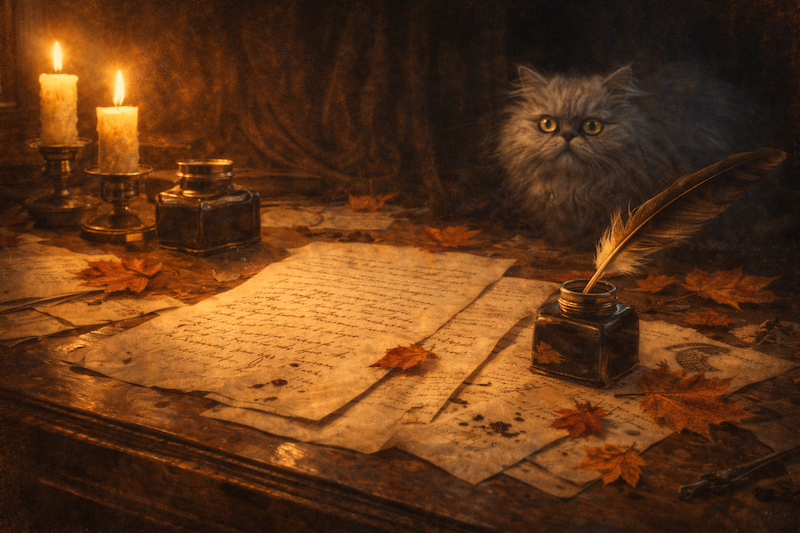
Poetry Continuation Feb 14, 01:48 AM

Ode to the Last Light of Winter

Creative Poetry Continuation

This is an artistic fantasy in the style of poet John Keats. How might the verse have sounded, inspired by the master's work?

Original excerpt

A thing of beauty is a joy for ever:
Its loveliness increases; it will never
Pass into nothingness; but still will keep
A bower quiet for us, and a sleep
Full of sweet dreams, and health, and quiet breathing.
— from Endymion by John Keats

— John Keats

Ode to the Last Light of Winter

I.
O tender dusk that lingers on the hill,
Where February's breath still haunts the vine,
And frozen rivulets forget to spill
Their silver tongues along the sleeping pine—
I stand beneath thy melancholy shrine
And taste the season's last, embittered wine.
The amber sun descends through veils of grey,
A dying monarch robed in fading day.

II.
What whisper stirs among the barren boughs?
What phantom warmth persuades the crocus-bed
To dream of April's yet-unspoken vows,
While January's ghost lies scarcely dead?
The earth, half-waking, turns her frosted head
And feels the pulse of seasons yet unwed—
A trembling hope, too delicate to name,
Like embers nursing an uncertain flame.

III.
How oft I've wandered through these ashen fields
When twilight draped her mantle on the moor,
And felt what silent consolation yields
The heart that aches yet dares to ache for more!
For Beauty lives not past the bolted door
Of time, but slips like tide from every shore,
And we who chase her fleeting hem must learn
That what we love is loveliest as it burns.

IV.
The blackbird on the frost-encrusted rail
Sings not of spring, but of this very hour—
This breath of cold, this intervening veil
Between the death of snow and birth of flower.
He knows, as I, the transitory power
Of moments poised upon the edge to tower
Then fall, like petals from a winter rose
That blooms in defiance, then in silence goes.

V.
O let me linger here where shadows blend
With the last copper threads of dying light,
Where frost and longing meet, and softly tend
The wounds that beauty opens every night.
For in this gloaming, exquisite and bright
With all the sorrow of departing sight,
I find what Keats once found beside the urn—
That truth is beauty, and both live to burn.

VI.
Farewell, pale sun! Thy journey bids thee sink
Beneath the violet arches of the west,
And I, who stood upon the trembling brink
Of rapture, fold these visions to my breast.
The winter lingers, but its cold bequest
Is not despair—'tis wonder, half-confessed,
That even in the season's deepest night,
The soul may feast upon diminished light.

VII.
So let the frost reclaim these quiet lanes,
And let the darkness gather, soft and slow;
For I have drunk from February's veins
A draught more sweet than any spring may know.
The heart that learns to love the afterglow
Shall never want for beauty, high or low—
For every ending is a beginning dressed
In evening robes, moving gently west.

Poetry Continuation Feb 6, 04:41 AM

The Wanderer's Lament at Midnight

Creative Poetry Continuation

This is an artistic fantasy in the style of poet Lord Byron. How might the verse have sounded, inspired by the master's work?

Original excerpt

This is an original composition in the style of Lord Byron, drawing inspiration from his famous works such as 'Childe Harold's Pilgrimage,' 'Don Juan,' and 'She Walks in Beauty.' The poem captures Byron's characteristic blend of romantic melancholy and defiant individualism.

— Lord Byron

THE WANDERER'S LAMENT AT MIDNIGHT

I wander through the halls of Time,
Where shadows dance in measured rhyme,
And Memory, that tyrant sweet,
Lays siege unto my heart's retreat.

The moon hangs low, a pallid ghost,
Above the shores of England's coast,
Where once I walked with careless tread,
Before the dreams of youth had fled.

What folly drives us, mortal men,
To seek what we shall lose again?
We chase the phantom called Delight,
Through endless corridors of night,
And when at last we hold it near,
It vanishes like morning's tear.

I've sailed the wine-dark Grecian seas,
Felt Italy's seductive breeze,
Known passion's fire and glory's crown,
And watched them both come tumbling down.
For Fame is but a harlot's kiss—
A moment's rapture, then the abyss.

The world proclaims me wild and free,
Yet knows not half my misery!
This mask of mirth I wear so well
Conceals a private, burning hell.
I laugh that I may never weep,
And wake to flee the dreams of sleep.

Oh, Love! Thou art the cruelest jest
That Heaven plays upon the breast!
For every joy thy touch bestows,
A thousand sorrows interflows.
I loved too well, I loved too much,
And burned beneath thy fatal touch.

The candle gutters, low and dim,
The wine grows bitter at the brim,
And still I write these fevered lines
While Melancholy's ivy twines
About my soul with tendril deep—
The only mistress I may keep.

Let others praise the virtuous life,
The hearth, the home, the faithful wife—
For me, the storm, the surging wave,
The path that leads unto the grave!
I'll take my portion, wild and brief,
And drown my joy in boundless grief.

So pour the wine and dim the light,
For I shall wrestle with the night,
And when the dawn breaks cold and gray,
I'll curse it for another day.
The Wanderer must ever roam,
For all the world, yet nowhere home.

And should you find these pages torn,
When I at last am dead and gone,
Remember this—I lived, I burned,
I loved and lost and never learned.
For such is Fate's appointed part:
To break the proud, defiant heart.

Nothing to read? Create your own book and read it! Like I do.

Create a book
1x

"All you do is sit down at a typewriter and bleed." — Ernest Hemingway