Active Dialogue in Russian Prose
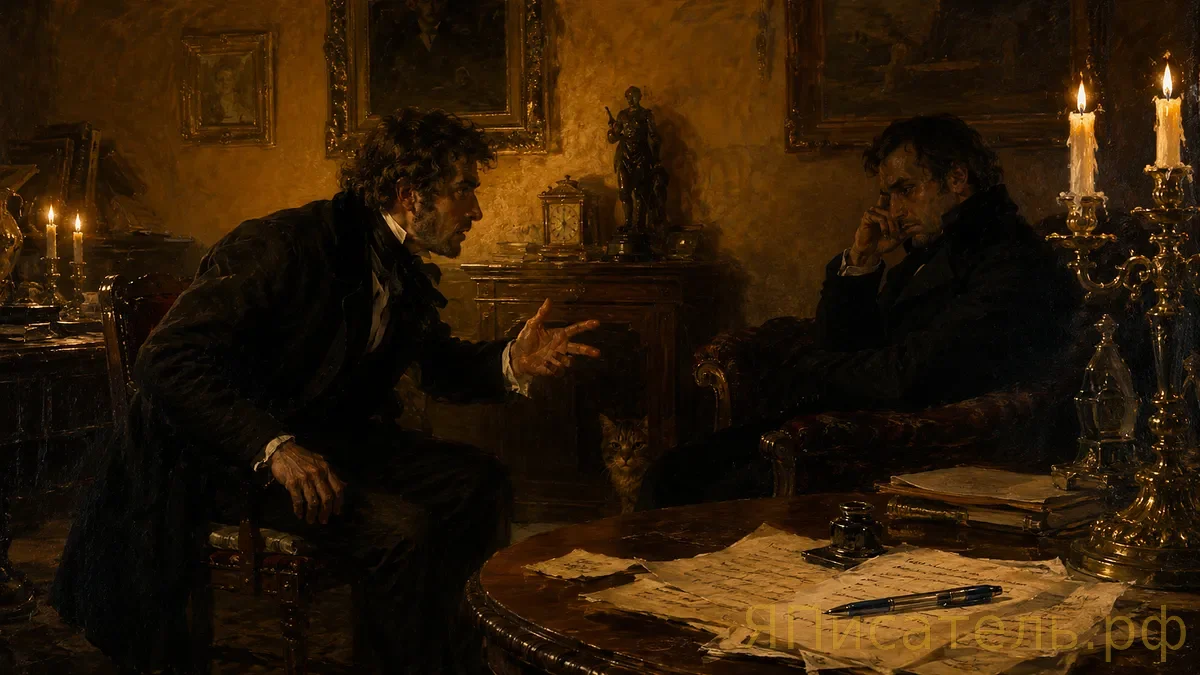
Master the art of using dialogue as a vehicle for character revelation and narrative progression in Russian literature. Active dialogue advances plot while revealing internal conflict through what characters say, don't say, and how they speak.
Dialogue in Russian prose serves multiple functions simultaneously: it reveals character psychology, advances the narrative, and creates rhythm through natural speech patterns. Unlike exposition, active dialogue shows rather than tells—a character's refusal to answer reveals more than any explanation could. Russian writers like Dostoevsky employed dialogue to expose internal contradictions, having characters argue both sides of philosophical debates. The technique requires careful attention to individuality: each character must speak distinctly, using vocabulary, sentence structure, and rhythm that reflects their social position, education, and emotional state. Active dialogue avoids the trap of identical voices or exposition-heavy exchanges where characters tell each other things they already know. Instead, it creates subtext—what lies beneath the words. A single line of dialogue can alter the entire meaning of a scene depending on tone and context. The pacing of dialogue matters too; short exchanges create tension, while longer monologues build philosophical weight. Russian prose masters understood that silence between characters speaks as loudly as words, and what characters refuse to discuss often matters more than what they openly debate.

Loading comments...