Content Feed

Discover interesting content about books and writing

Article Feb 14, 02:14 AM

Your Brain Picks Books in 3 Seconds — And the Cover Does All the Talking

"Don't judge a book by its cover" is the most repeated — and most ignored — piece of advice in literary history. And for good reason: it's terrible advice. Every single day, millions of readers walk into bookstores and make purchasing decisions in under three seconds. That's not a moral failing. That's evolution, marketing, and surprisingly good taste working in perfect harmony.

Here's a dirty little secret the publishing industry knows but rarely says out loud: covers sell books more reliably than reviews, word-of-mouth, or even the author's name. A 2016 study by The Codex Group found that 79% of book buyers said the cover design played a decisive role in their purchase. Not "some role." Decisive. Your English teacher lied to you. We judge books by covers, and we're spectacularly good at it.

Consider the most famous cover redesign in modern publishing. When Bloomsbury first released "Harry Potter and the Philosopher's Stone" in 1997, the original Thomas Taylor illustration showed a cartoonish boy near a train. It was charming, but it screamed "children's book." When adults started reading it on trains — hiding the covers behind newspapers, embarrassed — Bloomsbury released "adult editions" with sleek, photographic, minimalist covers. Same exact words inside. But suddenly, grown professionals could read Harry Potter in public without shame. The cover didn't change the story. It changed who felt permission to read it.

Or take the curious case of "The Great Gatsby." Francis Cugat painted that iconic cover — the disembodied eyes and lips floating over a dark blue carnival skyline — before Fitzgerald even finished writing the novel. Fitzgerald loved it so much that he actually wrote the image into the book. The celestial eyes of Doctor T.J. Eckleburg on that billboard? Inspired by the cover art. Think about that: one of the most analyzed symbols in American literature exists because a cover designer got to the manuscript first. The cover didn't just sell the book. It shaped the book.

Now let's talk about what covers actually communicate, because this is where the "don't judge" crowd gets it wrong. A cover is not decoration. It's a contract. It tells you the genre, the tone, the ambition level, and the target audience — all in a single glance. A thriller with embossed gold lettering and a shadowy figure promises you a specific kind of Saturday night. A novel with a pastel watercolor and handwritten font promises something entirely different. When these visual contracts are broken — when a literary novel gets a romance cover, or a serious history book looks like a self-help pamphlet — readers feel genuinely betrayed. And they should.

Chip Kidd, arguably the most influential book cover designer alive, put it perfectly: "A book cover is a distillation. It is a haiku of the story." Kidd designed the cover for Michael Crichton's "Jurassic Park" — that stark T-Rex skeleton on a white background. Steven Spielberg liked the design so much he used it as the movie logo. One designer's interpretation of a novel became the visual identity of a multi-billion-dollar franchise. Still think covers don't matter?

The economics are brutal and honest. Publishers spend anywhere from $2,000 to $30,000 on a single cover design for a major release. Self-published authors who cheap out on covers — using stock photos, bad typography, amateur Photoshop — see their sales crater regardless of the writing quality. Data from BookBub and other promotion platforms consistently shows that a professional cover redesign can increase sales by 50 to 300 percent. Same book. Same words. Different wrapper. Wildly different results.

And here's what makes this truly fascinating rather than depressing: readers who judge by covers aren't being shallow. They're being efficient. In a world where roughly 4 million books are published every year, you physically cannot read sample chapters of everything. Your brain has developed remarkably accurate heuristics for filtering signal from noise, and cover design is one of the most reliable signals available. A well-designed cover tells you that someone — an agent, an editor, a publisher, a designer — invested real thought and real money into this project. That's not a guarantee of quality, but it's a strong indicator that the book passed through multiple gates of professional judgment.

Let me give you a practical framework, because this isn't just trivia — it's a survival skill for modern readers. When you look at a cover, ask three questions. First: does the typography match the genre? Serif fonts signal literary fiction, history, and serious nonfiction. Sans-serif with bold colors signals commercial fiction, business, and self-help. Handwritten or script fonts signal memoir, romance, and lifestyle. If the font doesn't match the genre, someone made a mistake. Second: is the design consistent with other successful books in this category? A cover that looks nothing like its peers is either brilliantly innovative or tragically uninformed, and the odds favor the latter. Third: does the cover make a specific promise? Vague, generic covers usually indicate vague, generic content.

The self-publishing revolution has made this skill more important, not less. When anyone can upload a manuscript to Amazon in twenty minutes, the cover becomes your primary quality filter. Dozens of avid readers openly admit they skip any Kindle book with a cover that looks like it was made in Microsoft Paint. Are they missing some hidden gems? Probably. But they're also avoiding thousands of unedited, unproofread manuscripts that would waste their time. The math works out in their favor.

There's a counterargument worth addressing: some genuinely great books have had terrible covers. The early editions of Philip K. Dick's novels looked like bargain-bin pulp, which contributed to decades of literary snobbery against his work. Ursula K. Le Guin's "The Left Hand of Darkness" was saddled with a cover featuring a half-naked woman who doesn't appear anywhere in the novel. These are real injustices. But they prove the point rather than refuting it: bad covers actively harmed these books' reputations. The lesson isn't that covers don't matter. The lesson is that they matter so much that getting them wrong is a form of literary sabotage.

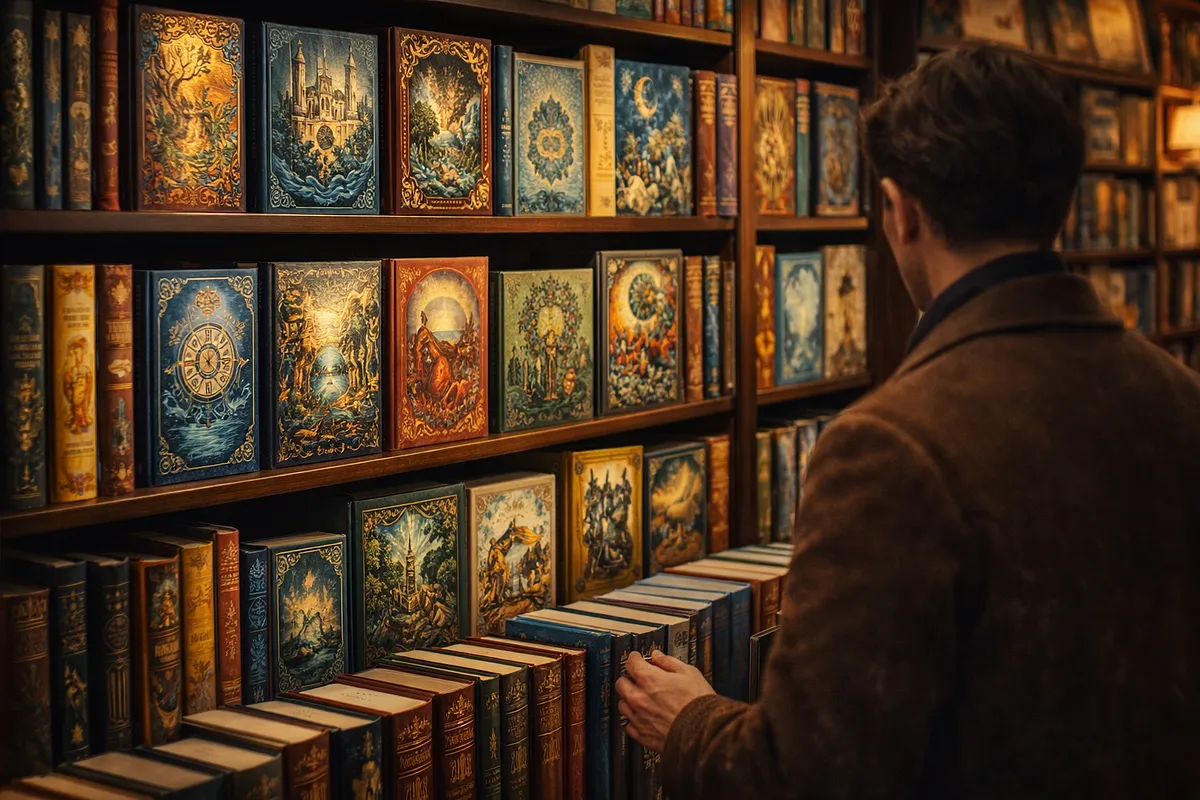
So here's my advice, and I'm completely serious: judge books by their covers. Do it consciously. Do it deliberately. Train your eye to read the visual language of publishing. When you walk into a bookstore, let your gut reactions guide your first pass. Pick up the books that catch your eye. Put down the ones that don't. You have roughly 80 years on this planet, and there are more good books than you could read in a thousand lifetimes. Your cover instincts are a gift — a pattern-recognition superpower honed by years of visual culture. Use them without guilt.

The proverb should have been: "Don't judge a book only by its cover." That word — only — changes everything. Of course you should also read reviews, check the first page, and ask friends. But the cover? The cover is where the conversation starts. And anyone who tells you otherwise is probably trying to sell you a book with a terrible one.
Article Feb 6, 11:12 PM

Your Brain Decides in 3 Seconds — And Book Publishers Know It

We've been told since childhood: don't judge a book by its cover. It's one of those proverbs that sounds wise until you realize the entire publishing industry spends billions proving otherwise. Here's the uncomfortable truth — you absolutely should judge books by their covers, and the smartest readers already do.

A cover isn't decoration. It's a contract between the publisher and you. It tells you the genre, the tone, the ambition level, and whether the people behind this book actually cared enough to invest in its presentation. When a publisher slaps a stock photo and a default font on a novel, they're not being humble — they're telling you they didn't believe in this book enough to spend the money. And if they don't believe in it, why should you?

Let's talk numbers. In 2023, the Book Industry Study Group reported that cover design is the single biggest factor in impulse book purchases, outranking author name, blurbs, and even recommendations. A study by The Codex Group found that 79% of readers say cover design significantly influenced their decision to pick up a book. Three seconds — that's how long you have in a bookstore before the brain sorts a book into "interesting" or "invisible." Publishers know this. Chip Kidd, the legendary designer behind Michael Crichton's Jurassic Park cover — that iconic skeleton silhouette — once said: "A book cover is a distillation. It's a haiku of the story." And he was right.

Consider the most famous cover redesign in history. When Penguin relaunched its classics line in the early 2000s with those gorgeous Coralie Bickford-Smith cloth-bound editions — the ones with intricate foil patterns — sales of Victorian literature jumped by 40%. Same books. Same words inside. Jane Austen didn't write a single new sentence. But suddenly, people wanted to own Pride and Prejudice again. The cover didn't just sell the book; it transformed it into a cultural object, a piece of furniture for your shelf. That's not shallow. That's brilliant design doing exactly what it should.

Now flip the coin. Remember when Bloomsbury published the first Harry Potter book in 1997? The original UK cover by Thomas Taylor showed a cartoon Harry standing near the Hogwarts Express. It was fine — friendly, approachable, clearly a children's book. But when they wanted adults to read it too, they commissioned a second cover line: sleek, photographic, moody. Same story about a boy wizard. Two entirely different audiences reached through cover design alone. J.K. Rowling didn't have to change a word. The cover did all the heavy lifting.

Here's where it gets really practical. If you're browsing a bookstore — physical or digital — and you see a thriller with a dark, high-contrast cover featuring a lone figure, sharp sans-serif typography, and a one-word title, your brain already knows what it's getting. That visual grammar exists because publishers have spent decades refining it. A romance novel with pastel tones and script fonts. A literary fiction title with an abstract painting and tasteful spacing. A sci-fi paperback with metallic lettering and a spaceship. These aren't accidents. They're a language, and learning to read it makes you a smarter consumer.

So here's your concrete advice. First: trust the cover grammar. If something looks like a thriller, reads like a thriller on the back, and is shelved with thrillers — it's a thriller. Publishers rarely lie about genre through design because it backfires catastrophically. Second: beware the generic cover. If a book looks like it was designed in Microsoft Word — centered title, author name in Times New Roman, a vaguely relevant stock image — that's a red flag. It doesn't mean the writing is bad, but it means nobody with resources and expertise backed this project. Third: pay attention to redesigns. When a publisher invests in a new cover for an old book, they're signaling renewed confidence. The 2014 redesign of Donna Tartt's The Secret History with that stark marble bust became almost as iconic as the novel itself, and it pulled in an entirely new generation of readers.

The self-publishing revolution made all of this even more critical. When Amazon's Kindle store exploded in the 2010s, suddenly millions of books competed for attention in thumbnail-sized images. The authors who understood cover design thrived. Mark Dawson, one of the most successful indie authors, has spoken openly about spending $2,000-$3,000 per cover because he knows the ROI is massive. Meanwhile, countless talented writers languish in obscurity because their cousin "who's good with Photoshop" designed something that screams amateur from fifty pixels away.

There's also the counterargument worth addressing. "But what about great books with terrible covers?" Sure, they exist. The original American cover of A Clockwork Orange was so bland that most people don't even know what it looked like. But here's the thing — that book succeeded despite its cover, not because publishers were right to ignore design. And when they finally gave it a proper cover — that menacing bowler-hatted figure — sales climbed again. Bad covers don't kill great books, but great covers absolutely resurrect forgotten ones.

Let me give you one more example that should settle this debate. In 2012, designer Peter Mendelsund redesigned the covers for Kafka's collected works. His interpretation — fragmented faces, disorienting perspectives, stark black and white — didn't just sell books. It changed how a new generation understood Kafka. People who'd never read The Trial picked it up because the cover made them feel something before they'd read a single word. That's not superficiality. That's communication at its most efficient.

So stop feeling guilty about it. Judging a book by its cover isn't lazy — it's literate. You're reading a visual text that dozens of professionals crafted specifically to communicate with you. The designer, the art director, the marketing team, the editor — they all agreed on that image, that font, that color. When you respond to it, you're not being shallow. You're being exactly the reader they designed it for. The only people who tell you not to judge a book by its cover are people who've never had to sell one.

Article Jan 17, 01:02 PM

Stop Pretending You Don't Judge Books by Their Covers – You Do, I Do, and Publishers Spend Millions Counting On It

Stop Pretending You Don't Judge Books by Their Covers – You Do, I Do, and Publishers Spend Millions Counting On It

Here's a dirty little secret the literary world doesn't want to admit: that old saying about not judging books by covers? It's garbage advice, and everyone knows it. Every single reader, from the snootiest literature professor to the teenager grabbing a paperback at the airport, makes snap judgments based on covers. And here's the kicker – we're absolutely right to do it.

Think about it. When you walk into a bookstore or scroll through Amazon, you're faced with thousands of options. You don't have time to read the first chapter of every book. Your brain needs shortcuts, and covers are the most efficient filter ever invented. Publishers know this. They spend anywhere from $2,000 to $30,000 on a single cover design, and for bestseller hopefuls, that number can skyrocket. They're not doing this for charity. They're doing it because covers sell books, period.

Let's talk about one of the most famous cover redesigns in publishing history. When Penguin decided to rebrand the Twilight series in 2009, they slapped a simple black cover with a red ribbon on it. Sales jumped. The original covers with the apple and chess pieces were fine, but this minimalist approach signaled sophistication to readers who were embarrassed to be caught reading vampire romance. The content inside? Exactly the same. The perception? Completely transformed. That's the power of design.

Here's where it gets really interesting. Chip Kidd, the legendary book cover designer who created the iconic Jurassic Park cover with the T-Rex skeleton, once said that a cover is a "visual distillation" of thousands of pages. He's right. A good cover tells you what kind of reading experience awaits. Pastel colors with whimsical fonts? You're getting light contemporary fiction. Dark, moody photography with sans-serif text? Thriller territory. Gold embossed lettering on a navy background? Historical fiction or literary pretension. These aren't accidents. They're visual contracts between publisher and reader.

Now, some people will argue that judging by covers makes you miss hidden gems. Sure, that happens occasionally. But let's be practical here. If a publisher doesn't care enough to give their book a decent cover, what does that tell you about their investment in the whole package? A bad cover often signals rushed production, minimal marketing budget, or a fundamental misunderstanding of the target audience. None of these are good signs for the content inside.

Consider the curious case of E.L. James's Fifty Shades of Grey. The original cover was a simple gray tie on a gray background. Nothing fancy. But it communicated something crucial: this isn't romance as usual. The understated design allowed readers to carry it in public without screaming "I'm reading erotica!" Meanwhile, the content was about as subtle as a sledgehammer. That cover made the phenomenon possible. Would millions of women have bought it if it featured a shirtless man in leather pants? Probably not as openly.

Here's your practical takeaway, and this is actionable advice you can use today: train yourself to read covers like a language. Look at the fonts. Serif fonts (the ones with little feet on the letters) typically signal traditional, literary, or historical content. Sans-serif fonts suggest modern, commercial, or genre fiction. Notice the colors. Romance uses warm tones. Thrillers favor dark palettes with splashes of red. Young adult fiction loves gradients and bold typography. The images matter too – illustrated covers often indicate lighter fare, while photography suggests realism or intensity.

The placement of the author's name tells you everything about their market position. Is the author's name bigger than the title? You're looking at a brand-name author where the name itself sells books – think Stephen King, James Patterson, or Nora Roberts. Is the name tucked away in modest lettering at the bottom? Debut author or midlist writer, though the book might be brilliant. Award seals and blurbs on the front cover indicate the publisher is leaning on external validation, which can mean they're not confident the cover alone does the job.

Let me give you another example that proves covers matter more than content sometimes. In 2011, publisher Bloomsbury released two versions of Justine Larbalestier's novel Liar – one with a white girl on the cover, one with a black girl. The protagonist in the book is explicitly black. The version with the white girl was released first and became controversial precisely because readers understood that covers communicate promises. The publisher eventually fixed it, but the damage was done. This wasn't just about representation; it was about the fundamental trust between cover and reader.

So what should you actually do with this information? First, stop feeling guilty about judging covers. You're not being shallow; you're being efficient. Second, use covers as your first filter, not your only one. A great cover gets a book into your hands; the first page determines if it stays there. Third, when you find yourself drawn to a cover, ask yourself why. Understanding your own visual preferences helps you find more books you'll love.

And for any aspiring writers reading this: invest in your cover. Seriously. That DIY design you made in Canva isn't fooling anyone. Professional cover design is the difference between being taken seriously and being scrolled past. Your words might be poetry, but if your cover screams "self-published in 2008," nobody will ever read them.

The truth is, covers are the most honest form of marketing in publishing. Unlike blurbs written by authors' friends or reviews that might be compromised, a cover is a direct visual argument for what the book is. When that argument is made well, readers respond. When it's made poorly, they move on. We judge books by covers because covers are designed to be judged. The entire industry depends on it. So next time someone tries to shame you for picking up a book because it was pretty, tell them you're just a sophisticated consumer responding to intentional design choices. Then buy the book, and don't feel bad about it for a second.

Nothing to read? Create your own book and read it! Like I do.

Create a book
1x

"Writing is thinking. To write well is to think clearly." — Isaac Asimov