Julio Cortázar: The Man Who Taught Literature to Do Backflips (And Why We're Still Dizzy)
Forty-two years ago, a lanky Argentine with the face of a melancholic jazz musician and the mind of a literary arsonist slipped away from this world. Julio Cortázar died in Paris on February 12, 1984, leaving behind a body of work that still makes readers question whether they're holding the book or the book is holding them. If you've never read him, congratulations—you're about to discover why your favorite 'experimental' novelist is basically a cover band.
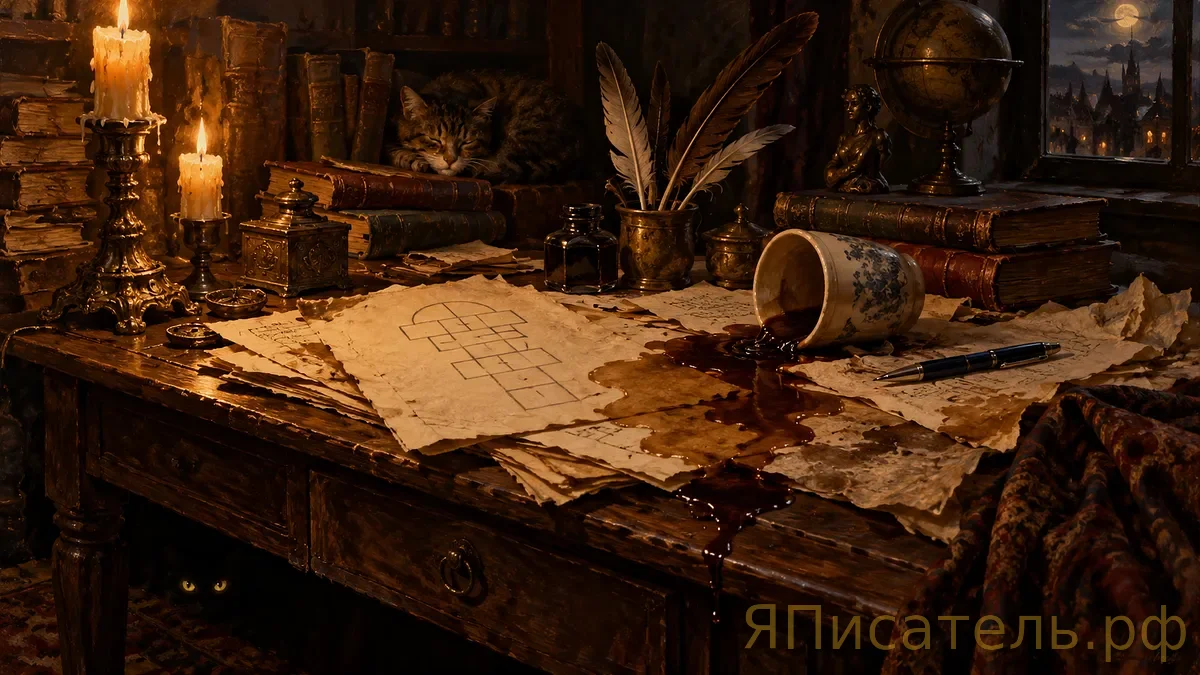
Let's start with the elephant in the room: Hopscotch. Published in 1963, this novel came with instructions to read it in two different orders—or any order you damn well please. Cortázar essentially handed readers a literary Rubik's cube and said, 'Figure it out yourself, I'm going to smoke and look mysterious.' The audacity! Imagine publishing a book today with a note that says, 'Start at chapter 73, then jump to 1, or don't, I'm not your mother.' Publishers would have a collective aneurysm. Yet this madness spawned an entire generation of writers who thought, 'Wait, we can DO that?'
But here's what nobody tells you about Cortázar: the man was obsessed with jazz, Paris, and the absurd conviction that reality is just a suggestion. Born in Brussels in 1914 to Argentine parents, raised in Buenos Aires, and eventually exiled to France, he lived like one of his own characters—constantly between worlds, never quite belonging anywhere, and finding profound meaning in that displacement. His characters smoke too much, think too much, and find cosmic significance in mundane objects. Sound familiar? That's because every indie film and literary novel of the past six decades has been unconsciously channeling this guy.
Now, let's talk about 'Blow-Up,' the short story that Michelangelo Antonioni turned into that 1966 film where everyone pretends to understand what's happening. The original story, called 'Las babas del diablo' (which delightfully translates to 'The Devil's Drool'), features a photographer who may or may not have captured a murder on film. Or maybe he captured nothing. Or maybe the photograph is capturing him. Cortázar never explains, and that's precisely the point. He pioneered the art of literary ambiguity that makes you feel simultaneously enlightened and like you need to lie down.
What makes Cortázar's influence so insidious—and I mean that as the highest compliment—is that you don't realize you're reading his descendants until you've already consumed half of contemporary literature. David Mitchell's nested narratives? Cortázar did it first. Roberto Bolaño's labyrinthine plots? He studied at Cortázar's feet. Even the choose-your-own-adventure books you read as a kid owe a debt to that Argentine madman who thought linear storytelling was for people lacking imagination.
'62: A Model Kit' takes the experimentation even further. Based on chapter 62 of Hopscotch, it's a novel where characters exist in a kind of collective consciousness, drifting through Paris and Vienna, connected by invisible threads of thought and desire. Reading it feels like being slightly drunk at a party where everyone is speaking a language you almost understand. Critics at the time called it 'difficult.' Today we'd call it 'a podcast with literary pretensions,' and I mean that lovingly.
Here's the thing that really gets me about Cortázar forty-two years after his death: the man made weird accessible. Before him, experimental literature was the domain of academics stroking their beards and muttering about Joyce. After him, regular humans could pick up a book where a man turns into an axolotl (yes, that's a real story he wrote) and think, 'Yeah, this makes emotional sense.' He democratized strangeness. He made the surreal feel like coming home.
His short stories remain his most potent legacy. 'House Taken Over' is just seven pages of two siblings being slowly expelled from their ancestral home by... something. We never learn what. It doesn't matter. The story captures the creeping dread of displacement better than any thousand-page political treatise. 'The Night Face Up' blurs the line between a motorcycle accident victim and an Aztec sacrifice in a way that still induces vertigo decades later. These aren't tricks—they're excavations of human consciousness that happen to use supernatural elements as shovels.
Modern readers discovering Cortázar often express shock that someone could write this way in the 1960s. 'This feels so contemporary!' they exclaim, as if innovation were invented yesterday. The truth is that Cortázar was writing hypertext before the internet existed, crafting unreliable narrators before we had a term for them, and exploring the fragmentation of identity before smartphones made it our default state. He wasn't ahead of his time—we're still catching up to his.
The influence extends beyond pure literature. Video games with multiple endings, films with non-linear narratives, television shows that demand active viewer participation—all of these carry Cortázar's DNA. When you're watching a series that plays with timeline and perspective, when you're navigating a story that requires you to piece together fragments, you're experiencing a world that Cortázar helped build. He taught storytellers that audiences aren't passive consumers but active participants, and that insight reshaped every narrative medium that followed.
What would Cortázar make of today's world? I suspect he'd be delighted and horrified in equal measure. Delighted that his vision of interconnected, non-linear experience has become our daily reality. Horrified that we've used this capability primarily for cat videos and arguing with strangers. He believed that play and creativity were sacred acts, that imagination was a form of resistance against the mundane tyranny of routine. Social media would have fascinated him for about fifteen minutes before he retreated to write a story about a man who becomes trapped in an infinite scroll of his own making.
Forty-two years is long enough to separate the merely famous from the genuinely immortal. Cortázar belongs firmly in the latter category, not because he won prizes (though he did) or because critics genuflect at his name (though they do), but because you cannot read contemporary literature without walking through rooms he built. Every story that plays with form, every narrative that trusts its readers to make connections, every work that finds the miraculous hiding inside the mundane—these are his children, whether they know it or not. The cronopio dances on.
Вставьте этот код в HTML вашего сайта для встраивания контента.