Dialogue Individuality
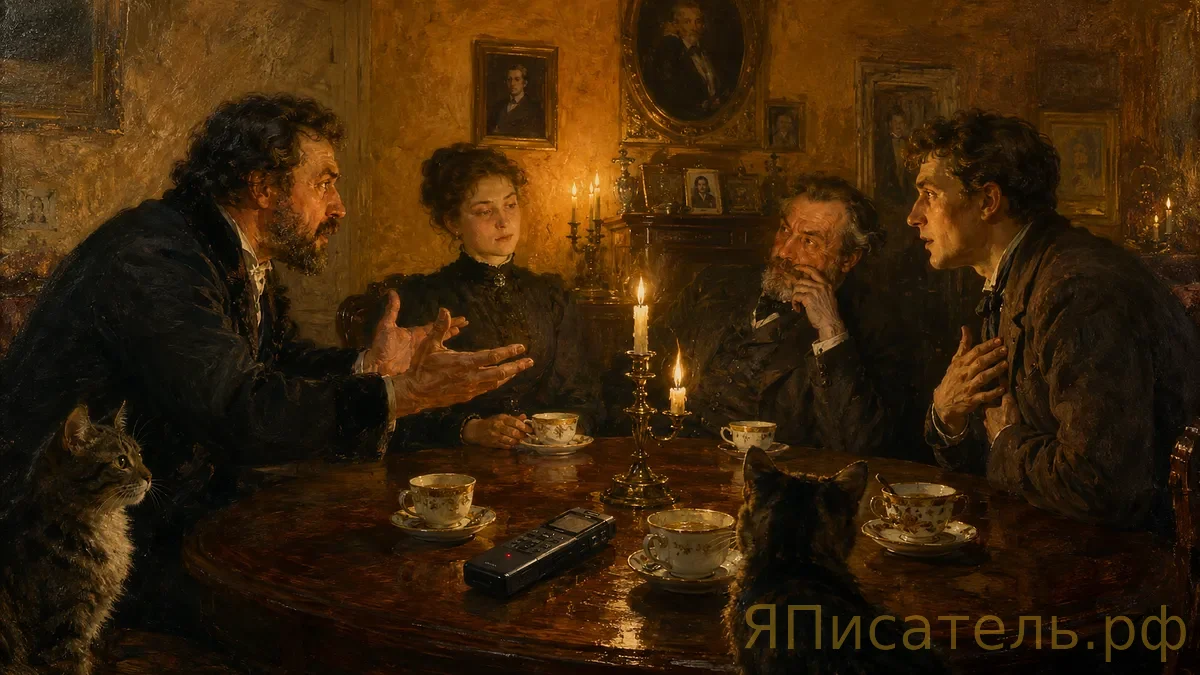
Develop distinct voices for each character through dialogue patterns, vocabulary, speech rhythm, and conversational habits. Character voice in dialogue reveals personality without explicit explanation.
Each character in Russian prose should speak distinctly, with patterns and vocabulary that reveal education, social position, emotional state, and personality. A peasant speaks differently from nobility, a scholar differently from a merchant, an emotional character differently from a controlled one. Dialogue individuality extends beyond surface variations to fundamental patterns: one character dominates conversations while another asks questions; one speaks in long, complex sentences while another uses short, direct speech; one employs folk wisdom while another cites philosophy. Russian writers created distinctive patterns through word choice: some characters use formal language, others employ slang or dialect; some pepper speech with exclamations, others remain measured. Speech rhythms vary: rapid-fire dialogue suggests excitement or anger, long thoughtful pauses suggest deliberation or doubt. The rhythm should feel natural and consistent: readers come to expect each character's particular pattern and recognize immediately who is speaking without attribution tags. Creating distinct dialogue requires listening carefully to how actual people speak: noticing speech habits, favorite expressions, conversational patterns, and how these reveal personality. Dialogue individuality becomes especially important in scenes with multiple characters where readers must track who is speaking, what relationships develop, and how power dynamics shift through conversational control. A character's dialogue patterns might change through the novel, marking psychological transformation or adaptation to circumstances.
Loading comments...