Content Feed

Discover interesting content about books and writing

Article Feb 9, 11:30 AM

Pushkin Died in a Duel at 37 — And Still Writes Better Than You

Here's a fun exercise: name a poet who got killed defending his wife's honor, invented modern Russian literature on the side, and still manages to haunt every love-struck teenager 189 years later. You can't — because there's only one. Alexander Pushkin died on February 10, 1837, from a gunshot wound sustained in a duel with a French military officer who may or may not have been sleeping with his wife. He was 37. That's younger than most people when they finally get around to writing their first novel.

And yet, in those 37 years, the man produced a body of work so staggeringly influential that the entire Russian literary tradition — Tolstoy, Dostoevsky, Chekhov, all of them — basically owes him rent. Today marks 189 years since that fatal duel, and it feels like a good time to ask: why does a guy who wrote in verse about aristocratic ennui still matter in a world of TikTok and AI-generated slop?

Let's start with the elephant in the room — "Eugene Onegin." If you haven't read it, here's the pitch: imagine a 19th-century influencer who's bored with everything, rejects a sincere woman's love, kills his best friend in a pointless duel (ironic, given Pushkin's own fate), and then spends years regretting it all. Sound familiar? That's because Pushkin essentially invented the "superfluous man" — a character type so powerful it became the template for every brooding antihero from Pechorin to Don Draper. Onegin is the original sad boy, and Pushkin wrote him with a level of self-awareness that most modern writers can only dream of. The novel in verse isn't just a love story; it's a vivisection of an entire social class, performed with surgical wit and set to a rhyme scheme so intricate that translators have been weeping over it for two centuries.

But Pushkin wasn't a one-trick pony. "The Captain's Daughter" is basically a historical adventure novel disguised as a coming-of-age story, set against the backdrop of Pugachev's Rebellion of 1773-1775. It's got love, war, betrayal, clemency from an outlaw leader, and a young woman who walks into the court of Catherine the Great to beg for her lover's life. Hollywood hasn't adapted it yet, and honestly, that's Hollywood's loss. The novel is a masterclass in economy — every sentence does three things at once, and the whole thing clocks in at barely over a hundred pages. Pushkin could do in a paragraph what lesser writers need a chapter for.

Then there's "The Queen of Spades" — a short story so tightly wound it practically vibrates. A young officer named Hermann becomes obsessed with a secret card-playing formula supposedly known by an elderly countess. He terrorizes the old woman, she dies of fright, her ghost visits him with the secret, and then — well, let's just say gambling addiction doesn't end well. Tchaikovsky turned it into an opera. Dostoevsky cited it as an influence on his own gambling obsession. The story is barely 30 pages long, and it contains more psychological tension than most 500-page thrillers. It's the literary equivalent of a knife: small, sharp, and absolutely lethal.

What makes Pushkin genuinely revolutionary — not in the watered-down way we use that word for every mildly innovative creator — is what he did to the Russian language itself. Before Pushkin, Russian literary language was a stiff, Frenchified mess, full of Church Slavonic constructions and aristocratic affectations. Pushkin took the language people actually spoke, the Russian of streets and salons and arguments and love letters, and he made it sing. He didn't dumb it down. He elevated the vernacular into art. Gogol reportedly said, "When I heard the name Pushkin, it seemed to me that everything Russian breathed in that name." That's not hyperbole. It's a statement of fact.

Here's what really gets me, though. Pushkin's themes haven't aged a day. Eugene Onegin's inability to recognize love until it's too late? That's every third person on a dating app. Hermann's descent into obsession over a get-rich-quick scheme in "The Queen of Spades"? That's crypto bros in 2024. The moral courage of Masha Mironova in "The Captain's Daughter," who risks everything for the person she loves while the men around her dither and posture? That's a story we still desperately need to hear. Pushkin understood something fundamental about human nature: we are creatures who consistently choose pride over happiness, obsession over contentment, performance over authenticity. And he wrote about it not with moralistic finger-wagging, but with compassion and devastating humor.

The tragedy of Pushkin's death is compounded by the sheer stupidity of how it happened. Georges d'Anthès, a French officer serving in the Russian cavalry, had been openly pursuing Pushkin's wife, Natalia Goncharova — widely considered the most beautiful woman in St. Petersburg. Anonymous letters mocking Pushkin as a cuckold circulated through society. Pushkin, proud and hot-tempered, challenged d'Anthès to a duel. D'Anthès shot first, the bullet lodging in Pushkin's abdomen. Pushkin managed to fire back from the ground, wounding d'Anthès slightly, but the damage was done. He died two days later. The Tsar reportedly said, "It's a pity he's dead." Even the autocrat recognized the magnitude of the loss.

D'Anthès, by the way, survived, was expelled from Russia, went back to France, and became a senator. He lived to 83. There's a cosmic joke in there somewhere — the mediocre man outlives the genius by nearly half a century. But here we are, 189 years later, and nobody's writing articles about Georges d'Anthès.

So what do we do with Pushkin in 2026? We read him. Not because he's a monument or a school assignment, but because his writing is genuinely, absurdly alive. Pick up "The Queen of Spades" on your lunch break — it'll take you 40 minutes and you'll think about it for weeks. Try "Eugene Onegin" in a good translation and discover that a 200-year-old verse novel can make you laugh out loud on a train. Read "The Captain's Daughter" and realize that moral courage has never gone out of style.

Pushkin died at 37 with a bullet in his gut and a duel on his conscience. He left behind a body of work that essentially created modern Russian literature, influenced everyone from Dostoevsky to Nabokov, and remains as sharp, as funny, and as heartbreaking as the day it was written. The least we can do — 189 years on — is actually read it. Trust me, your Netflix queue can wait.
Article Feb 9, 07:19 AM

Pushkin Died in a Duel at 37 — And Still Outsmarted Every Writer Since

Here's a fun fact to ruin your morning coffee: the man who essentially invented modern Russian literature, who gave an entire civilization its literary voice, died because some French pretty boy was flirting with his wife. Alexander Pushkin took a bullet to the gut on January 27, 1837, and bled out two days later. He was thirty-seven. Most of us at thirty-seven are still figuring out our Netflix queue.

But here's what's truly maddening — 189 years after his death, Pushkin's fingerprints are everywhere, and most of the Western world barely knows his name. If you've read Dostoevsky, Tolstoy, Chekhov, Nabokov — congratulations, you've been reading Pushkin's children. Every single one of them pointed back to him as the source. Dostoevsky literally said, "Pushkin is everything." Not "Pushkin is great." Everything. Let that sink in.

Let's talk about *Eugene Onegin*, arguably the most influential novel nobody outside Russia has actually read. Published between 1825 and 1832, written entirely in verse — yes, a novel in poetry, because apparently Pushkin thought prose was too easy — it tells the story of a bored aristocrat who rejects the love of a sincere young woman, Tatiana, only to realize years later that he's made the catastrophic mistake of his life. Sound familiar? It should. This is the DNA of every romantic tragedy you've ever consumed. Every brooding male lead in every period drama who realizes too late that he blew it with the good one? That's Onegin's ghost haunting your screen.

What makes *Eugene Onegin* genuinely revolutionary isn't just the love story. It's the tone. Pushkin invented a narrative voice that's simultaneously inside the story and mocking it from the outside. He's the narrator who digresses about his own feet, who interrupts a dramatic scene to talk about ice cream, who winks at the reader while his characters suffer. This is metafiction — in 1825. Laurence Sterne did something similar, sure, but Pushkin weaponized it. He made irony the default setting of the Russian novel. Without this move, you don't get Nabokov's playfulness, you don't get Bulgakov's absurdism, you arguably don't get half of postmodern literature.

Now, *The Captain's Daughter* — or *Kapitanskaya Dochka* if you want to sound impressive at parties. Published in 1836, just a year before Pushkin's death, it's a historical novel set during the Pugachev Rebellion of 1773. On the surface, it's a straightforward adventure: young officer falls in love, gets caught up in a peasant uprising, faces moral choices. But underneath, Pushkin is doing something subversive. He's writing about political rebellion and making the rebel leader, Pugachev, genuinely charismatic and human. In Tsarist Russia. Under censorship. The man had brass ones, let's be honest. Walter Scott was the king of historical fiction at the time, and Pushkin basically took Scott's template, stripped out the bloat, injected psychological complexity, and produced something tighter and more dangerous. Tolstoy later admitted that *The Captain's Daughter* influenced *War and Peace*. Let me repeat: the longest novel most people will never finish was inspired by one of the shortest novels you could read in an afternoon.

*The Queen of Spades* is where Pushkin gets genuinely creepy. Written in 1834, this short story about a young officer obsessed with a gambling secret held by an ancient countess is basically the blueprint for psychological horror in Russian literature. Hermann — the protagonist — isn't evil. He's just consumed by the idea that there's a system, a hidden pattern, a shortcut to wealth. He stalks an old woman, terrifies her to death, and then her ghost appears to give him the winning card combination. Except she lies. Or does she? Pushkin leaves it beautifully ambiguous. Is Hermann insane? Is the supernatural real? Does the universe punish greed, or is it all just dumb luck? Dostoevsky's entire gambling obsession, his novel *The Gambler*, Tchaikovsky's opera — all downstream from this thirty-page story. Hollywood has been recycling this plot for decades without even knowing the source.

Here's what connects all three works, and what makes Pushkin feel disturbingly modern 189 years later: he understood that people are fundamentally terrible at knowing what they want. Onegin wants freedom until he doesn't. Grinev in *The Captain's Daughter* wants adventure until real violence arrives. Hermann wants certainty in a world that runs on chaos. These aren't 19th-century problems. Open any self-help book, scroll through any social media feed, and you'll find millions of people making exactly the same mistakes. Pushkin diagnosed the human condition with surgical precision, then wrapped the diagnosis in stories so entertaining that you barely notice you're being dissected.

The tragedy of Pushkin's Western obscurity is partly a translation problem. His genius lives in the Russian language itself — the rhythm, the compression, the way he could pack an entire emotional arc into four lines of verse. Translating Pushkin is like trying to explain a joke in a different language: you can convey the meaning, but the magic evaporates. Nabokov spent years on a hyper-literal translation of *Eugene Onegin* and produced four volumes of commentary for a text that's about 200 pages. His translation is accurate and completely unreadable as poetry. Other translators sacrifice accuracy for music. Nobody wins.

But here's the thing — you don't need to read Russian to feel Pushkin's influence. Every time a novel uses an unreliable narrator with a sense of humor, every time a short story leaves you unsettled without cheap jump scares, every time a historical novel treats rebels as humans rather than villains, Pushkin is in the room. He built the operating system. Everyone else is just writing apps.

The man died in a pointless duel, defending his wife's honor against a man who probably wasn't worth the bullet. He left behind a body of work so foundational that an entire literary tradition — one that produced Gogol, Turgenev, Dostoevsky, Tolstoy, Chekhov, Bulgakov, and Nabokov — considers him the starting point. He did this in roughly fifteen years of serious writing. At thirty-seven, he was done. Not retired. Dead.

So the next time someone asks you who the greatest writer you've never read is, you have your answer. Alexander Pushkin has been dead for 189 years, and he's still the most modern writer in the room. The rest of us are just catching up.

Article Feb 9, 12:16 AM

Pushkin Died 189 Years Ago — And Still Writes Better Than You

On February 10, 1837, Alexander Pushkin bled out on a couch after a duel over his wife's honor. He was 37. That's younger than most people when they finally get around to reading him. And yet, nearly two centuries later, this man's ghost has a firmer grip on world literature than most living authors could dream of. Here's the uncomfortable truth: Pushkin invented modern Russian literature the way Steve Jobs invented the smartphone — not from scratch, but by making everything before him look embarrassingly primitive.

Let's start with the elephant in the room: most English-speaking readers have never properly read Pushkin. They've heard the name, maybe nodded along when someone mentioned "Eugene Onegin," and moved on to their Dostoevsky phase. This is a tragedy on par with loving Italian food but never having tried actual pasta in Italy. You think you get it, but you absolutely do not. Pushkin in translation is like listening to jazz through a wall — you catch the rhythm, you miss the soul.

But let's talk about what even the wall can't muffle. "Eugene Onegin" — a novel in verse, which sounds like the most pretentious thing imaginable until you realize Pushkin pulled it off with the effortless cool of someone who knows they're the smartest person in the room but refuses to be boring about it. Written between 1823 and 1831, it tells the story of a jaded aristocrat who rejects a young woman's love, only to fall desperately for her years later when she's moved on. Sound familiar? That's because every romantic comedy you've ever watched stole this plot. Every single one. Pushkin didn't just write a love story; he wrote THE love story, the template, the original code that Hollywood has been copy-pasting for decades.

What makes Onegin terrifying in its brilliance is the Onegin stanza — 14 lines of iambic tetrameter with a rhyme scheme so intricate it makes sonnets look like limericks. Pushkin maintained this structure for over 5,000 lines while keeping the tone conversational, witty, and devastatingly human. Tchaikovsky turned it into an opera. Scholars have spent careers dissecting it. And somewhere, a 25-year-old Pushkin was probably just having fun.

"The Captain's Daughter" is where Pushkin decided to casually invent the Russian historical novel. Published in 1836, just a year before his death, it's set during the Pugachev Rebellion of 1773-1775 — a massive peasant uprising that the Russian government would have preferred everyone forgot about. Pushkin didn't forget. He researched it obsessively, traveled to the actual locations, interviewed survivors, and then wrapped the whole bloody mess in a coming-of-age love story that reads like an adventure novel. Walter Scott was doing similar things in Britain, sure, but Pushkin did it with fewer pages and more danger. The man literally had to get government permission to access the archives. Writing historical fiction in tsarist Russia wasn't a hobby; it was an act of quiet rebellion.

And then there's "The Queen of Spades" — a short story so perfectly constructed it should be studied in engineering schools. Published in 1834, it's about a young officer named Hermann who becomes obsessed with discovering an old countess's secret to winning at cards. It's got gambling, madness, ghosts, and a twist ending that M. Night Shyamalan wishes he'd thought of. In about 30 pages, Pushkin created a psychological thriller that anticipated Dostoevsky's explorations of obsession by three decades. Prokofiev made it into an opera. It's been adapted into films at least a dozen times. The story is so tight, so ruthlessly efficient, that it makes you angry at every bloated 400-page thriller sitting on airport bookshelves today.

Here's what connects all three works, and what makes Pushkin's legacy genuinely dangerous: he respected his readers' intelligence. He never explained too much. He never sentimentalized. He trusted you to catch the irony, feel the heartbreak, and understand the political subtext without being beaten over the head with it. In an era of literature that often drowned in Romantic excess and melodrama, Pushkin wrote with the precision of a surgeon and the warmth of a best friend. That combination is rarer than you think.

The influence is everywhere once you start looking. Dostoevsky openly worshipped him. Tolstoy's "Anna Karenina" opens with a direct echo of Onegin's themes. Turgenev, Gogol, Chekhov — they all grew in the garden Pushkin planted. But it goes beyond Russia. Pushkin's narrative techniques — the unreliable narrator flirtations, the metafictional asides, the mixing of high and low registers — these are tools that modern literature takes for granted. When a contemporary novelist breaks the fourth wall or lets their narrator crack a joke mid-tragedy, they're speaking Pushkin's language whether they know it or not.

There's also the uncomfortable biographical dimension. Pushkin was of African descent — his great-grandfather, Abram Gannibal, was brought from Africa to the court of Peter the Great. In the rigidly hierarchical, deeply racist aristocratic world of 19th-century Russia, Pushkin turned his heritage into a source of fierce pride while simultaneously becoming the most celebrated literary figure in the empire. He didn't transcend his identity; he weaponized it. His unfinished novel "The Moor of Peter the Great" directly addressed his ancestor's story. In 2026, when conversations about representation in literature have finally become mainstream, Pushkin's biography reads like a radical manifesto written 200 years early.

The duel that killed him was, in its way, the most Pushkin thing possible. Georges d'Anthès, a French officer, had been publicly pursuing Pushkin's wife, Natalia. Anonymous letters mocked Pushkin as a cuckold. Rather than ignore the gossip like a sensible person, Pushkin chose to defend his honor with pistols in the snow. He was shot in the abdomen and died two days later. It was stupid, it was tragic, it was impossibly romantic, and it was exactly the kind of ending one of his own characters might have faced — which is either poetic justice or proof that life plagiarizes from art far more often than the other way around.

So here we are, 189 years after a bullet in the gut silenced the voice that taught an entire civilization how to speak. The question isn't whether Pushkin is still relevant — that's like asking whether oxygen is still useful. The question is whether we're brave enough to actually read him, not as a dusty monument on a school syllabus, but as what he actually was: a young, furious, brilliant troublemaker who happened to write in verse. Pick up "The Queen of Spades" tonight. It'll take you an hour. And I promise you — you'll spend the rest of the week wondering why nobody writes like that anymore.

Article Feb 8, 12:04 PM

Pushkin Died in a Duel at 37 — And Still Writes Better Than You

On February 10, 1837, Alexander Pushkin bled out on a couch after taking a bullet to the gut in a duel over his wife's honor. He was thirty-seven. By that age, most of us have accomplished precisely nothing that will be remembered in two centuries. Pushkin had already invented modern Russian literature, written a novel in verse that makes grown men weep, and created characters so alive they've been arguing with readers for nearly two hundred years.

Here's the uncomfortable truth: 189 years after his death, Pushkin is more relevant than ninety percent of what's on your bookshelf right now. And if that offends you, good — keep reading.

Let's start with "Eugene Onegin," the novel in verse that shouldn't work but absolutely does. Imagine someone today pitching this to a publisher: "So it's a love story, but in poetry, and the hero is a bored aristocrat who rejects the girl, kills his best friend in a duel, then comes crawling back years later only to get rejected himself." Any sane editor would say pass. But Pushkin pulled it off with such grace, such devastating psychological precision, that Tchaikovsky turned it into an opera, and university professors have been dissecting it ever since like it's some kind of literary genome.

What makes Onegin terrifyingly modern is that its protagonist is essentially the first literary fuckboy. He's educated, charming, emotionally unavailable, and pathologically incapable of recognizing a good thing until it's gone. Sound familiar? Scroll through any dating advice subreddit and you'll find thousands of Onegins and Tatianas posting their sad little stories, completely unaware that a Russian poet diagnosed their exact problem in 1833. Pushkin didn't just write a character — he wrote a personality type that has haunted every generation since.

Then there's "The Captain's Daughter" — Pushkin's historical novel about the Pugachev Rebellion of the 1770s. On the surface, it's an adventure story: young officer, forbidden love, a charismatic rebel leader. But underneath, it's asking a question that no era has managed to answer satisfactorily: What do you owe to authority, and when does loyalty become cowardice? Pushkin wrote this while the Russian Empire was tightening its grip on everything, and he managed to portray the rebel Pugachev with such humanity that the censors didn't quite know what to do. The villain is the most compelling person in the book. That's not accidental — that's genius-level subversion.

And speaking of subversion, let's talk about "The Queen of Spades." This one is a masterpiece of psychological horror disguised as a gambling story. Hermann, the protagonist, is obsessed with discovering a secret three-card combination that guarantees winning at faro. He manipulates an old countess, she dies of fright, her ghost may or may not visit him with the secret, and — spoiler for a story published in 1834 — it all goes spectacularly wrong. Dostoevsky read this and basically built his entire career on the foundation Pushkin laid. "Crime and Punishment" is, in many ways, "The Queen of Spades" with more pages and more suffering.

What's remarkable about these three works taken together is how completely they map the territory of human weakness. Onegin is about emotional cowardice. "The Captain's Daughter" is about moral cowardice. "The Queen of Spades" is about intellectual arrogance. Pushkin understood that people don't fail because they're stupid — they fail because they're brilliant enough to construct elaborate justifications for their worst impulses. If that's not a description of the twenty-first century, I don't know what is.

Now, you might be thinking: "Sure, but he's a Russian writer. What does he have to do with me?" And that's where you'd be dead wrong. Pushkin's influence bleeds across every border. Tchaikovsky's operas based on his works are performed in every major opera house on the planet. Mussorgsky's "Boris Godunov" — Pushkin. The entire tradition of the Russian novel that gave us Tolstoy, Dostoevsky, Chekhov, and Bulgakov — Pushkin started it. When Dostoevsky said "We all came out of Gogol's 'Overcoat,'" he conveniently forgot to mention that Gogol came out of Pushkin's coat pocket.

But influence on other writers is the boring answer. The real legacy is simpler and stranger: Pushkin taught literature how to be honest without being heavy. Before him, Russian writing was either stiff odes to the tsar or clumsy imitations of French novels. Pushkin wrote in the language people actually spoke. He made poetry feel like conversation. He made novels feel like confessions whispered at three in the morning. Every writer who's ever tried to be "authentic" on the page is, whether they know it or not, following a trail Pushkin blazed.

There's also the matter of his death, which has become the stuff of myth. Georges-Charles de Heeckeren d'Anthès, a French officer adopted by a Dutch diplomat, had been publicly flirting with Pushkin's wife Natalia. Anonymous letters mocked Pushkin as a cuckold. He challenged d'Anthès to a duel. D'Anthès shot first and hit Pushkin in the abdomen. Pushkin, lying in the snow, managed to fire back and wound d'Anthès, but it wasn't enough. He died two days later. The tsar allegedly paid off his debts and provided for his family — a magnanimous gesture somewhat undercut by the fact that the tsar's own secret police had been surveilling Pushkin for years.

The duel itself has become a metaphor for what happens when a society destroys its geniuses. Russia has a particular talent for this — see also: Lermontov (duel), Mayakovsky (suicide under political pressure), Mandelstam (gulag), Bulgakov (censorship unto death). But Pushkin was the prototype. He showed that a country could simultaneously worship a poet and make his life impossible.

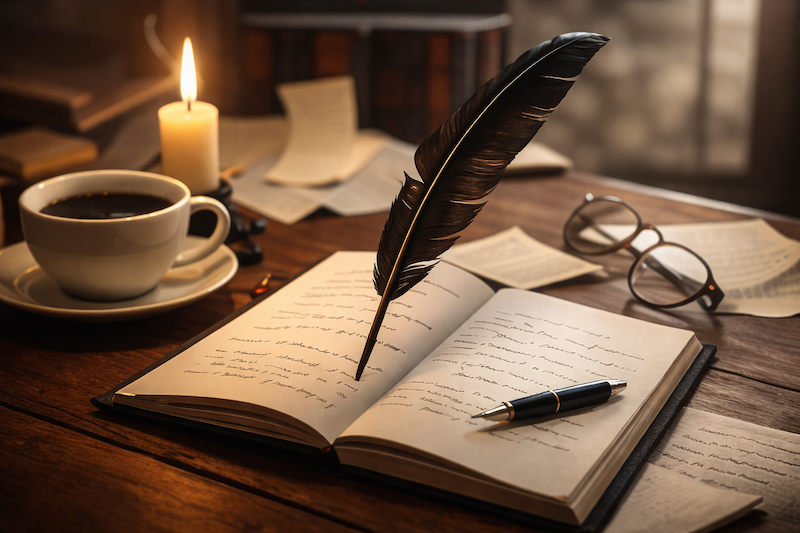
So here we are, 189 years later. Pushkin's been dead longer than most nations have existed. And yet Tatiana's letter to Onegin still makes people cry. Hermann's madness still sends a chill down the spine. Pugachev's rough charisma still raises uncomfortable questions about who the real villains are in any given revolution. The man wrote with a quill pen by candlelight, died before the invention of the telegraph, and somehow managed to describe your emotional life with more accuracy than your therapist.

If that doesn't make you want to pick up one of his books tonight, I genuinely don't know what will. But do yourself a favor — start with "The Queen of Spades." It's short, it's savage, and it will ruin gambling for you forever. Which, honestly, is a public service.

Article Feb 8, 02:11 AM

Pushkin Died in a Duel at 37 — And Still Outsmarted Every Writer Since

On February 10, 1837, Alexander Pushkin bled out on a couch after being shot in the gut by a French dandy who may or may not have been sleeping with his wife. He was thirty-seven years old. That's younger than most people when they finally get around to writing their first novel. And yet, nearly two centuries later, this man's fingerprints are on everything — from Russian rap battles to Hollywood poker scenes to the entire concept of the "superfluous man" that half of modern literature can't stop recycling.

Here's the uncomfortable truth: Pushkin didn't just write great Russian literature. He essentially invented it. Before him, Russian literary language was a stiff, Frenchified mess that read like a bureaucrat trying to write love letters. Pushkin grabbed the living, breathing Russian spoken by peasants, merchants, and aristocrats alike, shoved it into verse forms borrowed from Byron, and created something entirely new. Today, 189 years after his death, we're still living in the world he built.

Let's start with "Eugene Onegin," the novel in verse that every Russian schoolchild is forced to memorize and every Western reader pretends to have finished. Here's the thing about Onegin — it's not really a love story. It's the first great novel about boredom. Onegin is a wealthy young man who has everything and feels nothing. He's the original "too cool for school" protagonist, the ancestor of every brooding antihero from Pechorin to Don Draper. When Tatiana, a sincere country girl, writes him a love letter pouring out her soul, he gives her a patronizing lecture about how he's just not built for love. Years later, when she's transformed into a dazzling society woman, he suddenly discovers he's madly in love with her. She turns him down. Not because she doesn't love him — she admits she does — but because she's married and won't betray her vows. The ending is devastating precisely because nobody wins. Sound familiar? That's because every rom-com that ends with "the one who got away" is ripping off Pushkin whether it knows it or not.

But Onegin's influence goes deeper than plot structure. Pushkin invented the "Onegin stanza" — fourteen lines of iambic tetrameter with a specific rhyme scheme (AbAbCCddEffEgg) that has never been successfully replicated in any other language. It's a literary magic trick: formal enough to feel elegant, loose enough to accommodate everything from philosophical digressions to brutal satire to a recipe for how to properly eat a roast beef in a St. Petersburg restaurant. The poem literally contains a footnote about the correct temperature of champagne. Pushkin was the original blogger, centuries before the internet.

"The Captain's Daughter" is the work that gets the least attention in the West, and that's a crime. Published in 1836, just months before Pushkin's death, it's a historical novel set during the Pugachev Rebellion of 1773-1775 — basically Russia's version of a full-blown civil war. On the surface, it's an adventure romance: young officer Pyotr Grinyov gets posted to a frontier fortress, falls in love with the captain's daughter Masha, and gets tangled up in history's worst timing when Pugachev's army rolls through. But Pushkin does something sneaky here. He makes Pugachev — the rebel, the pretender to the throne, the man who would be hanged and quartered — genuinely charismatic. There's a scene where Pugachev tells Grinyov a folk tale about an eagle who'd rather live thirty-three years drinking fresh blood than three hundred years eating dead meat. It's terrifying and seductive at the same time. Pushkin understood something that most political writers still don't: revolutions aren't led by monsters. They're led by people with enormous charisma and a convincing story.

And then there's "The Queen of Spades," which might be the most perfect short story ever written. Hermann, a German-Russian engineer, becomes obsessed with an old countess who supposedly knows a secret three-card combination that guarantees winning at faro. He seduces her young ward to gain access to the old woman, confronts the countess at gunpoint, and accidentally frightens her to death. Her ghost appears to him and reveals the secret: three, seven, ace. He bets everything. Wins on the three. Wins on the seven. And on the final hand, instead of the ace, he turns over the queen of spades — who seems to wink at him. He goes insane. The story is barely forty pages long and it contains more psychological depth than most thousand-page novels. Dostoyevsky read it and essentially built his entire career exploring the same territory: obsession, gambling, the thin line between rationality and madness. Tchaikovsky turned it into an opera. Hollywood turned it into every poker movie where the hero's hubris destroys him.

What makes Pushkin's legacy truly staggering is the sheer range. He wrote fairy tales that Russian children still grow up on. He wrote a play about Boris Godunov that Mussorgsky turned into one of the greatest operas in history. He wrote lyric poetry so perfect that Russians quote it the way English speakers quote Shakespeare — casually, in everyday conversation, often without even realizing they're doing it. The phrase "What's in a name?" has its Russian equivalent in Pushkin. Half the expressions Russians use to describe love, autumn, melancholy, and vodka-fueled regret come from this one man.

Here's what really gets me, though. Pushkin was also, by the standards of his time and ours, a genuinely radical figure. He had African heritage — his great-grandfather, Abram Gannibal, was an African page brought to the court of Peter the Great who became a general and nobleman. Pushkin was proud of this lineage and wrote about it. In a country that would spend the next two centuries struggling with questions of identity, empire, and who gets to be "Russian," Pushkin's very existence was an argument for a bigger, wilder, more inclusive version of the national story.

He was also exiled twice by the tsar for writing poems that were too politically dangerous. Let that sink in. The government of one of the world's great empires considered this poet — this guy writing sonnets and fairy tales — a genuine threat to state security. They were right. Ideas are more dangerous than armies, and Pushkin's ideas about freedom, dignity, and the right to feel things deeply without apology have outlived every tsar, every commissar, and every apparatchik who ever tried to shut him up.

So here we are, 189 years after a bullet ended the life of a thirty-seven-year-old poet. The man who shot him, Georges d'Anthès, lived to be eighty-three, became a French senator, and is remembered by exactly nobody except as a footnote in Pushkin's biography. Meanwhile, Pushkin's words are still being recited at weddings, argued about in universities, adapted into films, and whispered by lovers in the dark. If you want to know what immortality actually looks like, forget pharaohs and pyramids. It looks like a short guy with wild curly hair who wrote the right words at the right time and died too young — but not before changing everything.

Article Feb 7, 09:07 PM

Pushkin Died in a Duel at 37 — And Still Outsmarted Us All

On February 10, 1837, Alexander Pushkin bled out on a couch after taking a bullet to the abdomen in a duel over his wife's honor. He was thirty-seven. That's younger than most people when they finally get around to writing their first novel. And yet, 189 years later, this man's fingerprints are smeared across everything — from Russian rap lyrics to Hollywood adaptations, from Tchaikovsky's operas to the way an entire nation thinks about love, fate, and the terrifying randomness of a card game.

Here's the uncomfortable truth: most of us will live twice as long as Pushkin and produce approximately nothing that anyone remembers past next Tuesday. Meanwhile, this guy cranked out *Eugene Onegin*, *The Captain's Daughter*, *The Queen of Spades*, and about four hundred other things — poems, plays, fairy tales, critical essays — while simultaneously getting exiled by the Tsar, gambling away his money, and managing a love life so chaotic it would make reality TV producers weep with joy.

Let's talk about *Eugene Onegin* first, because it's arguably the most influential novel you've never read. Yes, I said novel. It's written entirely in verse — 389 stanzas of iambic tetrameter with a rhyme scheme Pushkin invented himself. The man literally created his own poetic form because the existing ones bored him. The story is deceptively simple: a bored aristocrat rejects a young woman's love, kills his best friend in a duel (Pushkin had a thing about duels, clearly), then years later realizes the woman was the love of his life — only to be rejected in return. It's the original "you don't know what you've got till it's gone" story, except Pushkin told it with enough irony, wit, and self-awareness to make it feel like it was written yesterday.

Here's what's wild: Tchaikovsky turned it into an opera in 1879. It became the backbone of Russian literary identity. Dostoevsky worshipped it. Nabokov spent years translating it into English and wrote a commentary four times longer than the original text — because of course he did. And the so-called "Onegin stanza" influenced poets for two centuries. Every time a Russian songwriter writes about unrequited love with a smirk instead of a tear, they're channeling Pushkin whether they know it or not.

*The Queen of Spades* is a different beast entirely — and honestly, it might be Pushkin's most modern work. Published in 1834, it's a tight, almost hallucinatory short story about a military engineer named Hermann who becomes obsessed with learning the secret of three winning cards from an old countess. He sneaks into her bedroom at night, threatens her with a pistol, and she literally dies of fright. Then her ghost shows up and gives him the cards anyway. He bets everything. Wins twice. And on the third bet — the queen of spades winks at him from the table, and he loses his mind. Literally. He ends up in an asylum.

Read that again and tell me it doesn't sound like a pitch for a psychological thriller on Netflix. The story influenced everything from Dostoevsky's *The Gambler* to Tchaikovsky's opera of the same name, to countless films. Hermann is essentially the prototype for every obsessive, self-destructive protagonist in modern fiction — the guy who's so convinced he's found the system, the cheat code, the loophole, that he destroys himself reaching for it. Sound familiar? Every crypto bro who went all-in on a meme coin is basically Hermann without the ghost.

Then there's *The Captain's Daughter*, which Pushkin published in 1836, just a year before his death. Set during the Pugachev Rebellion of 1773-1775, it's a historical novel disguised as a love story — or a love story disguised as a historical novel. A young officer named Pyotr Grinyov gets posted to a remote fortress, falls in love with the captain's daughter Masha, and gets swept up in a massive peasant uprising led by the charismatic rebel Pugachev. What makes the novel brilliant isn't the plot — it's Pushkin's refusal to simplify. Pugachev is terrifying and generous. The government forces are brutal and legitimate. Love is real but not enough to fix anything.

Historians actually credit *The Captain's Daughter* with shaping how Russians understand the Pugachev Rebellion to this day. Pushkin didn't just write a novel — he wrote history's rough draft. He traveled to the Ural region, interviewed survivors, and studied government archives before putting pen to paper. The result is a work that feels like journalism filtered through poetry. Tolstoy later admitted that *The Captain's Daughter* influenced *War and Peace*. Let that sink in. Pushkin influenced the book that most people consider the greatest novel ever written.

But here's what really gets me about Pushkin's legacy: he didn't just write great literature. He essentially created the modern Russian literary language. Before Pushkin, Russian prose was stiff, formal, drowning in Church Slavonic constructions that nobody actually spoke. Pushkin took the language people used in the streets, in love letters, in arguments at dinner parties, and turned it into art. He proved you could be sophisticated without being stuffy. Every Russian writer who came after — Gogol, Turgenev, Chekhov, Bulgakov — is building on the linguistic foundation Pushkin laid.

And his influence reaches well beyond Russia. *Eugene Onegin* is a direct ancestor of the self-aware, meta-fictional novel. Pushkin constantly interrupts his own story to comment on it, joke about literary conventions, and address the reader directly. Sound familiar? That's because every postmodern novelist from John Barth to Zadie Smith has been doing the same thing — most of them without knowing they owe a debt to a Russian poet who died before the telegraph was widely adopted.

The dueling culture that killed Pushkin is long gone, but his questions haven't aged a day. What do you do when you realize too late that you've thrown away the best thing in your life? How far will obsession take you before it takes everything? Can love survive when history is literally burning down around you? These aren't 19th-century questions. These are 3 AM questions. These are the questions that keep you staring at your phone screen, scrolling through someone's old photos, wondering where it all went sideways.

So today, 189 years after a bullet ended the life of a thirty-seven-year-old genius, raise a glass — preferably of something strong and Russian — and consider this: Pushkin had less time than most of us get, and he used every minute of it to write things that still punch us in the gut. The real question isn't why we still read Pushkin. The real question is what the hell we're doing with the extra decades he never got.

Article Feb 4, 07:02 PM

The Dead Russian Who Still Runs Your Love Life: Why Pushkin Refuses to Stay in His Grave

On February 10, 1837, Alexander Pushkin died from a gunshot wound sustained in a duel over his wife's honor. He was 37 years old, dramatically handsome in that disheveled Romantic way, and absolutely furious about dying. One hundred eighty-nine years later, we're still picking up the pieces of his literary explosion—and whether you know it or not, that dead Russian is probably the reason you swooned over your last toxic relationship.

Let me explain. Pushkin didn't just write poetry and prose—he essentially invented the blueprint for the brooding, emotionally unavailable love interest that has haunted Western storytelling ever since. Eugene Onegin, his verse novel masterpiece, gave us a protagonist who rejects genuine love because he's too sophisticated and bored to recognize it. Sound familiar? Every Mr. Darcy, every Heathcliff, every Edward Cullen (yes, even the sparkly vampire) owes a debt to this Russian template. Pushkin looked at the human heart and said: "What if I made falling in love feel like a beautiful catastrophe?"

But here's the delicious irony nobody talks about. Pushkin wrote Eugene Onegin over seven years, from 1823 to 1830, pouring his soul into this tale of missed connections and romantic tragedy. Meanwhile, in his actual life, he was chasing skirts across St. Petersburg with the enthusiasm of a golden retriever at a tennis ball factory. The man who penned the most devastating rejection scene in literature—Tatiana's famous letter and Onegin's cold refusal—was himself constantly falling in and out of love, writing passionate verses to various women, and generally behaving exactly like the irresponsible Romantic poet central casting would have ordered.

Now let's talk about gambling, because Pushkin absolutely loved a good card game—and that obsession gave us The Queen of Spades. This novella is essentially a horror story wearing a tailcoat. Hermann, our protagonist, becomes so consumed with learning a secret three-card winning combination that he literally terrorizes an old countess to death and then goes mad when her ghost appears to give him the formula. Published in 1834, this story predicted our modern addiction culture with unsettling accuracy. Replace the cards with slot machines, cryptocurrency, or doom-scrolling social media, and Hermann's descent feels uncomfortably contemporary. Pushkin understood that humans will absolutely destroy themselves chasing systems and shortcuts, and he made it entertainingly gothic.

The Captain's Daughter, meanwhile, is Pushkin doing something sneaky. On the surface, it's a historical romance set during the Pugachev Rebellion of the 1770s—young officer falls for commander's daughter, war breaks out, adventures ensue. But underneath, Pushkin was doing something revolutionary for Russian literature: he was writing about ordinary people with dignity and complexity. The peasant rebel Pugachev isn't a monster; he's charismatic, merciful, and genuinely interesting. This was dangerous stuff in 1836 Russia, where discussing peasant uprisings could get you exiled (again—Pushkin had already been banished twice for his liberal poems). He wrapped his subversive ideas in adventure story packaging, and the censors let it through.

Here's what truly sets Pushkin apart from his contemporaries: the man could write. I mean really write. While other Romantic poets were drowning their verses in tortured metaphors and pretentious classical references, Pushkin achieved something that seems simple but is devastatingly difficult—clarity. His Russian flows like conversation. His verse sounds like someone thinking aloud, working through emotions in real time. Russians still quote him constantly in daily speech, often without realizing it. Imagine if Shakespeare's lines were so embedded in English that people used them at the grocery store without noticing. That's Pushkin's position in Russian culture.

The influence bleeds everywhere once you start looking. Tchaikovsky turned both Eugene Onegin and The Queen of Spades into operas that remain in active rotation worldwide. Dostoevsky practically built his career on the psychological intensity Pushkin pioneered—that obsessive, feverish quality of Hermann staring at cards is a direct ancestor of Raskolnikov with his axe. Tolstoy, who famously thought most writers were overrated, couldn't stop praising Pushkin's prose style. Even Soviet authorities, who were suspicious of pre-revolutionary culture, couldn't dismiss him—they simply repackaged Pushkin as a proto-revolutionary figure fighting against aristocratic corruption.

But perhaps the most relevant aspect of Pushkin's legacy is how he handled being a celebrity in an era of surveillance. Tsar Nicholas I personally appointed himself Pushkin's censor, which meant every word the poet published had to pass imperial review. Pushkin responded with masterful ambiguity—writing works that could be read as loyal while containing subversive undercurrents. He pioneered the art of saying the unsayable through literary misdirection. In our current age of algorithmic content moderation and social media pile-ons, Pushkin's strategic ambiguity feels like a survival guide.

The circumstances of his death deserve mention because they're so perfectly, tragically literary that you'd reject them as too on-the-nose if they appeared in fiction. Pushkin's wife Natalya was considered the most beautiful woman in St. Petersburg—so beautiful that Tsar Nicholas himself was rumored to have interests. A French military officer named Georges d'Anthès began publicly pursuing her, and anonymous letters mocking Pushkin as a cuckold circulated through society. Pushkin, who had survived exile and censorship, couldn't survive wounded pride. He challenged d'Anthès. D'Anthès shot first and better. Pushkin lingered for two days before dying, surrounded by friends and books, asking his wife to feed him cloudberries.

So here we are, 189 years later, still reading him. Still watching operas based on his work. Still unconsciously replicating his romantic archetypes in our streaming shows and bestselling novels. Still struggling with the gambling addictions and status anxieties he diagnosed. The poet who died defending his honor against a Frenchman now belongs to humanity—translated into every major language, analyzed in every literature department, echoing through every story about love gone wrong or obsession gone too far.

Raise a glass tonight. Not to mourn, but to acknowledge. Somewhere in your understanding of what love should feel like, what tragedy should sound like, what Russian literature means—there's a 37-year-old poet with curly hair and African heritage, laughing at the cosmic joke of immortality. He wanted to be remembered. He got something stranger: he became inescapable.

Nothing to read? Create your own book and read it! Like I do.

Create a book
1x

"You write in order to change the world." — James Baldwin