The Man Who Broke the Novel and Taught Us to Read Backwards: 42 Years Without Julio Cortázar
Forty-two years ago today, the literary world lost its greatest prankster. Julio Cortázar died in Paris on February 12, 1984, leaving behind a body of work that still makes contemporary novelists look like they're writing grocery lists. If you've never read Hopscotch, congratulations—you've been missing out on the single most revolutionary reading experience of the twentieth century, and also the best excuse to drink wine while pretending to be intellectual.
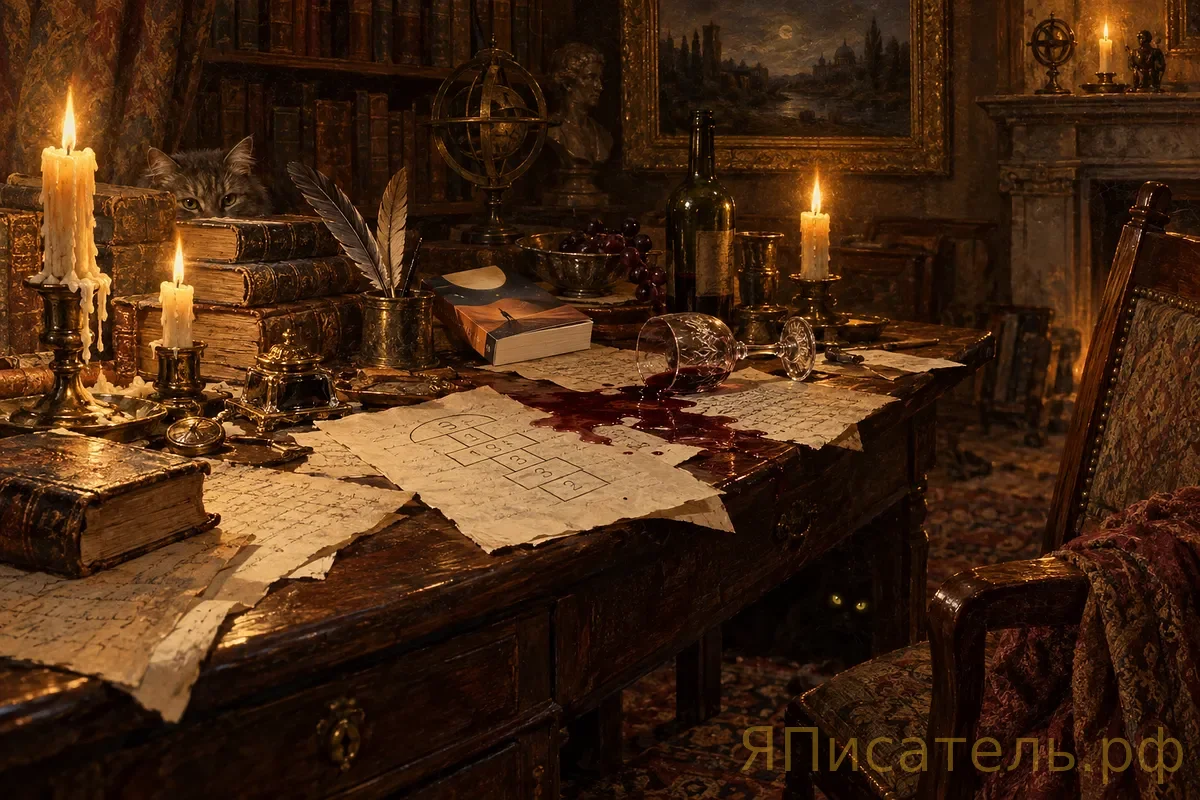
Let's get something straight: Cortázar didn't just write novels. He built literary labyrinths and then handed you the keys while blindfolding you. Hopscotch—Rayuela in Spanish—isn't a book you read. It's a book you play. Published in 1963, it came with instructions: you could read it straight through, like a normal person, or you could follow Cortázar's suggested hopscotch pattern, jumping from chapter 73 to chapter 1 to chapter 2 to chapter 116, and so on. The man essentially invented the choose-your-own-adventure novel for adults who smoke too much and have opinions about jazz.
But here's what nobody tells you about Cortázar's legacy: he made pretentiousness cool again. Before him, experimental literature was something dusty professors discussed in poorly lit seminar rooms. After him, it became something you could argue about in Buenos Aires cafés while a beautiful stranger across the room wondered if you were profound or just insufferably French-adjacent. Cortázar, you see, was that rare creature—an Argentine who lived in Paris and somehow managed to make both cities claim him as their own.
Consider 'Blow-Up,' the short story that Michelangelo Antonioni turned into his 1966 film of the same name. The story is about a photographer who may or may not have accidentally captured a murder on film. Or maybe it's about the nature of reality. Or perhaps it's about how we can never truly know what we're looking at. Antonioni took this premise and made it about a very attractive man wandering around London looking confused—which, to be fair, is a perfectly valid interpretation. The story spawned an entire genre of paranoid thrillers where the protagonist squints at photographs, and we're all supposed to pretend we understand what's happening.
What makes Cortázar's influence so insidious—and I mean that as a compliment—is that he infected literature with the idea that readers aren't passive consumers. They're collaborators. Before Netflix invented interactive episodes and thought they were clever, Cortázar was already there in the 1960s, saying: 'You want to read my book? Fine. But you're going to work for it.' This wasn't arrogance; it was respect. He believed readers were smart enough to handle complexity, ambiguity, and the occasional chapter that seems to exist only to mess with your head.
62: A Model Kit, published in 1968, took this even further. The novel explicitly grew out of Chapter 62 of Hopscotch—yes, the man wrote a footnote to his own work and published it as a separate novel. The book has no clear plot, characters drift in and out of each other's lives like ghosts at a cocktail party, and time itself becomes a suggestion rather than a rule. Reading it is like trying to assemble IKEA furniture without instructions, except the furniture is your own consciousness and the Allen key is made of dreams.
But let's talk about influence, because that's supposedly why we're here. Every author who has ever played with structure owes Cortázar a debt. David Mitchell's Cloud Atlas with its nested narratives? Cortázar was there first. Mark Z. Danielewski's House of Leaves with its footnotes within footnotes? Cortázar did it while wearing a better jacket. Jennifer Egan's A Visit from the Goon Squad with its PowerPoint chapter? Okay, that one's probably not directly connected, but the spirit is the same: literature can be whatever shape you need it to be.
The Latin American Boom of the 1960s and 70s gave us García Márquez and magical realism, Borges and infinite libraries, Vargas Llosa and political epics. Cortázar gave us something different: the literature of play. His cronopios and famas—those absurd little beings from his short stories—aren't symbols of anything. They're just delightful. Not everything has to mean something. Sometimes a cronopio is just a cronopio, singing badly and being optimistic for no particular reason.
What's remarkable is how Cortázar's formal innovations never feel cold or academic. His characters love each other desperately, mess up their lives spectacularly, listen to jazz records, and wander through cities at night looking for something they can't name. Horacio Oliveira, the protagonist of Hopscotch, is searching for a mystical center he calls the 'kibbutz of desire'—a metaphysical home that doesn't exist but that we all recognize anyway. We've all been looking for the kibbutz of desire; we just didn't have a name for it until Cortázar gave us one.
Today, forty-two years after his death, Cortázar's influence persists in unexpected places. Every time a video game offers you multiple endings, every time a streaming platform releases episodes out of order, every time an artist insists that you, the audience, must participate in creating meaning—that's the spirit of Cortázar. He understood, before the internet made it obvious, that culture is a conversation, not a lecture.
Here's the thing about Cortázar that the literary establishment sometimes forgets: he was fun. For all his experimental credentials, his work is genuinely enjoyable to read. He had wit, warmth, and an absolute refusal to take himself too seriously while simultaneously taking literature more seriously than almost anyone. That's the trick, isn't it? To care deeply while appearing not to care at all.
So raise a glass tonight to Julio Cortázar, the tall Argentine who taught us that a novel could be a game, that a story could be a trap, and that the reader is never innocent. Pick up Hopscotch if you haven't already—and if you have, pick it up again and read it in the other order. That's what he would have wanted. After all, with Cortázar, you're never really finished. You're just starting from a different square.
Вставьте этот код в HTML вашего сайта для встраивания контента.