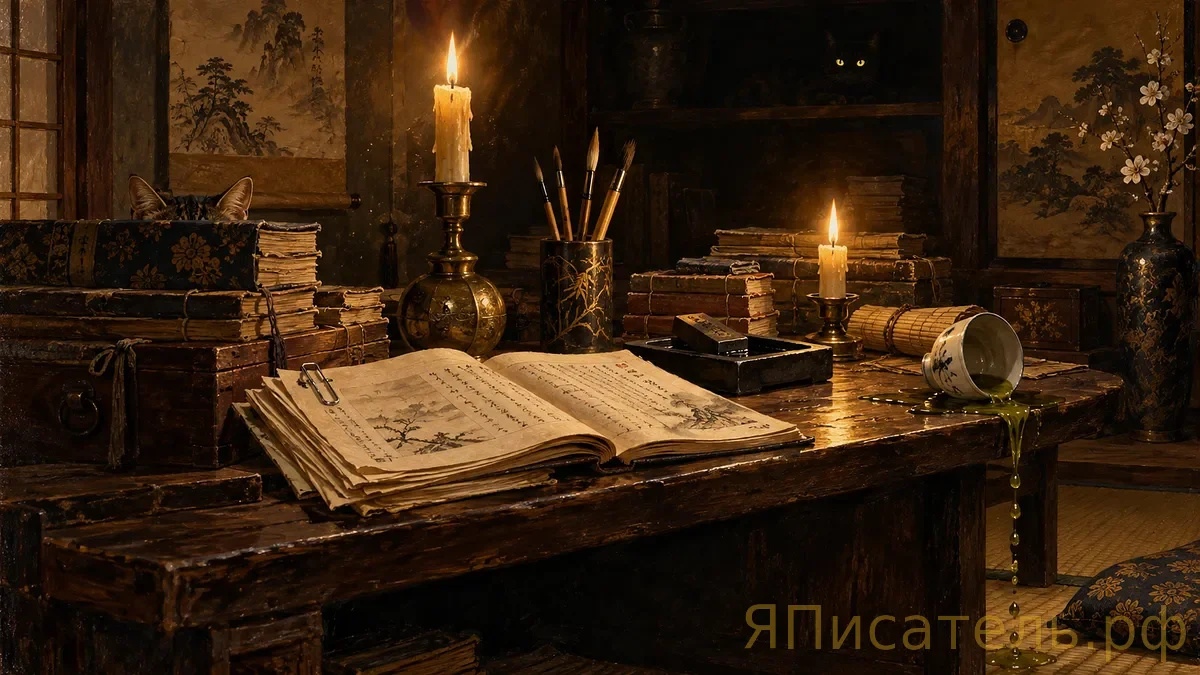
A Library in Kyoto Has Been Lending the Same Book for 300 Years — No One Has Finished It
In the quiet Higashiyama district of Kyoto, a small private lending library called Bunko-dō has operated continuously since 1723. Its ledgers — handwritten volumes tracking every loan for three centuries — have long been considered a minor local curiosity. But a team of literary historians from Kyoto University has now made a startling discovery buried in those meticulous records.
One particular book has been checked out and returned more than 1,400 times across 300 years. It is a hand-copied, annotated edition of Murasaki Shikibu's 'The Tale of Genji,' widely regarded as the world's first novel, written around the year 1010. The annotations, believed to date from the late 1600s, are by an unknown scholar who filled the margins with cryptic commentary, cross-references, and what appear to be corrections to the text itself.
The remarkable detail, however, lies in the library's unique tradition. Each borrower was asked to place a small ink mark on the page where they stopped reading. Over three centuries, more than a thousand readers borrowed this particular volume — and not a single mark appears beyond chapter 41 of the novel's 54 chapters.
'It is as though the book resists completion,' said Professor Haruki Tanabe, who leads the research team. 'We initially assumed it was simply the difficulty of classical Japanese. But many of these borrowers were scholars themselves. Something about this particular copy seems to stop people.'
The answer may lie in the mysterious annotations. Around chapter 41, the unknown commentator's notes shift dramatically. The neat scholarly hand becomes agitated, the ink changes color, and the commentary transitions from literary analysis to what Tanabe describes as 'a kind of philosophical crisis.' The annotator appears to argue that the novel's ending was written by a different author entirely — a theory that modern scholars have debated for centuries but which this anonymous commentator proposed nearly 350 years ago.
'The margins become almost a counter-novel,' Tanabe explained. 'The annotator begins writing their own alternative passages, as though trying to redirect the story. It seems every reader who reached that point became so absorbed in the margin commentary that they abandoned the original text.'
The discovery has reignited scholarly interest in the so-called 'Uji chapters,' the final thirteen chapters of The Tale of Genji that have long divided academics. Some believe they were written by Murasaki Shikibu's daughter or a later imitator. This anonymous annotator's passionate 17th-century argument, predating modern literary criticism by two hundred years, could reshape how scholars understand the novel's contested authorship.
Bunko-dō plans to digitize the volume and its three centuries of lending records later this year, making them available to researchers worldwide. As for the book itself, it remains available for borrowing — though the librarian, 78-year-old Keiko Murakami, the sixth generation of her family to run the library, smiled when asked if anyone might finally finish it.
'Three hundred years, and chapter 41 always wins,' she said. 'I tried it myself when I was young. I did not finish either.'
Вставьте этот код в HTML вашего сайта для встраивания контента.