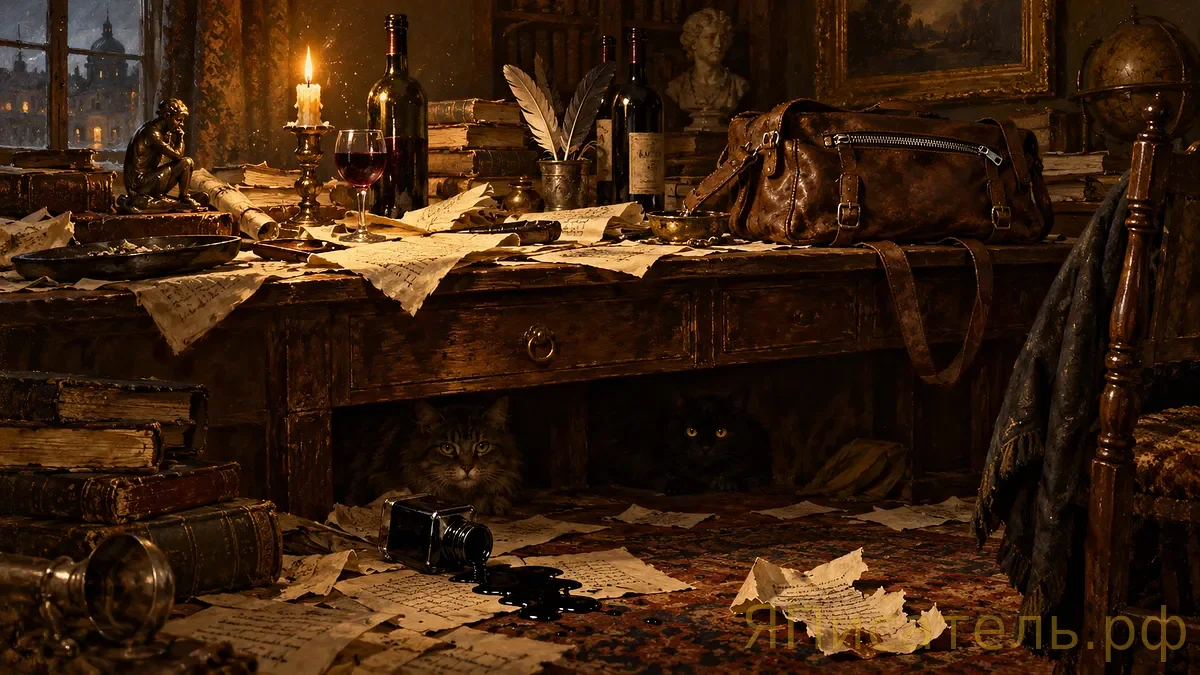
Writing Habits That Authors Lie About: The Dirty Secrets Behind Those Pristine Morning Routines
Every writer you admire has lied to you. That beautiful morning routine Hemingway described? The disciplined schedule Murakami swears by? The sober, ascetic lifestyle your favorite contemporary author claims to maintain? It's all carefully curated mythology. Pull back the curtain on any celebrated author's 'writing process,' and you'll find a mess of contradictions, exaggerations, and outright fabrications designed to make them seem more romantic, disciplined, or tortured than they actually are.
Let's start with the granddaddy of all writing lies: the sacred morning ritual. Hemingway famously claimed he wrote standing up, starting at first light, producing exactly 500 words before stopping mid-sentence so he'd know where to pick up tomorrow. Sounds beautiful, right? Except his letters reveal days, sometimes weeks, where he produced nothing but excuses. His editor, Maxwell Perkins, had to practically drag manuscripts out of him. The standing desk? He used it sometimes. When his back hurt. The rest of the time he wrote wherever he damn well pleased, often hungover, often horizontal.
Then there's the 'I write every single day' crowd. Stephen King claims he writes 2,000 words daily, including Christmas. Anthony Trollope allegedly produced 250 words every fifteen minutes by the clock. These stories have spawned a cottage industry of guilt among aspiring writers who can't maintain such discipline. But here's what they don't tell you: King has admitted to periods of complete creative drought. Trollope? He had servants, no children to raise, and a government job that left him with abundant free time. Context matters, but it doesn't make for inspiring interviews.
The sobriety myth might be the most insidious lie of all. Modern authors love claiming they write best with clear heads, sipping green tea and doing yoga. Meanwhile, literary history is a graveyard of functioning alcoholics who produced masterpieces while thoroughly pickled. Faulkner allegedly wrote most of 'As I Lay Dying' in six weeks while working the night shift at a power plant, sustained by whiskey. Dorothy Parker wrote hungover more often than not. Raymond Chandler would go on benders, then emerge with some of the sharpest prose in American detective fiction. Today's authors pretend they've evolved beyond this, but visit any literary festival after-party and watch that green tea transform into bourbon.
The 'first draft genius' lie deserves special mention. You've heard authors claim their prose flows perfectly formed, requiring minimal revision. Jack Kerouac supposedly wrote 'On the Road' in three weeks on a continuous scroll of paper, pure spontaneous brilliance. Except he'd been working on the material for years. That 'scroll draft' was actually his seventh attempt at the novel, and it still required significant editing before publication. The spontaneous masterpiece is almost always a carefully constructed myth designed to make genius seem effortless.
Writer's block denial is another favorite fabrication. Successful authors love claiming they've never experienced it, that discipline conquers all. They make it sound like showing up is enough. Tell that to Harper Lee, who published one novel and spent the rest of her life reportedly paralyzed by expectations. Tell it to Ralph Ellison, who worked on his second novel for forty years and never finished it. These aren't failures of discipline; they're proof that the creative process is far more mysterious and fragile than the productivity gurus want you to believe.
The 'I don't read reviews' lie is universal and universally false. Every single author reads their reviews. They claim they don't to seem above the fray, too focused on their art to care about public opinion. Norman Mailer didn't just read his reviews; he once headbutted a critic at a party. Truman Capote memorized his negative reviews and would recite them while drunk, adding his own commentary. Jonathan Franzen claims indifference to criticism while simultaneously writing essays defending himself against it. The truth is writers are desperately insecure creatures who read everything written about them, often multiple times.
Then there's the romantic poverty narrative. Authors love suggesting they suffered for their art, writing in freezing garrets, choosing literature over financial security. J.K. Rowling's welfare-to-billionaire story is legendary. What gets mentioned less: her ex-husband was a journalist, she had a teaching degree to fall back on, and her sister worked in publishing. This isn't to diminish her struggles, but the complete destitution narrative has been polished smooth. Similarly, plenty of your favorite 'starving artists' had trust funds, wealthy spouses, or day jobs they conveniently forget to mention.
The 'my characters write themselves' claim might be the most annoying fabrication. Authors love suggesting their creations take on independent life, making decisions the author never planned. It sounds mystical and removes responsibility for controversial choices. But characters don't write themselves any more than sculptures carve themselves. Every word is a deliberate choice. When George R.R. Martin kills a beloved character, it's not because the character 'had to die' – it's because Martin decided to kill them. The mystification of craft is just another form of self-protection.
Outline denial rounds out our catalog of lies. Pantsers – writers who claim to write 'by the seat of their pants' with no outline – are often secret planners ashamed to admit it. Writing without an outline sounds more creative, more artistic, more spontaneous. But even the most famous pantsers usually have extensive notes, character sketches, and mental roadmaps they conveniently forget to mention. Meanwhile, rigid outliners pretend their planning is minimal to avoid seeming mechanical. The truth falls somewhere in the messy middle that doesn't make for good interviews.
So why do authors lie about their habits? Because the truth is boring, embarrassing, or insufficiently romantic. Nobody wants to hear that your bestseller was written in stolen moments between childcare duties, fueled by cold coffee and desperation. Nobody wants to know you spent three months playing video games between chapters. The mythology of authorship requires suffering, discipline, and a touch of madness – and if reality doesn't provide these elements, authors will manufacture them.
Here's the liberating truth buried under all these lies: there is no correct way to write. The authors you admire didn't succeed because of their morning routines or daily word counts. They succeeded despite their chaotic, inconsistent, often unhealthy processes. They succeeded because they finished books that people wanted to read. Everything else is narrative decoration.
The next time a famous author describes their pristine creative process, smile and nod. Then go write however you actually write – in bed, at midnight, surrounded by snacks, with the TV on in the background. Your habits don't need to be Instagram-worthy. They just need to produce pages. The dirty secret of literature is that the words on the page are all that ultimately matters, and nobody needs to know how they got there.
Вставьте этот код в HTML вашего сайта для встраивания контента.