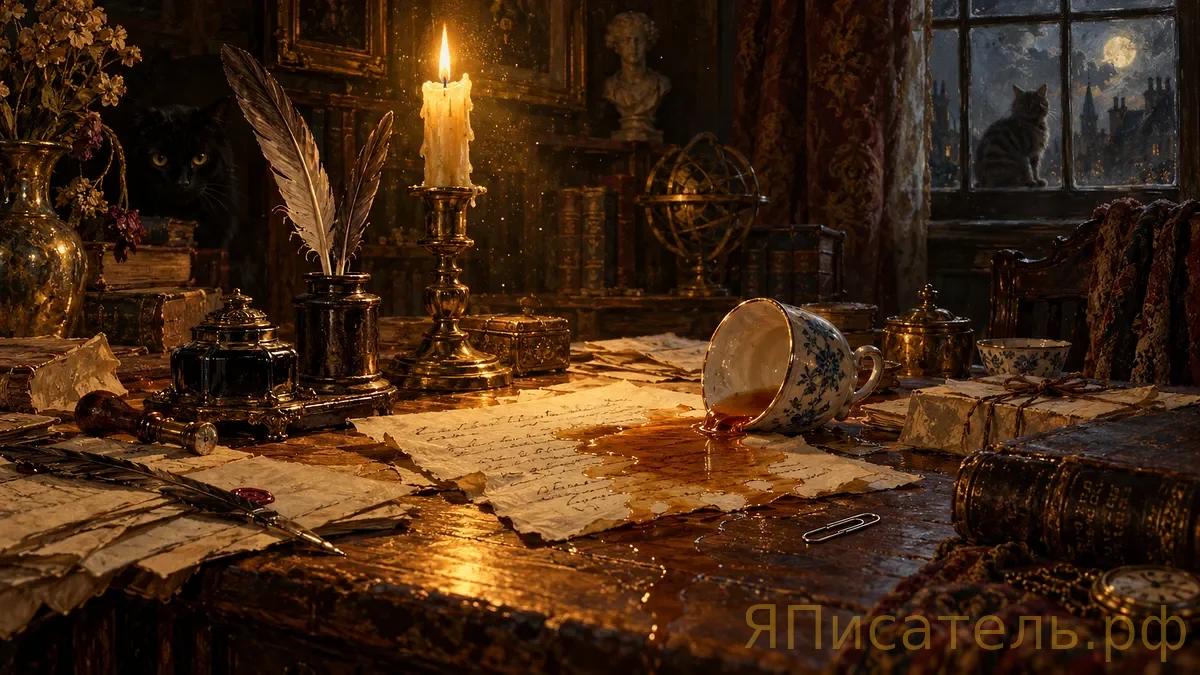
The Workhouse Kid Who Made Victorian England Weep: Charles Dickens at 214
Two hundred and fourteen years ago, a boy was born who would grow up to make the entire British Empire ugly-cry into their tea. Charles Dickens didn't just write novels—he weaponized sentimentality, invented Christmas as we know it, and somehow convinced millions of people to care about orphans, debtors, and the unwashed masses.
Before Dickens, poor people in literature were either comic relief or cautionary tales. After Dickens, they were human beings with feelings and backstories that would haunt you for weeks. The man basically invented social justice fiction while getting filthy rich doing it, which is either brilliant irony or peak capitalism—take your pick.
Let's talk about the elephant in the Victorian parlor: Dickens had daddy issues that would make Freud weep with joy. When Charles was twelve, his father John got thrown into Marshalsea debtors' prison, and young Charlie was shipped off to work at a boot-blacking factory, pasting labels onto shoe polish containers. This trauma never left him. He wrote about debtors' prisons, workhouses, and child labor with the kind of obsessive detail that screams "I'm still not over this, and neither should you be."
Oliver Twist hit the streets in 1837 like a literary Molotov cocktail. Here was a novel that said, essentially, "Hey, upper-class England, your workhouses are churning out criminals and corpses, and maybe that's a design flaw?" The famous line "Please, sir, I want some more" became shorthand for everything wrong with institutional cruelty. Dickens didn't just describe poverty—he made his readers feel personally guilty about it, which is a neat trick if you can pull it off.
But Oliver Twist was just the warm-up act. David Copperfield, published in 1850, was Dickens essentially writing his own therapy journal and selling it chapter by chapter. The autobiographical elements are about as subtle as a brick through a window. Young David's humiliation at the wine-bottling warehouse? That's Charles at the blacking factory. The imprisonment of Mr. Micawber? Hello again, Dad in Marshalsea. Dickens later called it his "favourite child" among his books, probably because writing it was cheaper than actual therapy.
Then came Great Expectations in 1861, which might be the most perfectly constructed novel Dickens ever wrote. It's got everything: class anxiety, romantic obsession, mysterious benefactors, and the message that maybe—just maybe—being a gentleman isn't about money or manners but about being a decent bloody human being. Pip's journey from blacksmith's apprentice to London snob and back to basic human decency is the Victorian equivalent of a coming-of-age indie film, except with better dialogue and more convicts.
Here's what truly set Dickens apart from his contemporaries: the man was a marketing genius before marketing was even a profession. He published most of his novels in weekly or monthly installments, which meant readers had to keep buying magazines to find out what happened next. It was Victorian Netflix, basically. When the ship carrying the final installment of The Old Curiosity Shop arrived in New York, crowds gathered at the dock shouting "Is Little Nell dead?" The man knew how to build suspense and monetize emotional investment simultaneously.
Dickens also practically invented the modern Christmas. Before A Christmas Carol dropped in 1843, the holiday was a minor religious observance that most people ignored. After Scrooge, Tiny Tim, and those three terrifying ghosts, Christmas became about family gatherings, charitable giving, and vaguely threatening the rich with supernatural consequences for being stingy. Every mall Santa, every charity collection box, every office Christmas party owes something to a guy who wrote a novella in six weeks because he needed quick cash.
The influence on literature is almost impossible to overstate. Dickens proved that popular fiction could also be socially conscious fiction. He showed that you could make people laugh and cry on the same page. His character names—Scrooge, Fagin, Uriah Heep, Miss Havisham—have become part of the language itself. When we call someone a "Scrooge," we're paying royalties to a man who's been dead for over 150 years.
Was he perfect? God, no. His treatment of his wife Catherine was appalling—after she gave him ten children, he essentially dumped her for a younger actress and then wrote newspaper articles implying Catherine was mentally unstable. His portrayals of women often swing between angelic martyrs and comic grotesques. And don't get me started on some of his racial characterizations, which have aged about as well as Victorian sewage systems.
But here's the thing about Dickens that keeps him relevant 214 years after his birth: he understood that stories have power. Real, tangible, change-the-world power. His novels didn't just describe social problems—they helped solve them. Workhouse reform, educational reform, sanitation reform—all were influenced by public opinion that Dickens helped shape. He proved that a writer with enough talent and enough reach could actually move the needle on policy.
So raise a glass to Charles John Huffam Dickens, the traumatized factory boy who became the most famous writer in the English-speaking world. He gave us Oliver asking for more, Pip learning humility, David finding himself, and Scrooge discovering his humanity at the last possible moment. He made Victorian England look in the mirror and squirm. And 214 years later, we're still reading his books, still watching his adaptations, and still arguing about whether his novels are too long. They probably are. Read them anyway.
Вставьте этот код в HTML вашего сайта для встраивания контента.