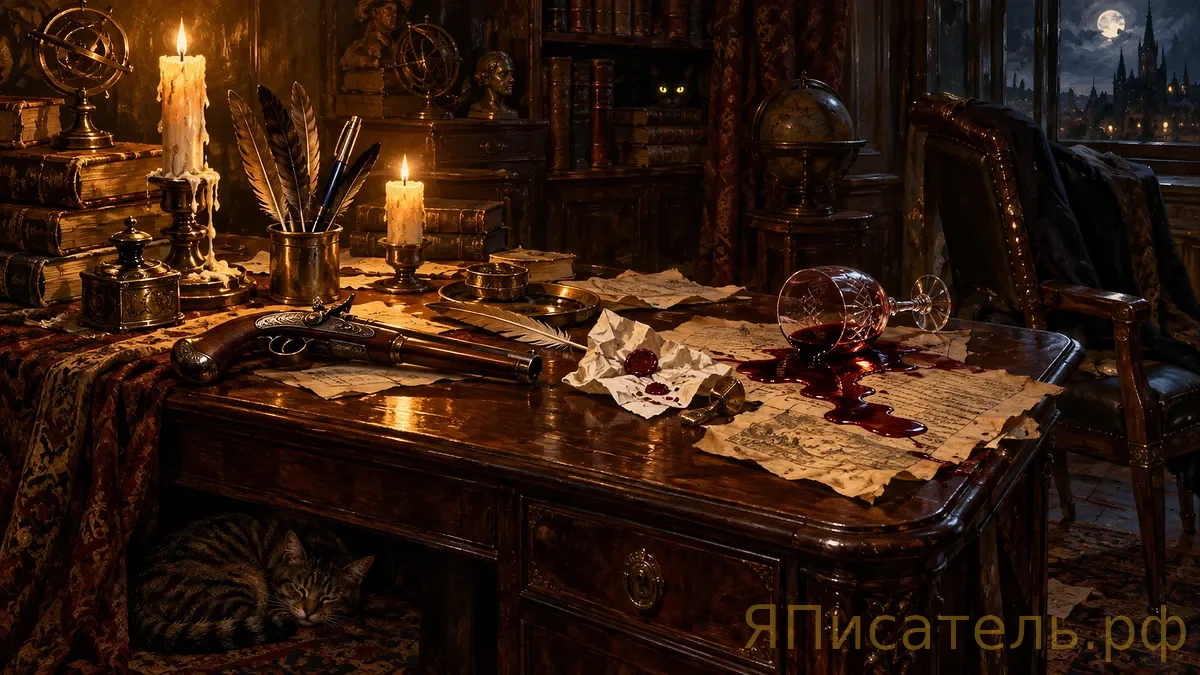
Pushkin Died in a Duel at 37 — and Still Outwrites Us All
A French exile's bullet killed Russia's greatest poet on February 10, 1837. He was thirty-seven. Let that sink in. At an age when most of us are still figuring out our LinkedIn bios, Alexander Pushkin had already invented an entire national literature from scratch. He'd written the novel that every Russian schoolchild can quote by heart, a ghost story that still haunts gamblers worldwide, and a tale of honor and rebellion set against a backdrop so vivid it makes Hollywood look lazy.
And here's the kicker: 189 years later, the man is more relevant than ever. Not in that vague, hand-wavy "classics are timeless" way your high school teacher mumbled while you stared out the window. Pushkin is relevant the way a slap across the face is relevant — immediate, undeniable, and impossible to ignore.
Let's start with "Eugene Onegin," because if you haven't read it, you've been living a lesser life and I say that with love. Written between 1823 and 1831, it's a novel in verse — yes, an entire novel in poetry, fourteen-line stanzas with a rhyme scheme so intricate it's named after him (the Onegin stanza, look it up). But forget the technical wizardry for a moment. What Pushkin actually wrote was the first great story about a bored, privileged young man who destroys everything good in his life because he thinks he's too sophisticated for happiness. Sound familiar? Onegin is the original sad boy. He's the template for every brooding antihero from Pechorin to Don Draper. He rejects Tatiana — a woman who offers him genuine, vulnerable love — because sincerity embarrasses him. Years later, when he finally realizes what he lost, it's too late. She's moved on. She's stronger. She tells him to get lost, essentially, in the most dignified rejection letter in literary history.
Now tell me that doesn't hit different in the age of ghosting and situationships. Pushkin diagnosed the emotional cowardice of the modern male two centuries before dating apps existed. Every time some guy texts "I'm just not in a place for a relationship right now" and then panics six months later when she's happy without him — that's Onegin. Pushkin saw it coming. He always saw it coming.
Then there's "The Queen of Spades," and honestly, if you want a masterclass in psychological horror packed into about thirty pages, this is your holy grail. Hermann, a calculating German officer in St. Petersburg, becomes obsessed with a secret card combination that supposedly guarantees winning at faro. He manipulates an old countess, terrifies her to death (literally), and then her ghost shows up to give him the winning cards. Except — and this is pure Pushkin genius — the cards betray him. Instead of the ace, he draws the queen of spades. And the queen winks at him.
That wink. That single, devastating, hallucinatory wink. It's one of the greatest moments in all of fiction. Is it supernatural? Is Hermann insane? Pushkin doesn't care about giving you answers. He cares about that chill running down your spine. Tchaikovsky turned it into an opera. Countless films have been adapted from it. The story essentially invented the psychological thriller as we know it — the unreliable narrator consumed by obsession, the universe that punishes greed not with thunder and lightning but with a quiet, smirking twist of fate.
And let's not sleep on "The Captain's Daughter." Set during the Pugachev Rebellion of 1773-1775, it's a historical novel disguised as an adventure story disguised as a love letter to human decency. Young Pyotr Grinyov gets sent to a remote frontier fortress, falls in love with Masha (the captain's daughter), and finds himself caught between imperial loyalty and the charismatic rebel Pugachev. What makes this book extraordinary isn't the battles or the romance — it's the moral complexity. Pugachev is a murderer and a usurper, but he's also generous, witty, and oddly honorable. Grinyov serves the empress, but the system he defends is brutal and unjust. Pushkin refuses to let you pick a comfortable side.
This is what separates Pushkin from the literary monuments who gather dust on shelves. He never preaches. He never tells you who's right. He shows you messy, contradictory humans making messy, contradictory choices, and he trusts you — the reader — to wrestle with it yourself. In an era of hot takes and moral certainty on social media, where everyone's racing to be the most righteous voice in the room, Pushkin's radical ambiguity feels almost revolutionary.
Here's something else people forget: Pushkin was African. His great-grandfather, Abram Gannibal, was brought from Africa to the court of Peter the Great, where he became a military engineer and nobleman. Pushkin was proud of this heritage — he wrote an unfinished novel about Gannibal. In the 1820s and 1830s, a man of African descent was creating the foundation of Russian literature. That fact alone should be taught in every classroom on the planet, not as a footnote but as a headline.
His influence bleeds across borders and centuries. Dostoevsky, Tolstoy, Gogol, Turgenev — they all grew from the soil Pushkin tilled. "We all came out of Gogol's 'Overcoat,'" Dostoevsky supposedly said, but Gogol himself came out of Pushkin. Nabokov spent years translating "Eugene Onegin" into English with obsessive, almost deranged fidelity, producing a four-volume commentary longer than the original poem. That's what Pushkin does to people. He gets under your skin and never leaves.
But perhaps the most Pushkin thing about Pushkin is how he died. His wife, Natalia Goncharova, was relentlessly pursued by Georges d'Anthès, a French officer adopted by the Dutch ambassador. The gossip was vicious. Anonymous letters circulated. Pushkin, already short-tempered, challenged d'Anthès to a duel. On January 27, 1837 (February 10 by the new calendar), on the outskirts of St. Petersburg, in the snow, d'Anthès fired first. The bullet hit Pushkin in the abdomen. He managed to fire back, wounding d'Anthès slightly, then collapsed. He died two days later.
Thirty-seven years old. Killed by wounded pride and a broken honor code. It's tragic, it's stupid, it's heartbreakingly human — and it's exactly the kind of ending Pushkin himself might have written for one of his characters. Life imitating art with the cruelest possible irony.
So, 189 years on, what do we do with Pushkin? We read him. Not because he's a "classic" and you're supposed to, but because his writing is alive in a way that most contemporary fiction can only dream of. Because Onegin's emotional paralysis is your friend who can't commit. Because Hermann's obsession with a shortcut to wealth is every crypto bro who ever lived. Because Grinyov's struggle between loyalty and conscience is the dilemma of anyone who's ever worked for a system they know is flawed.
Pushkin didn't just write for Russia. He wrote for anyone who's ever been foolish, proud, in love, afraid, greedy, or decent. Which is to say — he wrote for all of us. And the fact that a bullet took him at thirty-seven, before he could write the dozens of masterpieces still burning inside him, isn't just a literary tragedy. It's a personal one. Every reader who discovers Pushkin eventually feels it: the grief of all those unwritten pages, and the staggering gratitude for the ones he left behind.
Вставьте этот код в HTML вашего сайта для встраивания контента.