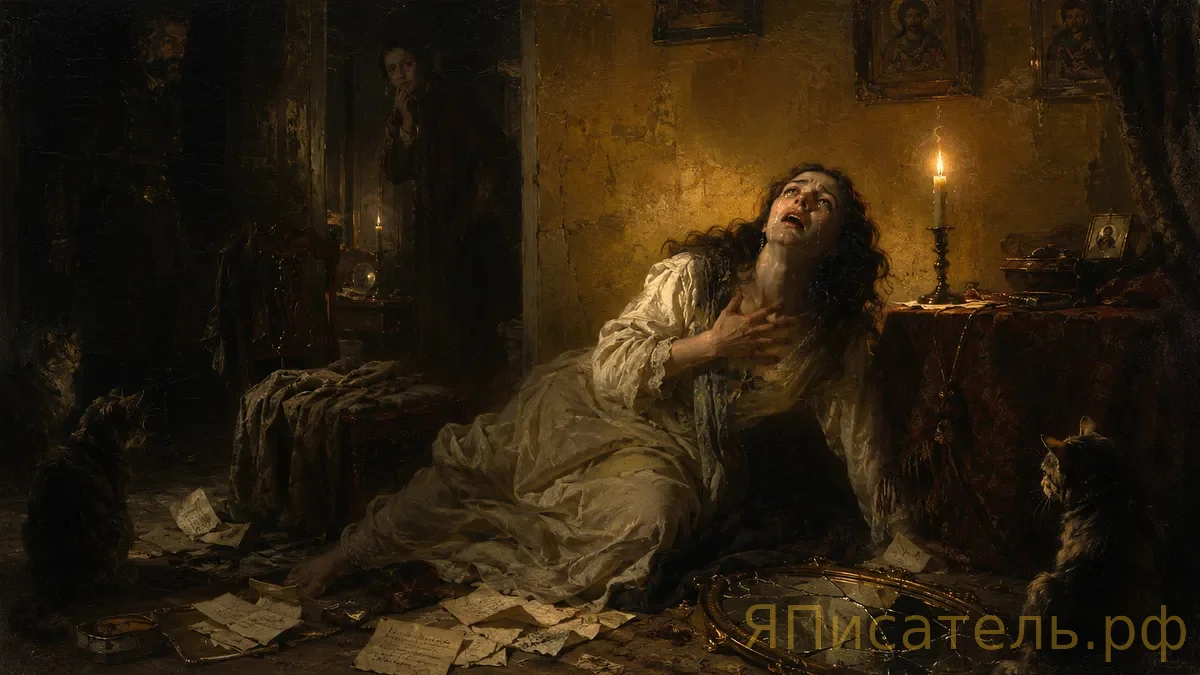
Climax and Resolution
Master how Russian writers construct climactic moments where internal and external conflicts converge. Effective climax emerges inevitably from prior events while offering genuine transformation.
The climax in Russian literature represents convergence of internal and external conflict where accumulated tension reaches breaking point and character choice becomes inevitable. Unlike formulaic climaxes where heroes triumph through virtue or effort, Russian climaxes often feature moral ambiguity, pyrrhic victory, or bittersweet transformation. The climax emerges not through sudden external event but through accumulation of prior actions, choices, and pressures that leave protagonists no viable alternative. Dostoevsky's climaxes involve psychological breakdown rather than external resolution: Raskolnikov's crisis comes not from police capture but from internal spiritual devastation. The climactic moment transforms understanding of everything preceding it: readers recognize that prior events made this conclusion inevitable while remaining surprised by its specific form. Russian writers often denied readers the satisfaction of complete resolution; climaxes answered major questions while leaving smaller ones unanswered, provided psychological insight without material security, or offered spiritual transformation without external improvement. The resolution following climax might extend beyond the dramatic moment: Russian literature often included extended denouement examining implications and aftermath rather than abruptly ceasing at the moment of maximum excitement. This technique permits exploration of how characters integrate crisis, what they learn from transformation, and what their changed understanding means for future life.
Вставьте этот код в HTML вашего сайта для встраивания контента.