The Dead Poet Who Still Controls Your Love Life: Why Pushkin's Ghost Haunts Every Romantic Comedy You've Ever Watched
On February 10, 1837, Alexander Pushkin died from a gunshot wound sustained in a duel over his wife's honor. He was 37 years old, roughly the same age you were when you finally understood that your ex wasn't 'complicated' – they were just terrible. And here's the thing: this Russian aristocrat who's been dead for 189 years probably understood your relationship better than your therapist does.
Pushkin didn't just write poetry. He invented the template for every brooding love interest, every 'he's broken but I can fix him' fantasy, and every dramatic rejection that made you cry into your ice cream at 2 AM. His fingerprints are all over modern storytelling, and most people have no idea they're living inside plots he sketched out two centuries ago.
Let's talk about 'Eugene Onegin,' which is basically the original 'he's just not that into you' manual. Tatyana, a young provincial girl, falls desperately in love with the sophisticated, bored aristocrat Onegin. She writes him a passionate letter confessing everything. His response? A patronizing lecture about how she should learn to control herself better. Sound familiar? Congratulations, you've dated an Onegin. We all have. Pushkin saw this dynamic in the 1820s and wrote it down so perfectly that Jane Austen scholars still argue about who influenced whom. The 'aloof love interest who realizes their mistake too late' trope? That's Pushkin's invention, and every romantic comedy from 'Pride and Prejudice' adaptations to 'You've Got Mail' owes him royalties.
But here's where it gets really interesting. Pushkin wasn't writing cautionary tales – he was holding up a mirror to Russian society and laughing at what he saw. Onegin is insufferable precisely because society taught him to be insufferable. He's educated, cultured, and completely incapable of genuine emotion because genuineness wasn't fashionable. In 2026, we'd call this 'emotional unavailability caused by societal expectations of masculinity.' Pushkin just called it being a fool, which is more economical.
'The Captain's Daughter' is Pushkin playing a different game entirely. It's a historical novel set during the Pugachev Rebellion of the 1770s, and it reads like someone mixed 'Game of Thrones' with a coming-of-age story about a young officer named Pyotr Grinyov. There's political intrigue, a romance with a fortress commander's daughter, and a rebel leader who's simultaneously terrifying and weirdly honorable. What makes it remarkable is how Pushkin refuses to make anyone purely good or evil. The rebel Pugachev, who should be the villain, saves our hero twice. The 'good' imperial authorities are often petty and corrupt. This moral complexity in historical fiction? Revolutionary for its time. Now it's the baseline expectation for any serious historical drama.
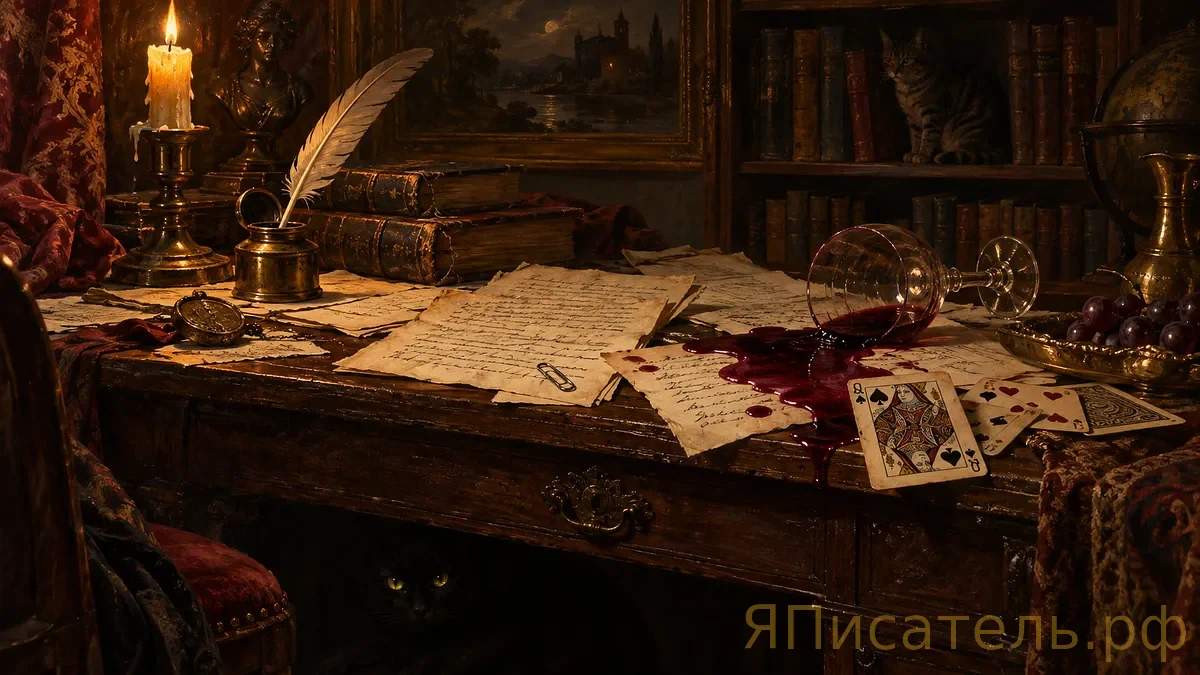
'The Queen of Spades' is where Pushkin gets genuinely creepy, and it's my personal favorite. Hermann, a German engineer in St. Petersburg, becomes obsessed with a gambling secret supposedly held by an ancient countess. He terrorizes her to learn the winning card combination, she dies of fright, and her ghost may or may not visit him with the fatal answer. It's a psychological horror story about obsession, greed, and the destruction that comes from wanting shortcuts to success. Tchaikovsky turned it into an opera. Dostoevsky clearly took notes for his own gambling-obsessed characters. Every thriller about someone destroyed by their own obsession traces its lineage back to this short story.
What makes Pushkin genuinely important – beyond his influence on basically everything – is that he created modern Russian literature essentially from scratch. Before him, Russian writing was mostly imitations of French and German models. Pushkin took the Russian language, which the aristocracy considered too crude for 'serious' literature, and proved it could be elegant, precise, and deeply expressive. He was doing for Russian what Dante did for Italian and Shakespeare did for English: demonstrating that the vernacular could achieve artistic greatness.
The man also lived his writing. Those aristocratic duels, impossible romances, and social rebellion he wrote about? He experienced all of them. He was exiled twice for his political poetry. He had affairs that scandalized society. He married one of the most beautiful women in Russia and then died defending her reputation against a French officer's flirtations. You can't make this up – except Pushkin essentially did make it up, for his characters, before living it himself. The line between his art and his life is so blurred that scholars still debate which came first.
Here's the uncomfortable truth about Pushkin's legacy: we've internalized his storytelling so completely that we don't notice it anymore. When you feel that someone 'got away' because you didn't appreciate them when you had the chance – that's an Onegin narrative. When you're drawn to someone mysterious despite knowing it's a bad idea – hello, Queen of Spades energy. When you believe that love and honor are worth dying for – you've absorbed the worldview of 'The Captain's Daughter' and a thousand works it influenced.
Pushkin died believing he'd failed. His final years were marked by financial troubles, social humiliation, and the duel that killed him. He couldn't have imagined that his works would be translated into every major language, that his phrases would become Russian proverbs, or that his literary techniques would become the foundation of modern fiction. He thought he was writing for his contemporaries. He was actually writing for us – and for everyone who comes after.
So today, 189 years after a bullet ended one of literature's most remarkable lives, maybe take a moment to recognize the ghost in your mental machinery. The next time you're convinced that the emotionally unavailable person will eventually realize your worth, or that taking a dangerous gamble might pay off, or that circumstances conspire against true love – you're not having original thoughts. You're performing scripts that a brilliant, doomed Russian wrote before dying in a snowfield outside St. Petersburg. The least we can do is remember his name.
Paste this code into your website HTML to embed this content.