News Feb 5, 06:14 AM

Ancient Manuscript Reveals Jane Austen Collaborated with Anonymous Female Writers' Circle

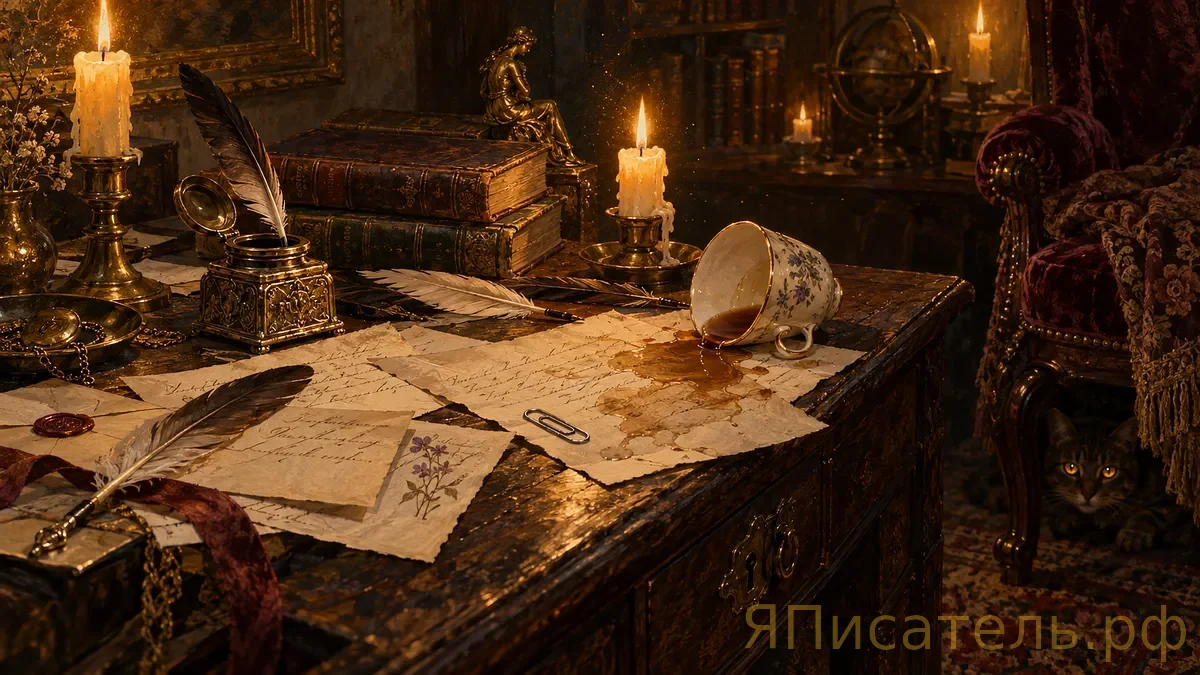
A remarkable discovery at Oxford's Bodleian Library has fundamentally altered our understanding of Jane Austen's creative process. Researchers examining a recently acquired collection of early 19th century correspondence have found compelling evidence that the beloved novelist was an active member of a clandestine literary circle comprised entirely of women writers.

The collection, donated anonymously last autumn, contains over forty letters exchanged between Austen and at least six other female authors between 1809 and 1815. The correspondence reveals a sophisticated system of manuscript exchange, with members offering detailed critiques and suggestions for each other's work.

"What we're seeing is nothing less than a proto-writing workshop," explains Dr. Helena Whitmore, the lead researcher on the project. "These women were operating outside the traditional literary establishment, supporting each other's creative endeavors in ways we never knew existed."

Perhaps most striking is the discovery that several passages from Austen's later novels appear to have been refined through this collaborative process. Marginal notes in handwriting identified as belonging to a woman named Catherine Ashworth suggest significant contributions to the famous opening chapters of "Emma."

The identity of the other circle members remains partially obscured, as many used pseudonyms in their correspondence. However, researchers have tentatively identified connections to several minor published works of the period, suggesting the circle's influence extended beyond Austen herself.

"This discovery challenges the romantic notion of the solitary genius," notes literary historian Professor James Harrington. "It shows that even our most celebrated authors existed within communities of mutual support and intellectual exchange."

The Bodleian Library plans to digitize the complete collection and make it available to scholars worldwide by early 2027. A public exhibition featuring selected letters is scheduled to open this September, coinciding with the 250th anniversary celebrations of Austen's birth.

1x

Comments (0)

No comments yet

Sign up to leave comments

Read Also

The Junkie Genius Who Shot His Wife and Revolutionized Literature: William S. Burroughs at 112
Article
13 minutes ago

The Junkie Genius Who Shot His Wife and Revolutionized Literature: William S. Burroughs at 112

On February 5, 1914, in a stuffy St. Louis mansion, a baby was born who would grow up to accidentally kill his wife during a drunken game of William Tell, become the godfather of counterculture, and write some of the most banned, reviled, and ultimately celebrated books of the twentieth century. Happy birthday, Bill. William Seward Burroughs II came from money—his grandfather invented the adding machine that made the family fortune—but he spent most of his life running from respectability like it was a plague of giant centipedes (which, incidentally, feature prominently in his nightmares and his fiction).

0
0
Iris Murdoch Died 27 Years Ago, and We Still Haven't Figured Out What the Hell She Was Talking About
Article
19 minutes ago

Iris Murdoch Died 27 Years Ago, and We Still Haven't Figured Out What the Hell She Was Talking About

Here's a confession that might get me banned from every book club in existence: the first time I tried to read 'The Sea, the Sea,' I threw it across the room. Not because it was bad—God, no—but because Iris Murdoch had the audacity to make me feel like the intellectual equivalent of a golden retriever staring at a calculus equation. Twenty-seven years after her death, this Irish-born philosopher-novelist continues to haunt our literary consciousness.

0
0
How AI Helps Overcome Writer's Block: A Practical Guide to Unlocking Your Creativity
Article
about 2 hours ago

How AI Helps Overcome Writer's Block: A Practical Guide to Unlocking Your Creativity

Every writer knows the feeling: you sit down at your desk, open a blank document, and nothing happens. The cursor blinks mockingly while your mind remains frustratingly empty. Writer's block isn't just an inconvenience—it's a creative crisis that has derailed countless promising projects and left authors questioning their abilities. But here's the good news: we live in an era where artificial intelligence has become a powerful ally in the battle against creative paralysis. AI doesn't replace the writer—it serves as a collaborative partner that can help spark ideas, overcome mental barriers, and keep the creative momentum flowing.

0
0

"Good writing is like a windowpane." — George Orwell