The Nobel Prize That Almost Killed Boris Pasternak
Imagine winning the most prestigious literary award on the planet — and then being forced to reject it under threat of exile. That's not a dystopian novel plot; that's Tuesday for Boris Pasternak. Born 136 years ago today, on February 10, 1890, this Russian poet turned the literary world upside down with a single novel he spent a decade writing, and then watched helplessly as his own country tried to destroy him for it.
Most people know Pasternak as "the Doctor Zhivago guy." Fair enough — it's a masterpiece. But reducing him to one novel is like saying Beethoven was "the Moonlight Sonata dude." Pasternak was first and foremost a poet, and arguably one of the greatest the Russian language ever produced. Before Doctor Zhivago made him internationally infamous, he'd already spent thirty years reshaping Russian verse with collections like *My Sister, Life* and *Second Birth*. His early poetry was so explosively original that fellow poets either worshipped him or wanted to throw things at him. There was no middle ground.
Let's rewind. Boris Leonidovich Pasternak grew up in a household so cultured it's almost annoying. His father, Leonid, was a celebrated painter who counted Tolstoy among his personal friends. His mother, Rosa Kaufman, was a concert pianist. Little Boris grew up with Tolstoy literally visiting his living room and Scriabin's music filling the hallways. If you ever needed proof that environment shapes genius, the Pasternak family is Exhibit A. Young Boris initially wanted to be a composer, then pivoted to philosophy, studying at the University of Marburg in Germany. He only settled on poetry after realizing — his words, essentially — that he lacked the absolute pitch necessary for music. Literature's gain was music's barely noticeable loss.
Here's where it gets interesting. Pasternak survived Stalin's Terror. Let that sink in. While fellow writers were being arrested, executed, or shipped to gulags with assembly-line efficiency, Pasternak somehow remained untouched. There's a famous story that Stalin personally called Pasternak on the phone in 1934 to discuss the arrested poet Osip Mandelstam. Pasternak, reportedly flustered, failed to adequately defend his colleague. He carried that guilt for the rest of his life. But the phone call may have also saved him — because Stalin, in his own twisted logic, seems to have decided that Pasternak was a harmless dreamer, a "cloud dweller" not worth the bullet.
So Pasternak survived. He translated Shakespeare and Goethe during the darkest years. He wrote. He waited. And then, starting in 1945, he began his magnum opus — *Doctor Zhivago*, a sweeping novel about a poet-physician navigating the Russian Revolution and Civil War. It took him a decade. When he finished, he knew no Soviet publisher would touch it. The manuscript was smuggled to Italy in 1957, where the publisher Giangiacomo Feltrinelli released it despite furious Soviet demands to return it. The book became an instant international sensation.
Then came the Nobel Prize in 1958, and all hell broke loose. The Soviet literary establishment — which had spent years tolerating Pasternak's eccentricities — went absolutely nuclear. The Writers' Union expelled him. Newspapers ran coordinated attack campaigns. Factory workers who had never read a line of Pasternak were organized to denounce him. One particularly memorable headline in *Pravda* essentially called him a pig. The phrase "I haven't read Pasternak, but I condemn him" became a dark joke that perfectly captured the absurdity of Soviet cultural politics.
Pasternak initially accepted the Nobel, sending the famous telegram: "Immensely thankful, touched, proud, astonished, abashed." Four days later, under crushing pressure and facing the very real threat of being stripped of Soviet citizenship and exiled — never to see his beloved country again — he was forced to decline. His telegram to the Swedish Academy read: "Considering the meaning this award has been given in the society to which I belong, I must reject this undeserved prize." Every word of that sentence drips with pain. "The society to which I belong" — not "my country," not "my homeland." The society. The machine.
What makes Doctor Zhivago so dangerous? On the surface, it's a love story set against revolution. But dig deeper and you find something the Soviet state couldn't tolerate: the radical idea that individual consciousness — a single person's inner life, their private joys, griefs, and meditations — matters more than any collective historical force. Yuri Zhivago is a terrible revolutionary. He's passive, contemplative, hopelessly romantic. He writes poetry while the world burns. And Pasternak clearly thinks that's not a bug — it's the whole point of being human.
The novel also accomplished something technically remarkable that often gets overlooked. Pasternak wove his poetry directly into the narrative fabric. The final section of Doctor Zhivago is a cycle of poems supposedly written by Zhivago himself, and these aren't decoration — they're the emotional and philosophical climax of the entire work. It's as if Tolstoy had ended *War and Peace* not with an essay on history, but with a sequence of sonnets. Nobody had done this before, and few have done it since with comparable success.
Pasternak died on May 30, 1960, in Peredelkino, the writers' village outside Moscow. He was 70. The Soviet authorities tried to suppress even his funeral, but thousands showed up anyway, reciting his poems aloud as they carried the coffin. It was, in its quiet way, one of the first acts of cultural defiance that would eventually feed the dissident movement.
The legacy is complicated and enormous. Doctor Zhivago became a David Lean film in 1965 — gorgeous, Oscar-laden, and only loosely connected to the novel's actual themes. The CIA, we now know, helped distribute the Russian-language edition abroad as a Cold War propaganda tool, which is both hilarious and deeply ironic given that Pasternak was no one's political instrument. In Russia, the novel was finally published in 1988, during perestroika, and the Nobel Prize was posthumously "restored" to Pasternak's family in 1989.
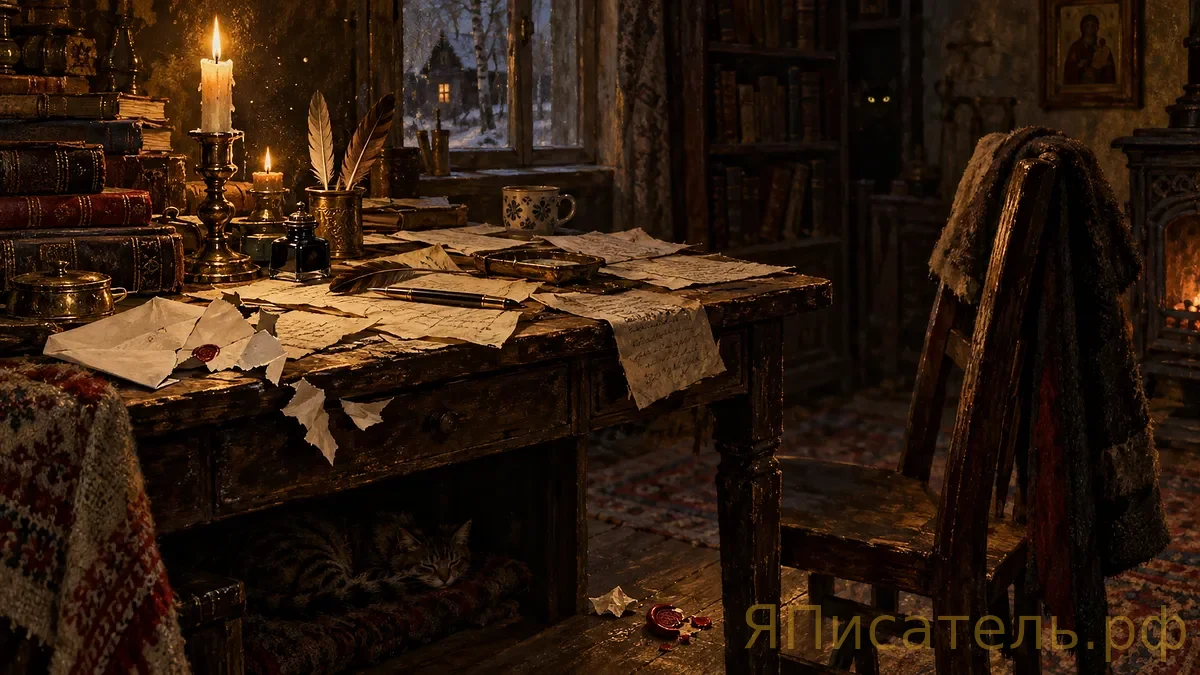
But here's what really stays with me, 136 years after his birth. Pasternak bet everything — his safety, his reputation, his peace of mind — on the conviction that a single honest book matters. Not a political manifesto, not a call to arms, but a novel about a man who watches snowflakes and writes poems about candles. In a century that worshipped action, Pasternak championed contemplation. In an empire that demanded conformity, he insisted on the irreducible sovereignty of the individual soul.
He was right, of course. The empire is gone. The poems remain. And somewhere in Peredelkino, the wind still moves through the birch trees the way it does in his verses — indifferent to ideology, loyal only to beauty. That's the kind of immortality no committee can award and no state can revoke.
将此代码粘贴到您网站的HTML中以嵌入此内容。