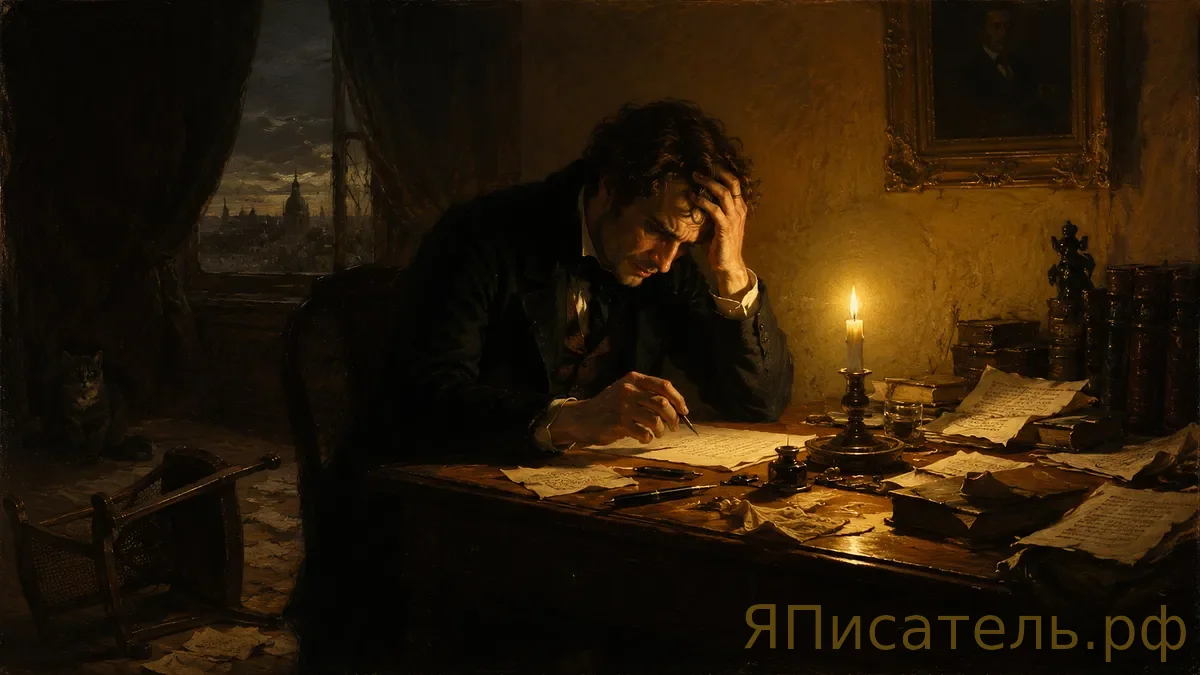
Show Don't Tell Principle
Understand how Russian writers reveal character and emotion through action, sensation, and detail rather than direct statement. The principle of showing creates immersive experiences that allow readers to draw their own conclusions.
The dictum 'show don't tell' remains fundamental to Russian literary tradition, where writers believed readers should experience scenes rather than hear authorial commentary. Instead of stating 'Ivan was angry,' Russian prose demonstrates anger through clenched fists, rapid speech, broken objects, or calculated coldness. Tolstoy exemplified this approach, using physical detail to convey emotional states: a character's hand trembling reveals anxiety more powerfully than declaring anxiety. The technique extends beyond emotion to all abstract concepts—justice, love, betrayal, faith. Rather than philosophizing about human nature, Russian writers constructed scenes where readers witness nature through specific, sensory details. This requires precision: the right detail carries enormous weight. A character adjusting their collar reveals self-consciousness; a hesitation before speech suggests doubt. Russian prose avoids telling readers what to think or feel about characters, trusting instead in the power of carefully selected action and detail. The reader becomes an active participant, interpreting behavior and drawing conclusions. This approach makes stories memorable because readers feel they've discovered truths themselves rather than being instructed.
Paste this code into your website HTML to embed this content.