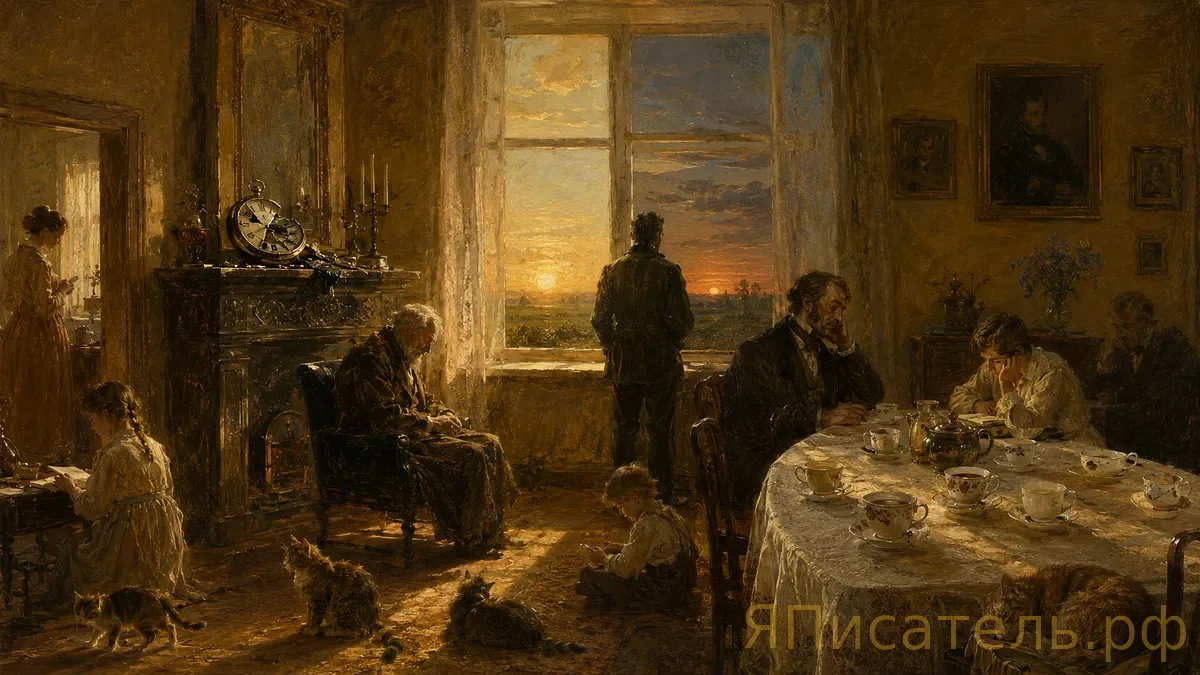
Time as Literary Tool
Understand how Russian writers manipulate temporal flow—expanding significant moments and compressing mundane time. Time structure reveals thematic importance and shapes reader experience.
Russian writers understood that narrative time need not match chronological time; a day of crucial psychological transformation might require a hundred pages while a year of routine living needs merely a sentence. Time manipulation serves thematic purposes: emphasizing critical moments through temporal expansion and moving quickly through periods of stasis or external events that don't advance understanding. Russian prose often employed non-linear time structures: beginning at narrative's end, then moving backward through time, or fragmenting chronological sequence to create meaning through arrangement rather than simple succession. Flashback sequences permitted access to past events that illuminate present consciousness. Another technique involved manipulating reader's sense of temporal duration through narrative rhythm: time feels long and tedious through slow, detailed description; time accelerates through rapid, sparse narrative. Russian writers also employed temporal ambiguity: leaving readers uncertain about when events occurred or the relationship between temporal moments. This technique mirrors consciousness itself—memory doesn't follow chronological order, significance transforms how we remember time, and present moment carries weight of past and future simultaneously. The structure of time within a narrative communicates implicit meaning: cyclical time suggests repetition and inescapable patterns, linear time suggests progress, fragmented time suggests trauma or psychological dislocation.
将此代码粘贴到您网站的HTML中以嵌入此内容。