Umberto Eco Predicted the Post-Truth Era — And We Didn't Listen
Umberto Eco Predicted the Post-Truth Era — And We Didn't Listen
Ten years ago today, the world lost Umberto Eco — a man who disguised philosophy as murder mysteries and turned conspiracy theories into literature before conspiracy theories became our daily news feed. We buried the prophet and kept scrolling. Now, a decade later, his novels read less like fiction and more like user manuals for surviving the information apocalypse. If you haven't read him yet, congratulations: you're living inside his plot.
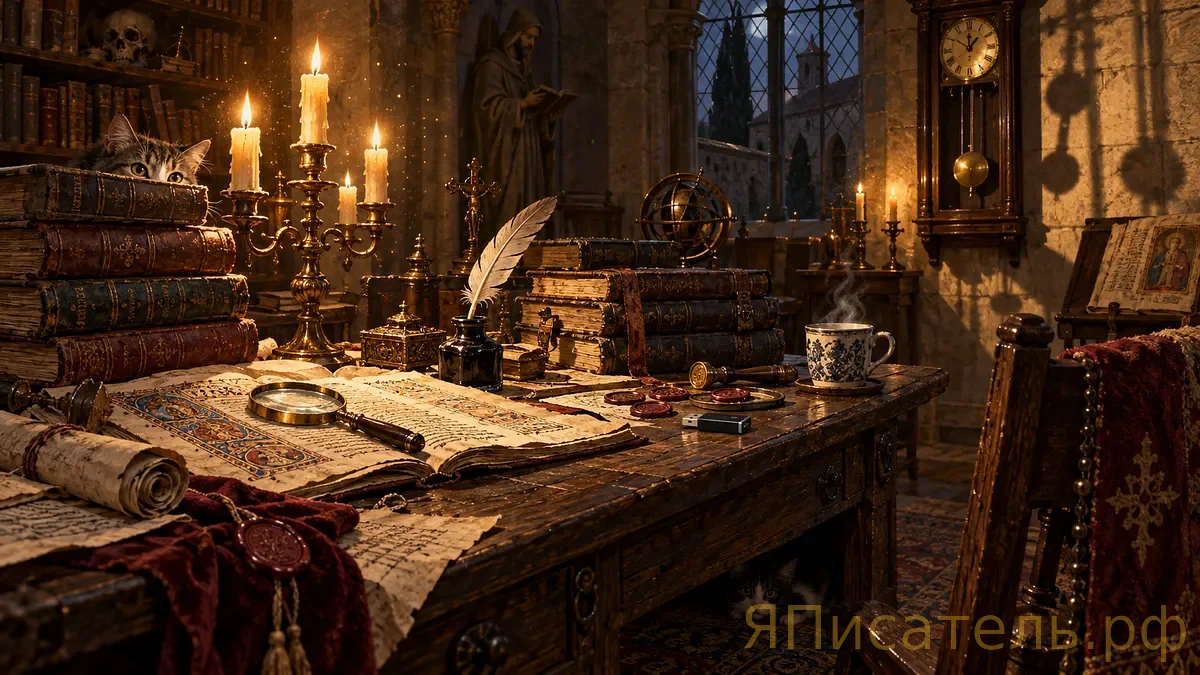
Let's start with the elephant in the scriptorium. The Name of the Rose, published in 1980, is a medieval detective novel about monks getting murdered in a monastery. Sounds like something your weird uncle might pitch at Thanksgiving. But here's the trick Eco pulled: he wrote a book about the suppression of knowledge — about powerful institutions deciding what you're allowed to laugh at, think about, and read — and he wrapped it in a whodunit so compelling that it sold over 50 million copies worldwide. Fifty. Million. For a book where characters debate Aristotle's lost treatise on comedy. The man was a sorcerer.
But The Name of the Rose wasn't just a clever puzzle box. It was a warning shot. The central conflict — a blind librarian hoarding and poisoning a book because he fears laughter will undermine authority — is basically the plot of every culture war we've had since 2016. Replace the monastery with social media platforms, replace the poisoned pages with algorithmic suppression, and you've got a disturbingly accurate portrait of how information gatekeeping works today. Eco saw it coming forty years early, wearing a tweed jacket and probably smirking.
Then there's Foucault's Pendulum, published in 1988, which is — and I say this with deep affection — the most gloriously unhinged novel of the twentieth century. Three bored editors at a vanity press decide, as a joke, to invent a grand conspiracy theory connecting the Knights Templar, the Rosicrucians, the Freemasons, and basically every secret society that ever existed. They feed random historical facts into a computer, connect the dots with pure imagination, and create "The Plan" — a fake master narrative explaining all of history. The punchline? People start believing it. People kill for it.
Sound familiar? It should. Eco wrote QAnon thirty years before QAnon existed. He wrote the playbook for how internet rabbit holes work before the internet was in most people's homes. The novel's core insight is devastatingly simple: humans are pattern-seeking animals, and if you give them enough data points, they will connect them into a story — any story — and then die on that hill. Literally. The characters in Foucault's Pendulum learn this the hard way. So has the internet.
What makes Eco's legacy so uncomfortably relevant is that he wasn't just a novelist playing with ideas. He was a semiotician — a scholar of signs and meaning. He spent his academic career studying how humans interpret symbols, how meaning gets made and manipulated, how a simple image or word can be weaponized. His 1995 essay "Ur-Fascism" laid out fourteen features of fascist thinking with such surgical precision that it gets shared on social media every few months like clockwork. The man wrote the diagnostic checklist for authoritarianism, and we keep pulling it out of the drawer like, "Huh, this seems relevant again."
Here's what kills me about Eco's reputation, though. In literary circles, he's revered. In academic circles, he's canonical. But in popular culture? He's fading. Ask someone under thirty about Umberto Eco, and you'll likely get a blank stare. This is a tragedy bordering on farce, because his work has never been more applicable. We live in an era where misinformation spreads faster than truth, where people construct elaborate conspiracies from YouTube videos and Reddit threads, where the very concept of "what is real" is up for debate. Eco spent his entire career preparing us for this moment, and we collectively said, "Nah, too many pages."
To be fair, Eco didn't make it easy. The Name of the Rose opens with a hundred pages of medieval theological debate. Foucault's Pendulum requires a working knowledge of Kabbalah, alchemy, and Brazilian spiritualism. He once said, "I felt like poisoning a monk," when asked why he wrote The Name of the Rose, which is either the most honest or most terrifying answer any author has ever given. He didn't write for casual readers. He wrote for people willing to meet him halfway up a very steep intellectual mountain — and then rewarded them with a view that changed how they saw everything below.
But here's the secret Eco embedded in all his work, the one that makes him essential reading in 2036: the antidote to conspiracy thinking isn't ignorance — it's more knowledge. William of Baskerville, the Sherlock Holmes figure in The Name of the Rose, doesn't solve the mystery by being smarter than everyone else. He solves it by being more curious, more willing to question his own assumptions, more committed to following evidence wherever it leads — even when it leads somewhere uncomfortable. In an age when people cherry-pick facts to support predetermined conclusions, Eco's detective stands as a radical figure: someone who actually wants to know the truth, consequences be damned.
The irony of Eco's death in 2016 is almost too perfect to be real. He died on February 19th, just as the world was about to plunge into the post-truth era he'd spent decades warning about. Brexit, the American election circus, the explosion of fake news — all of it happened in the months after he left. It's as if the universe waited for the referee to leave the field before descending into chaos. Eco himself would have appreciated the narrative symmetry. He probably would have written an essay about it, dense with footnotes and devastatingly witty.
So what do we do with Eco's legacy ten years on? We read him. Not because it's easy or because it makes us feel smart at dinner parties — though it absolutely does both eventually — but because his books are the intellectual equivalent of a fire extinguisher behind glass. Break in case of emergency. And brother, the building has been on fire for a while now. Foucault's Pendulum should be required reading for anyone with an internet connection. The Name of the Rose should be handed out at every library card registration. Not because Eco had all the answers, but because he asked the right questions in the most entertaining way possible — disguised as murder, conspiracy, and monks arguing about whether Jesus laughed.
Ten years without Umberto Eco. The books remain. The warnings remain. The question is whether we'll finally crack them open — or keep proving him right.
Pega este código en el HTML de tu sitio web para incrustar este contenido.