The Lullaby No One Sang
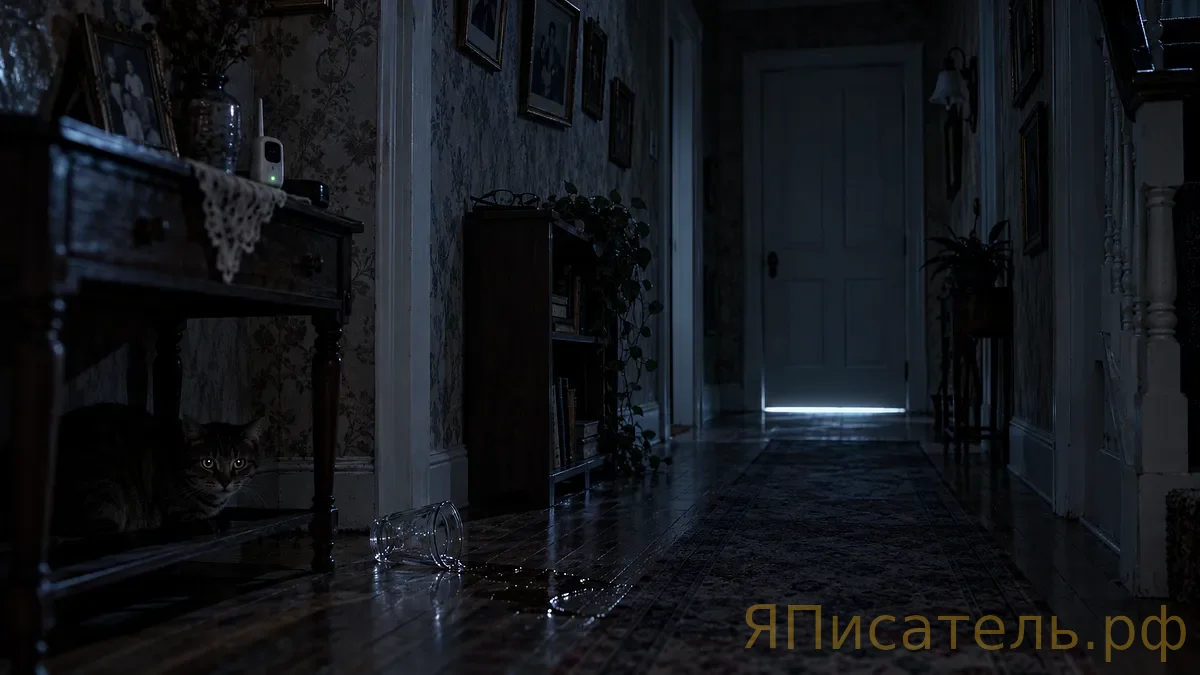
The baby monitor had been in the attic for years — ever since their daughter outgrew it. Claire had forgotten it existed until the power surge.
It happened on a Tuesday. A transformer blew three blocks away, and everything in the house flickered — the kitchen lights, the microwave clock, the television. When the power stabilized, Claire noticed a faint green light pulsing on the kitchen counter, half-hidden behind the bread box. She pulled it out and stared. The old baby monitor, its receiver unit, was on. She hadn't plugged it in. She hadn't even seen it in two years.
She almost tossed it in the trash. Almost.
But then she heard it — a low, rhythmic hum coming through the tiny speaker. Not static. Not feedback. A melody. Faint, like someone humming through a wall of cotton.
Claire pressed the unit to her ear. The humming was delicate, almost tender. A lullaby. The kind you'd sing to a child who couldn't sleep. She recognized the tune but couldn't name it — one of those melodies that lives in the marrow of memory, from a time before words.
She told herself it was radio interference. Baby monitors picked up all sorts of signals — taxi dispatchers, cordless phones, neighbors' devices. She'd read about it. Perfectly normal.
But the camera unit was upstairs. In the old nursery. The room they'd converted into storage after Lily turned four. Boxes of Christmas decorations, old clothes, a broken exercise bike. And the rocking chair — the one Claire's mother had given them, the one they kept meaning to move but never did.
She set the monitor on the counter and went back to her book. The humming continued. She turned the volume down. It continued. She put the monitor in a drawer. She could still hear it, muffled, persistent, patient.
At 12:47 AM, the humming stopped.
The silence was worse.
Claire lay in bed beside her sleeping husband, staring at the ceiling. The house settled around her — the usual creaks of old wood, the whisper of wind against the windows. But beneath it, something else. A rhythm. Not humming this time. Rocking. The slow, deliberate creak of weight shifting back and forth on wooden runners.
The rocking chair was directly above their bedroom.
She held her breath. Creak. Pause. Creak. Pause. The tempo of someone soothing a child. She pressed her hand against David's shoulder, but he didn't stir. He never stirred. He could sleep through anything — storms, car alarms, their daughter's nightmares. Claire had always envied that. Tonight it felt like abandonment.
She got up.
The hallway was dark. She didn't turn on the light — some instinct told her not to, the way animals know not to move when a predator is near. The nursery door was at the end of the hall. Closed. She always left it closed. But as she approached, she saw the thin line of pale light beneath it. Not electric light. Moonlight, maybe, though the nursery window faced north and the moon was behind clouds.
The rocking stopped.
Claire stood three feet from the door. Her hand was raised, reaching for the knob, but her fingers wouldn't close. The air was different here — colder, thicker, carrying a scent she hadn't noticed before. Powder. Baby powder. The sweet, chalky smell of it, so strong it coated the back of her throat.
Then the humming started again.
It came from inside the room, and it came from directly behind the door, and it came from the monitor downstairs in the kitchen drawer, all at once, the same lullaby, the same impossible voice. And now Claire recognized it. Not the tune — the voice. It was hers. Her voice. The exact way she used to hum to Lily, the exact cadence, the exact breath patterns, the little catch she always had on the third bar where the melody dipped low.
Someone — something — had learned her voice. Had listened to her sing through the monitor for months, maybe years, absorbing every note, every inflection, and was now singing it back to her through the wall of a door she could not bring herself to open.
She backed away. One step. Two. The humming grew louder.
She bumped against the wall and felt the family photographs rattle in their frames. She turned and walked — did not run, would not run — back to the bedroom. She closed the door. She locked it. She got into bed and pulled the covers up to her chin and lay there, rigid, listening.
The humming followed her through the walls.
At 1:01 AM, it changed. The lullaby shifted — not in melody, but in intent. It was no longer a song meant to soothe. It was a song meant to summon. Claire felt it in her chest, a pull, like a hook behind her sternum, gentle but insistent, drawing her toward the door, the hallway, the nursery. Her legs moved beneath the sheets. Her feet touched the cold floor. She was standing before she decided to stand.
She gripped the bedframe. "No," she whispered.
The humming paused. A beat of silence. Then, from the monitor in the kitchen — she could hear it even from here, even through two closed doors — a new sound. Not humming. Breathing. Slow, wet, ragged breathing. And beneath it, so faint she might have imagined it, a word.
"Mama."
Not Lily's voice. Lily was eight now, asleep in her room across the hall. This voice was younger — the voice of an infant, impossibly clear, impossibly deliberate.
"Mama. Come."
Claire's grip on the bedframe tightened until her knuckles ached. She looked at David. Still sleeping. Still breathing his slow, even breaths. She wanted to shake him, scream at him, but something told her that waking him would be wrong. That whatever was in the nursery wanted her alone, and interrupting that expectation would have consequences she couldn't predict.
The rocking started again. Faster now. The creaks came in quick succession, agitated, hungry. The light under the nursery door — she could see it from the gap beneath the bedroom door — pulsed brighter.
"Mama. I'm cold."
Claire pressed her hands over her ears. The voice was inside her head now, bypassing sound entirely, planted directly in the place where instinct lives. Every cell in her body screamed to go to it, to pick it up, to hold it, to warm it. It was the most fundamental command a mother could receive, and it was being wielded like a weapon.
She sank to the floor and pressed her back against the bed. Tears ran down her face, not from fear — from the effort of resistance. Of refusing the thing that sounded like need.
The rocking stopped.
Footsteps.
Small, bare, deliberate. Pad. Pad. Pad. Coming down the hallway. Stopping outside the bedroom door.
The doorknob turned. Slowly. Testing. It caught against the lock.
Silence.
Then the humming resumed — right there, inches away, on the other side of the door. Claire's lullaby, note for note, sung in her stolen voice. And beneath it, the sound of small fingers tracing patterns on the wood. Drawing something. Writing something.
Claire didn't move until dawn. When the gray light finally crept through the curtains and the humming faded like smoke, she unlocked the door with shaking hands and opened it.
The hallway was empty. The nursery door was closed. Everything looked normal.
Except for the bedroom door itself. On the outside, at the height a toddler could reach, five words had been scratched into the wood with something sharp — fingernails, maybe, or teeth:
YOU USED TO SING TO ME
Claire stared at the words. Her mind raced through explanations — Lily sleepwalking, a prank, her own dissociative episode — but none of them fit. None of them explained the baby powder she could still taste in the back of her throat, or the green light of the monitor still pulsing downstairs, or the single detail that would keep her awake for every night that followed.
The rocking chair. She checked.
It was warm.
Not room-temperature warm. Body-temperature warm. As if something had just been sitting in it. As if something had just been held.
She threw the monitor away that morning. Drove it to the dump herself. Watched it disappear into the compactor.
That night, at 1:01 AM, she heard humming.
It came from inside the walls.
Pega este código en el HTML de tu sitio web para incrustar este contenido.