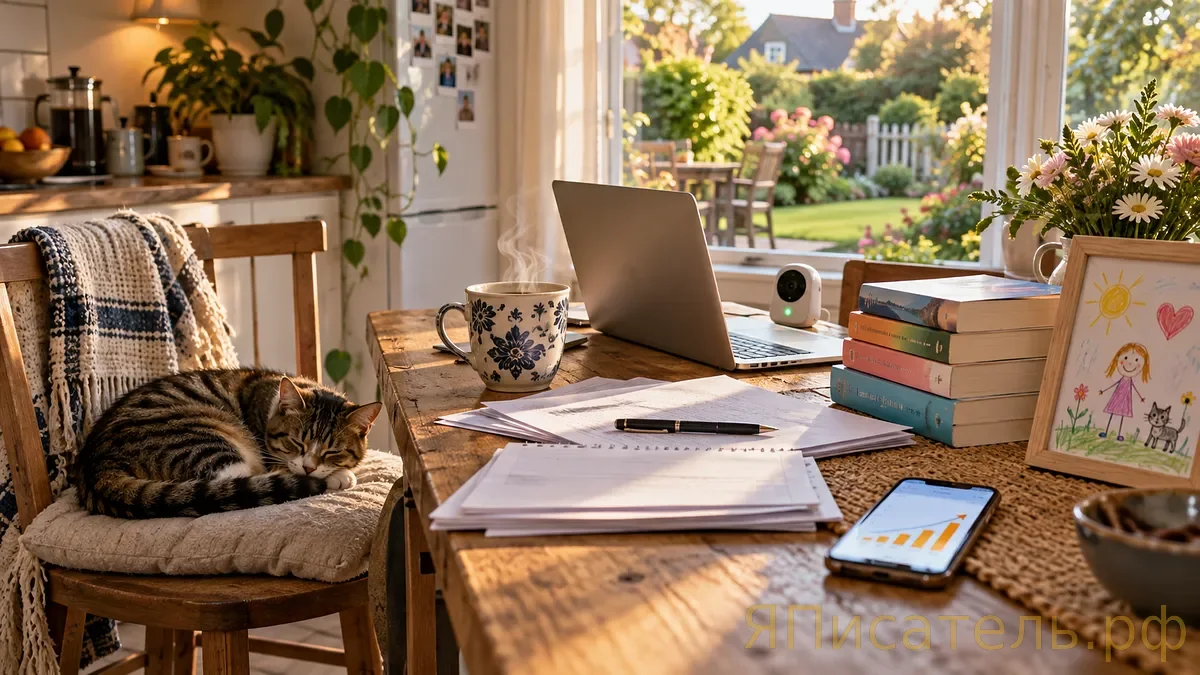
From Naptime Notes to Bestseller Lists: How Stay-at-Home Parents Are Quietly Conquering the Publishing World
Every bestselling book starts with a single sentence — and for a surprising number of successful authors, that sentence was written between diaper changes, school pickups, and midnight feedings. The rise of self-publishing has unlocked a path that didn't exist a generation ago: parents at home, building literary careers in the margins of their day, are now landing on bestseller lists and earning life-changing income. This isn't a fairy tale. It's a repeatable process, and the stories behind it are more practical — and more inspiring — than you might think.
Consider the story of Rachel Abbott. Before she became one of the UK's bestselling independent authors, she was a stay-at-home mother with no publishing credits and no literary agent. She wrote her first thriller, "Only the Innocent," during the quiet hours after her children went to bed. When traditional publishers showed no interest, she uploaded the book to Amazon in 2011. Within weeks it reached number one on the Kindle chart. She has since sold millions of copies and built a career that most traditionally published authors would envy. Her secret wasn't luck — it was consistency, a willingness to learn the craft, and the courage to publish without permission from gatekeepers.
Rachel's story is far from unique. Mark Dawson, LJ Ross, and dozens of other self-published authors began writing from home while juggling family responsibilities. What connects them isn't supernatural talent. It's a set of habits and decisions that any dedicated person can replicate. Let's break down the key lessons from their journeys.
The first lesson is deceptively simple: write in small, consistent blocks. Stay-at-home parents rarely have four uninterrupted hours to sit at a desk. Successful parent-authors learn to write in thirty-minute sessions — during nap time, before the household wakes up, or after bedtime routines. The novelist Anthony Trollope famously wrote 250 words every fifteen minutes, producing dozens of novels over his career. You don't need a cabin in the woods. You need a timer and a daily word count goal. Even 500 words a day produces a full-length novel draft in roughly six months.
The second lesson is to treat self-publishing as a business from day one. This means investing time in understanding your genre's market, studying successful book covers, writing compelling descriptions, and learning the basics of online marketing. Many stay-at-home parents already possess transferable skills — budgeting, multitasking, research, project management — that translate directly into indie publishing success. The authors who earn a sustainable income aren't just good writers; they're smart entrepreneurs who understand their readers.
The third lesson is one that trips up many aspiring authors: don't wait until your manuscript is perfect. Perfectionism is the enemy of a published book. Rachel Abbott's first novel wasn't flawless by literary-fiction standards, but it told a gripping story that readers couldn't put down. Edit thoroughly, yes. Hire a proofreader if your budget allows. But understand that your first book is your apprenticeship. Your fifth book will be dramatically better — but only if you actually finish and publish the first four.
A fourth critical insight is the power of modern tools to compress timelines that once stretched across years. Today's authors have access to AI-powered writing assistants that can help generate plot ideas, develop character arcs, outline chapters, and even polish prose. Platforms like yapisatel allow writers to move from a rough concept to a structured manuscript far more efficiently than working entirely alone. This doesn't replace the author's voice or creativity — it amplifies it, the way a calculator amplifies a mathematician's thinking. For a time-strapped parent, these tools can mean the difference between a book that stays in a notebook forever and one that actually reaches readers.
The fifth lesson is about genre selection, and it matters more than most beginners realize. The self-publishing market rewards certain genres heavily — romance, thriller, mystery, science fiction, and fantasy consistently dominate the charts. This doesn't mean you must write in a genre you hate, but it does mean you should understand where demand exists. Study the bestseller lists in your chosen category. Read the top books. Understand the conventions readers expect. Then bring your unique perspective — your voice, your life experience, your worldview — to that framework. The most successful stay-at-home-parent authors didn't reinvent the wheel; they built a better, more personal version of it.
Another pattern among successful parent-authors is the willingness to build community before and during publication. Join online writing groups. Engage with readers on social media. Start a simple email newsletter even before your book launches. Writing can feel isolating, especially when you're already spending most of your day within the four walls of your home. A community of fellow writers provides accountability, feedback, and emotional support. And an audience of even a few hundred engaged readers can turn a book launch from a silent event into a genuine milestone.
Financially, the self-publishing model is remarkably favorable for independent authors. Traditional publishing typically offers royalties of 8 to 15 percent on print books. Self-publishing through major platforms can yield 35 to 70 percent royalties on digital sales. A stay-at-home parent who builds a catalog of three to five books in a popular genre, priced strategically, can generate meaningful monthly income — sometimes enough to match or exceed a full-time salary. This financial independence is a recurring theme in success stories: what begins as a creative outlet becomes a genuine career.
The psychological dimension deserves attention too. Many stay-at-home parents describe a loss of professional identity during the years they spend focused on childcare. Writing and publishing a book — seeing your name on a cover, receiving reader reviews, earning your first royalty check — can be profoundly restorative. It's not about escaping parenthood; it's about expanding your sense of self within it. You are simultaneously a devoted parent and a working author. These identities don't compete; they enrich each other. The emotional depth of raising children often directly fuels better, more authentic storytelling.
If you're a stay-at-home parent who has been thinking about writing a book, the practical path forward is shorter than you imagine. Start with a simple outline. Commit to a small daily word count. Use the tools available to you — AI writing assistants on platforms such as yapisatel can help you structure your ideas and overcome the blank-page paralysis that stops so many would-be authors in their tracks. Research your target genre. Set a realistic deadline for your first draft. And above all, give yourself permission to be imperfect.
The publishing world has never been more accessible. The gatekeepers who once decided whose stories deserved to be read have been largely bypassed by technology and reader choice. Every month, new authors — many of them parents writing from kitchen tables and home offices — prove that a bestselling book doesn't require an MFA, a literary agent, or a six-figure advance. It requires a story worth telling, the discipline to finish it, and the willingness to share it with the world. Your story might be next.
Paste this code into your website HTML to embed this content.