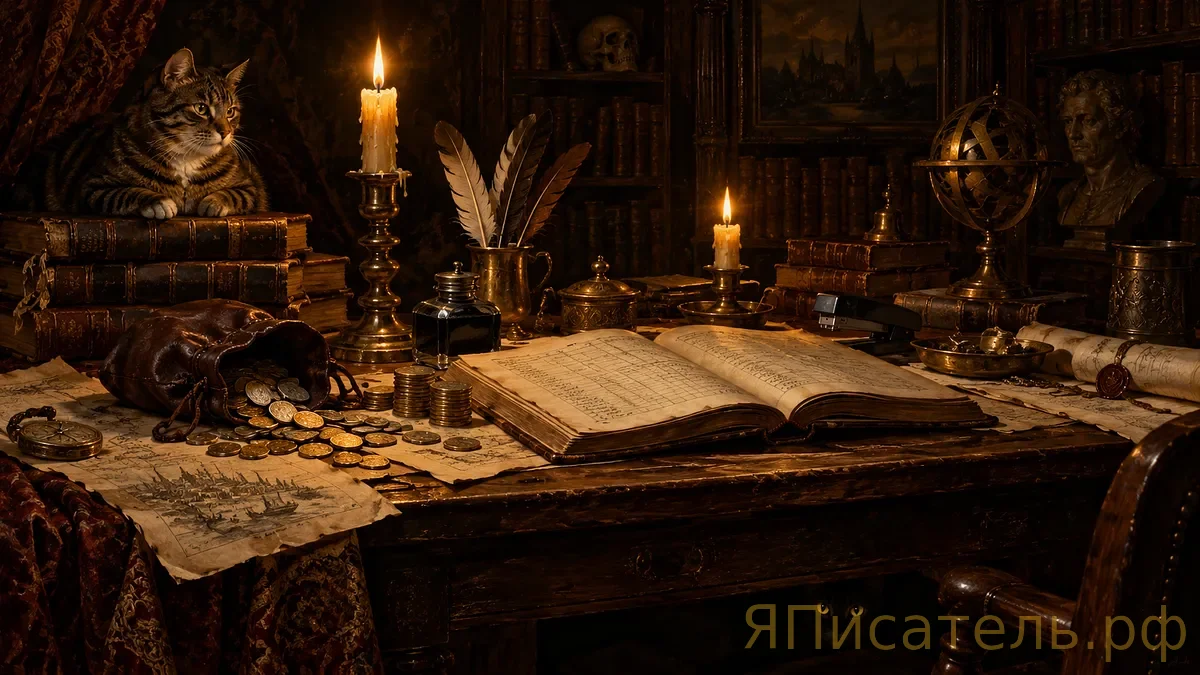
Dostoevsky Wrote for Gambling Debts — And Created Masterpieces
There's a special breed of literary snob who believes real writers should starve beautifully in garrets, producing art for art's sake while their landlord bangs on the door. These people have clearly never read a biography of any writer they actually admire. Because here's the dirty little secret of literary history: almost every classic you've ever loved was written by someone desperately chasing a paycheck.
Let's start with Fyodor Dostoevsky, the towering genius of Russian literature. The man was a degenerate gambler. Not a charming, occasional card-player — a full-blown addict who would lose his wife's wedding ring at roulette and then beg her for more money. In 1866, he owed his publisher so much that he signed a contract with truly insane terms: deliver a novel by November 1st, or forfeit the rights to ALL his works for nine years. So what did he do? He hired a stenographer named Anna Snitkina, dictated "The Gambler" in twenty-six days, and met the deadline. He then married the stenographer. That's not selling out — that's peak professionalism with a side of romance.
But Dostoevsky is just the tip of the iceberg. Shakespeare was a businessman first and a poet second. He co-owned the Globe Theatre, invested in real estate, and sued people who owed him money. He wrote plays because plays sold tickets, and tickets paid for his estate in Stratford. "Hamlet" wasn't born from some ethereal muse whispering in Will's ear at midnight — it was born from a company that needed a new hit for the season. And somehow, against all logic of the "art must be pure" crowd, it turned out to be the greatest play ever written.
Charles Dickens serialized his novels in magazines because serialization paid better than book deals. He was paid by the installment, which is why his novels are so wonderfully, absurdly long. Every cliffhanger at the end of a chapter? That's not artistic vision — that's a man making sure readers buy next week's issue. "A Tale of Two Cities," "Great Expectations," "Oliver Twist" — all of them products of a commercial publishing model. Dickens was essentially the showrunner of a Victorian Netflix series, and he knew exactly what he was doing.
Mark Twain went bankrupt investing in a typesetting machine and spent years on grueling lecture tours to pay off his debts. He wrote "Following the Equator" specifically as a money-making venture. Was it his best work? No. But the financial pressure of that period also produced some of his sharpest, most cynical observations about humanity. Money didn't corrupt his talent — it sharpened it.
Now let's talk about the elephant in the room: the modern publishing industry. Today, the "selling out" accusation gets thrown at anyone who writes genre fiction, takes a ghostwriting gig, or — God forbid — produces content for a living. There's this persistent myth that literary fiction is noble and commercial fiction is trash. Tell that to Raymond Chandler, who wrote pulp detective stories for Black Mask magazine at a penny a word and accidentally invented an entire literary tradition. Tell that to Ursula K. Le Guin, who wrote science fiction — a genre regularly dismissed by literary gatekeepers — and produced some of the most profound philosophical novels of the twentieth century.
The truth is, the wall between "art" and "commerce" in writing has always been an illusion maintained by people who either have trust funds or tenure. Virginia Woolf, the patron saint of highbrow literature, literally started her own publishing house — the Hogarth Press — to control the business side of her work. She understood something that today's romantic idealists refuse to accept: writing is a craft, and craftspeople deserve to be paid.
Here's what actually happens when you write for money: you learn discipline. You learn to finish things. You learn to edit ruthlessly because your editor won't accept bloated, self-indulgent nonsense. You learn to think about your audience — not to pander to them, but to communicate with them. Every professional writer who has ever sat down to meet a deadline knows that the muse is unreliable, but the mortgage payment is not. And somehow, paradoxically, the pressure of professionalism often produces better work than the freedom of having no stakes at all.
Anthony Trollope, the great Victorian novelist, wrote from 5:30 to 8:30 every morning before going to his day job at the Post Office. He set himself a quota of 250 words every fifteen minutes and tracked his output obsessively. When he finished a novel before his writing time was up, he'd pull out a fresh sheet of paper and start the next one. Literary critics were horrified when his autobiography revealed this mechanical process. How dare great literature be produced on a schedule! But Trollope wrote forty-seven novels, and at least a dozen of them are genuine masterpieces. His method didn't diminish his art — it enabled it.
The real question isn't whether writing for money is selling out. The real question is: what exactly are you supposed to sell if not your skills? A plumber who charges for fixing pipes isn't selling out the noble art of plumbing. A surgeon who takes a salary isn't betraying the Hippocratic Oath. Only in writing — and maybe music — do we maintain this absurd fantasy that money contaminates the product. It's a fantasy that benefits exactly one group of people: those who exploit writers by convincing them that exposure and artistic satisfaction are valid forms of payment.
Let me be blunt: the "don't write for money" advice is class warfare dressed up as aesthetic philosophy. It ensures that only people who can afford to write for free get to write at all. It silences working-class voices, immigrant voices, anyone who doesn't have the luxury of spending three years on a novel without worrying about rent. When you tell a writer that caring about money is beneath them, you're not protecting art — you're gatekeeping it.
So here's my advice, for whatever it's worth. Write for money. Write for love. Write for revenge, for therapy, for the sheer intoxicating pleasure of putting words in an order no one has tried before. But never, ever apologize for wanting to be paid. Dostoevsky didn't. Shakespeare didn't. Dickens didn't. And the next time someone calls you a sellout for writing something commercial, remind them that "Crime and Punishment" exists because a gambling addict needed cash. Art doesn't care where the motivation comes from. It only cares whether you show up and do the work.
Paste this code into your website HTML to embed this content.